Car keys · Cedar Dale
Motorcycle & Scooter Keys in Cedar Dale
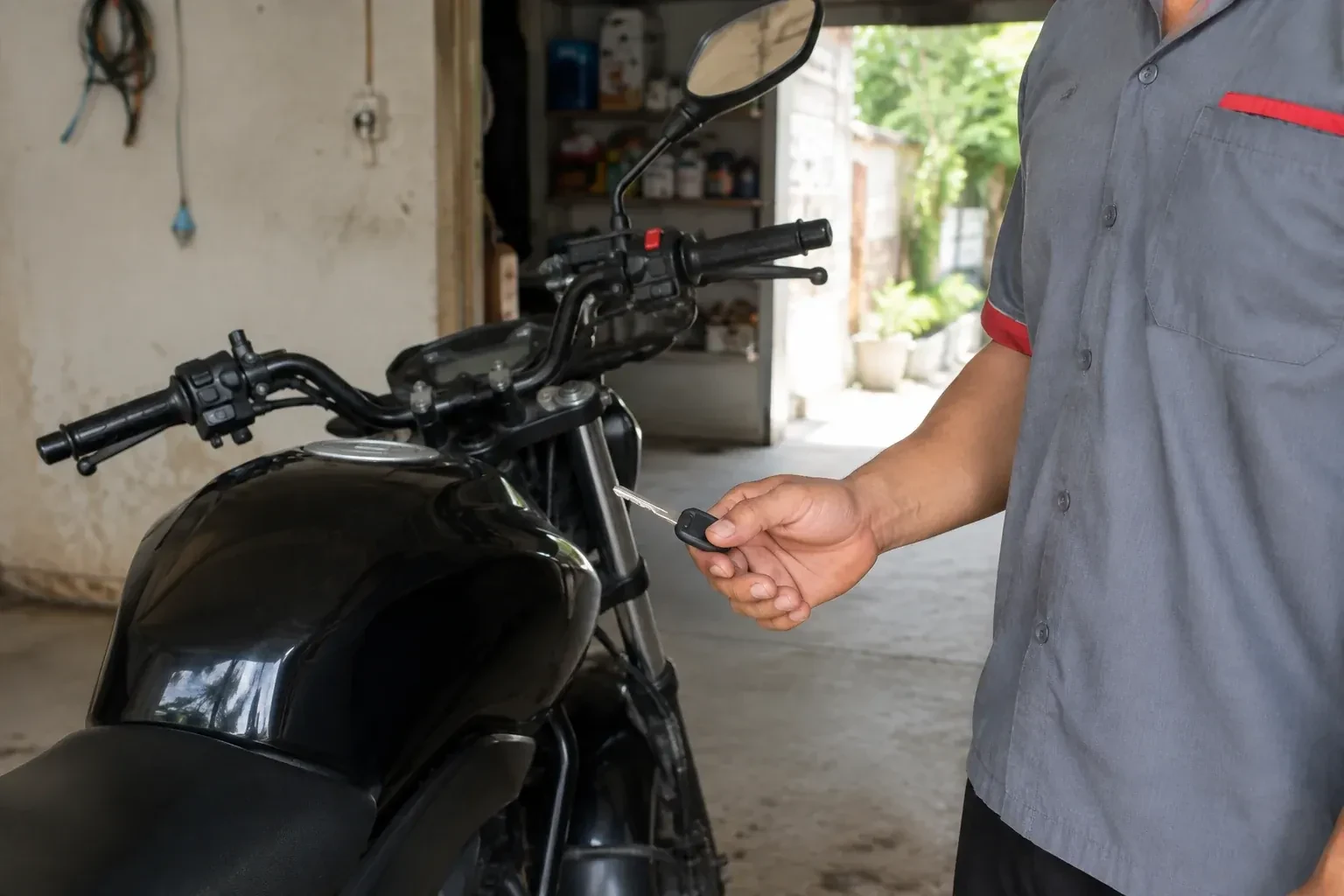
Two keys came with the scooter: one for the ignition and steering, an entirely different one for the seat and the storage compartment underneath it, so opening the seat means carrying twice the metal.
In plain words
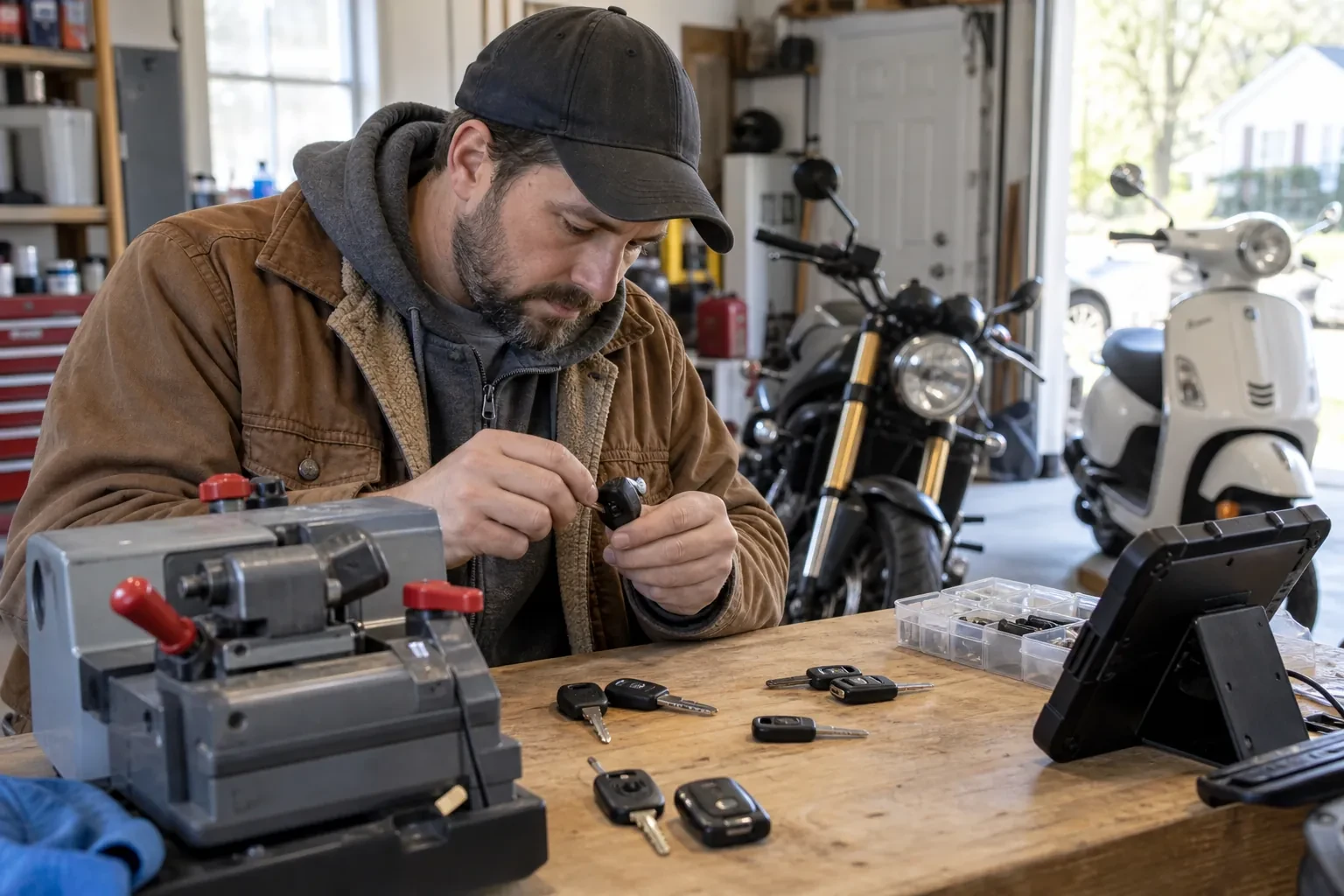
Sometimes the machine is not the problem; the key is. A blade that has worn thin, bent slightly, or been copied one generation too many stops lifting the wafers cleanly, which shows up as a key that needs a wiggle or a lift to turn. Rather than living with an unreliable copy, a fresh key cut directly from the lock's code or read from the original wafers restores a clean, consistent turn, and the worn key can be retired instead of carried as a backup that may not work when needed.
How the visit goesTwo keys came with the scooter: one for the ignition and steering, an entirely different one for the seat and the storage compartment underneath it, so opening the seat means carrying twice the metal.
Motorcycle & Scooter Keys
How the visit goes
Any prior work or damage
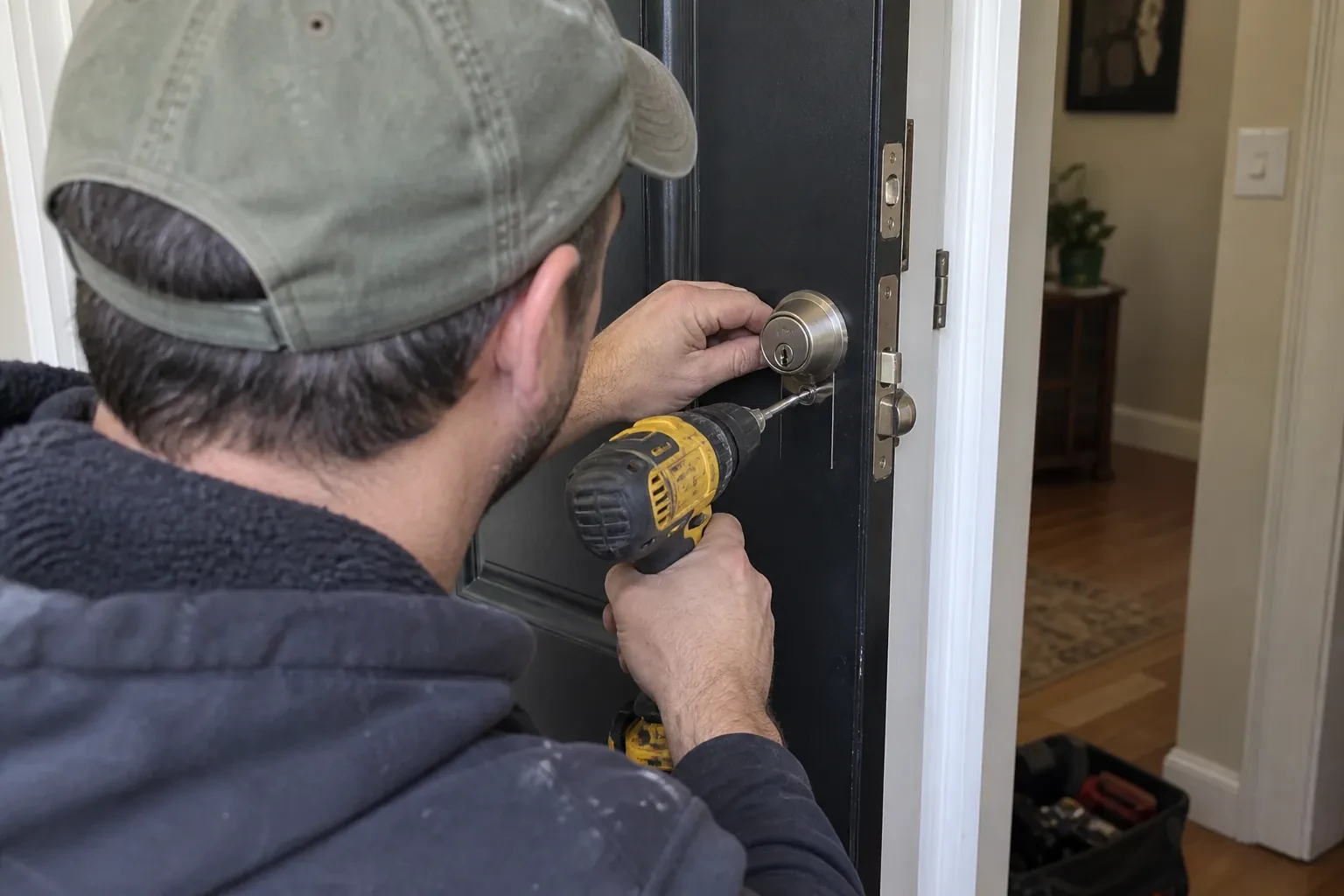
Before starting, the locksmith asks whether anyone has already tried to open or copy the lock: a hardware-store duplicate that never worked well, a bent key left in the barrel, or an attempt with an improvised tool that scratched the keyway. Any of this changes what is found once the lock is opened up, and knowing about it in advance means the owner is told plainly what was already there rather than assuming new damage happened during the visit. It also sometimes explains a wafer that has been sitting slightly out of place for months.
Cleaning and servicing a corroded lock
A lock gummed up by road grit or old grease is stripped down, its wafers and springs cleaned individually, and the keyway itself cleared of anything trapped against the wafers. Corrosion on a wafer's edge is worked off carefully rather than scraped away roughly, since removing metal changes the depth the key needs to lift it to. Once the mechanism moves freely again, it is dressed with whatever lubricant its own maker specifies, reassembled, and tested with the customer's key before the locksmith considers the lock itself resolved rather than simply hidden under a new cut.
Getting through the next storage season
Heading into a season of outdoor storage, a lock that has just been cleaned and lubricated is in a better position to start the next season the same way it ended this one. A light coat of corrosion inhibitor on an exposed lock face, a cover that keeps direct weather off the ignition and seat area, and keeping the machine somewhere it is not standing in meltwater all help the same mechanism that was just serviced stay free through the months it sits unused. None of this takes long, but it is easy to skip until a stiff lock brings it back to mind.
Motorcycle & Scooter Keys
In the van
Replacement transponder chips
Wafer lock decoder
Torx and security bits
Contact cleaner
Manufacturer-approved lock cleaner or lubricant
Motorcycle & Scooter Keys
What affects the quote
Make, model and age of the machine
Make, model and age decide how common the keyway and blank are. A widely used platform is usually the more straightforward case; an uncommon or older machine can take longer to source parts for.
Number of new keys cut
Keys cut on site are counted individually. Two for a rider and a partner, or several for a household that shares the machine, is reflected directly in the total.
Whether the lock needs replacing
Where wafers, springs or the housing itself are worn or damaged beyond a clean repair, replacing the lock rather than continuing to chase a fit is the more practical route, and is quoted as its own item.
What to have ready
- How many keys would you like cut in total?
- Do you have a key already, even one that works poorly?
- Was the machine bought used, and how many keys came with it?
Motorcycle & Scooter Keys: questions
QuestionsWhat should I do to look after a new key or lock afterward?
Very little beyond two simple habits: wipe the key clean before use, especially after a wet ride, and, where the lock's own maker calls for it, a light dose of the specified lubricant once or twice a year. Storing a spare somewhere other than on the machine itself rounds out the care a new key or lock generally needs.
Do all motorcycles have an immobiliser these days?
Not all of them. Many machines built in roughly the last two decades carry a transponder chip and an ignition module that checks it, but plenty of smaller-displacement bikes, scooters and older machines still use a purely mechanical lock with no electronic layer at all. The locksmith checks for a coil around the ignition barrel and asks how the engine behaves with the current key to tell which type is on hand.
Would a copy from a general hardware-store machine work just as well?
It can, but motorcycle wafer locks vary between manufacturers even when they look similar, and a generic cutter is not always set up to read the specific depths and keyway profile correctly. A copy that is slightly off shows up as a key that catches or needs a wiggle, which is often what brings someone in after trying that route first. Cutting from the lock's actual code avoids that guesswork.
Related services
- Car Key ReplacementThe engine cranks, catches for a second and dies, and a small key-shaped light keeps blinking on the dash.
- Spare Car Key DuplicationA lockout last month ended with a locksmith opening the door and going home, and the same single key has been carried ever since with nothing behind it.
- Key Fob ProgrammingA new driver has joined the household, and the one existing fob is the only key anyone has ever had cut for this vehicle.