
Commercial · Cedar Dale
Access Control Installation in Cedar Dale
Deliveries arrive before anyone is scheduled to be there, which right now means either propping the loading dock open at dawn or handing a key to a driver you have never met.
In plain words
An exit door does not stop being an exit once it is wired into an access control system. A magnetic lock on that route is paired with a request-to-exit device so anyone leaving is never held up looking for a code, and it is tied into the fire alarm so an alarm signal releases the door on its own. The installation is planned around the building's exits from the start rather than added around them afterward, so the system controls who comes in without complicating how people get out.
How the visit goesThe keypad on the side door has started sticking on cold mornings, codes get shared instead of reset, and half the staff still remember a code you meant to retire two hires ago.
Access Control Installation
How the visit goes
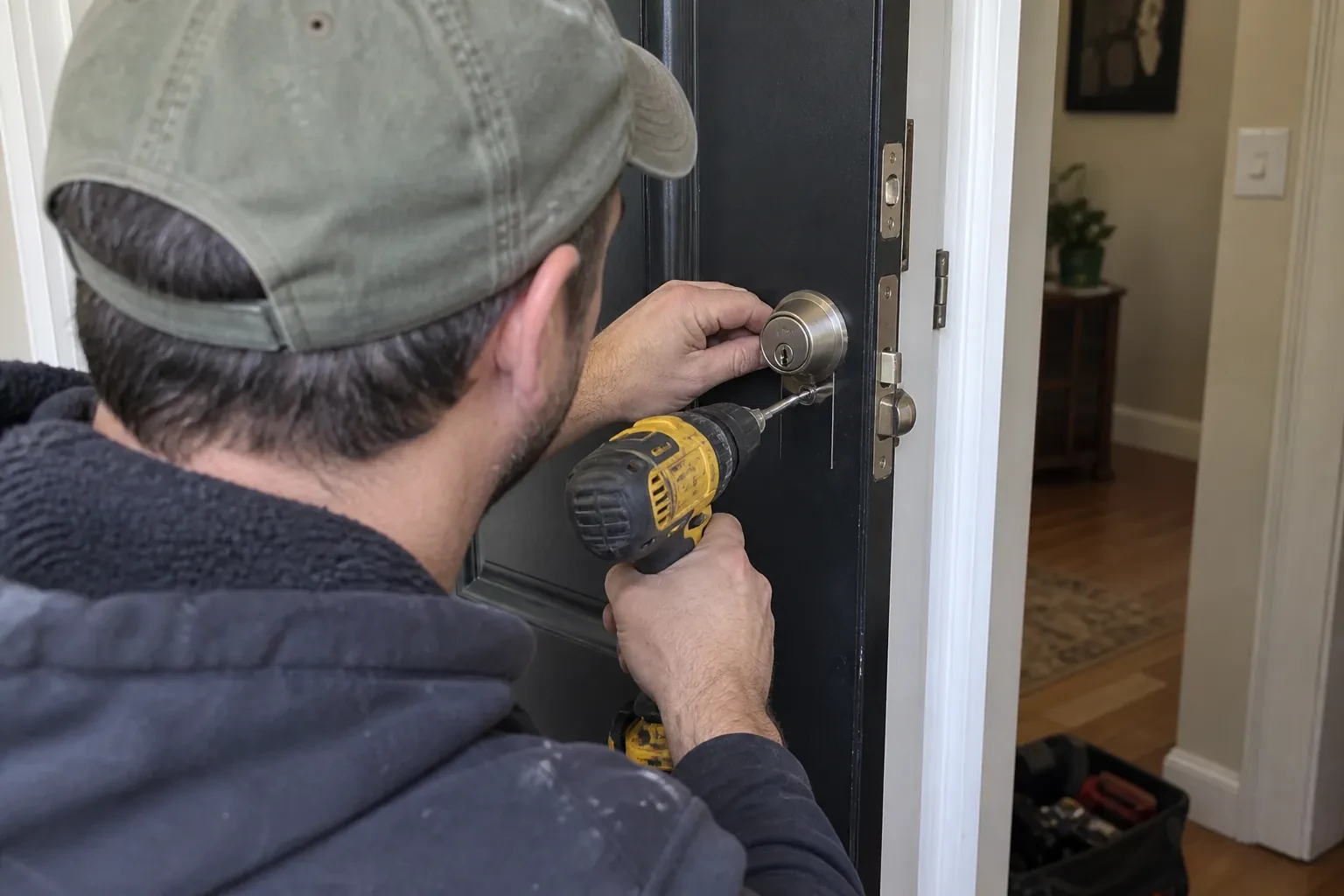
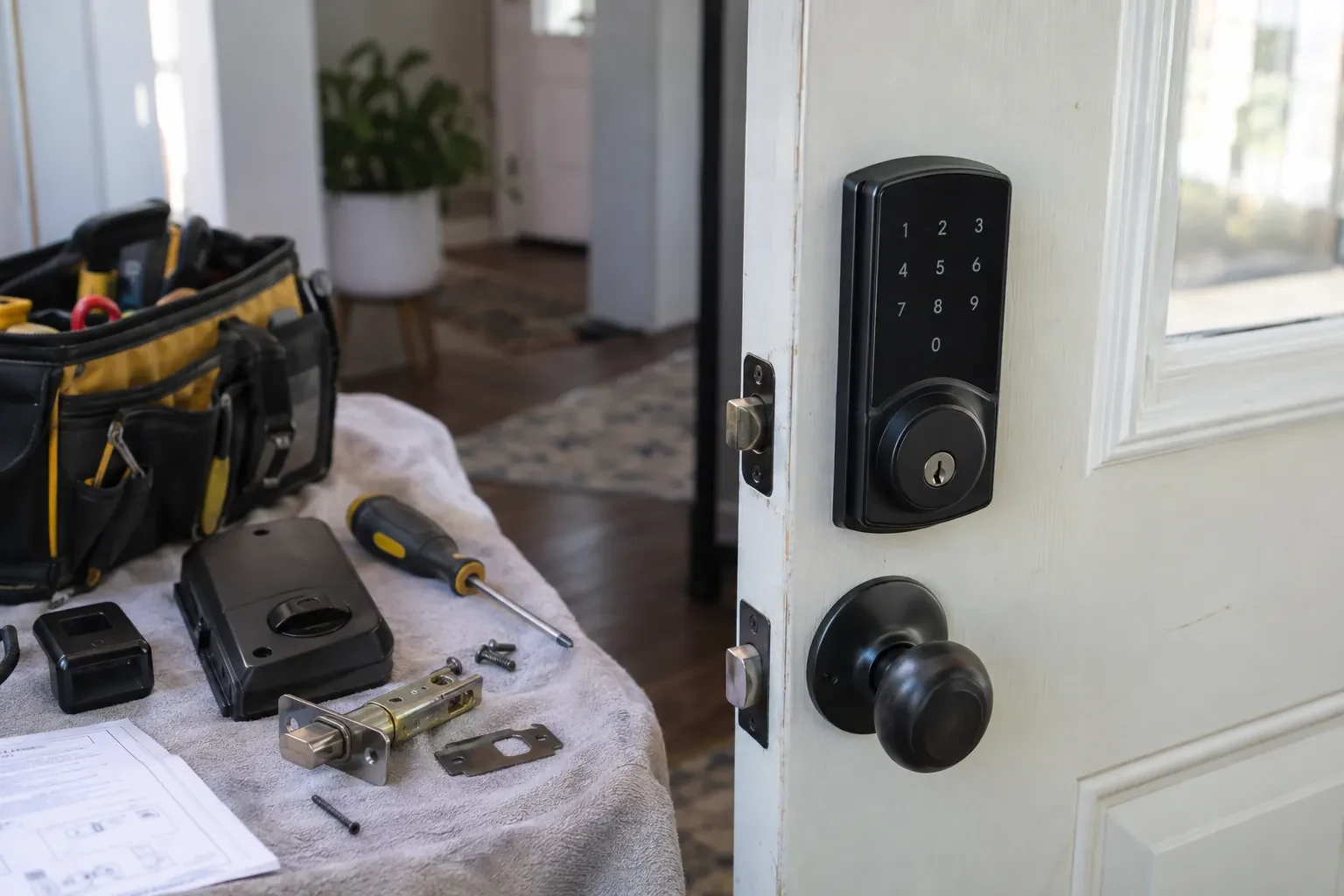
Checking which doors are also exits
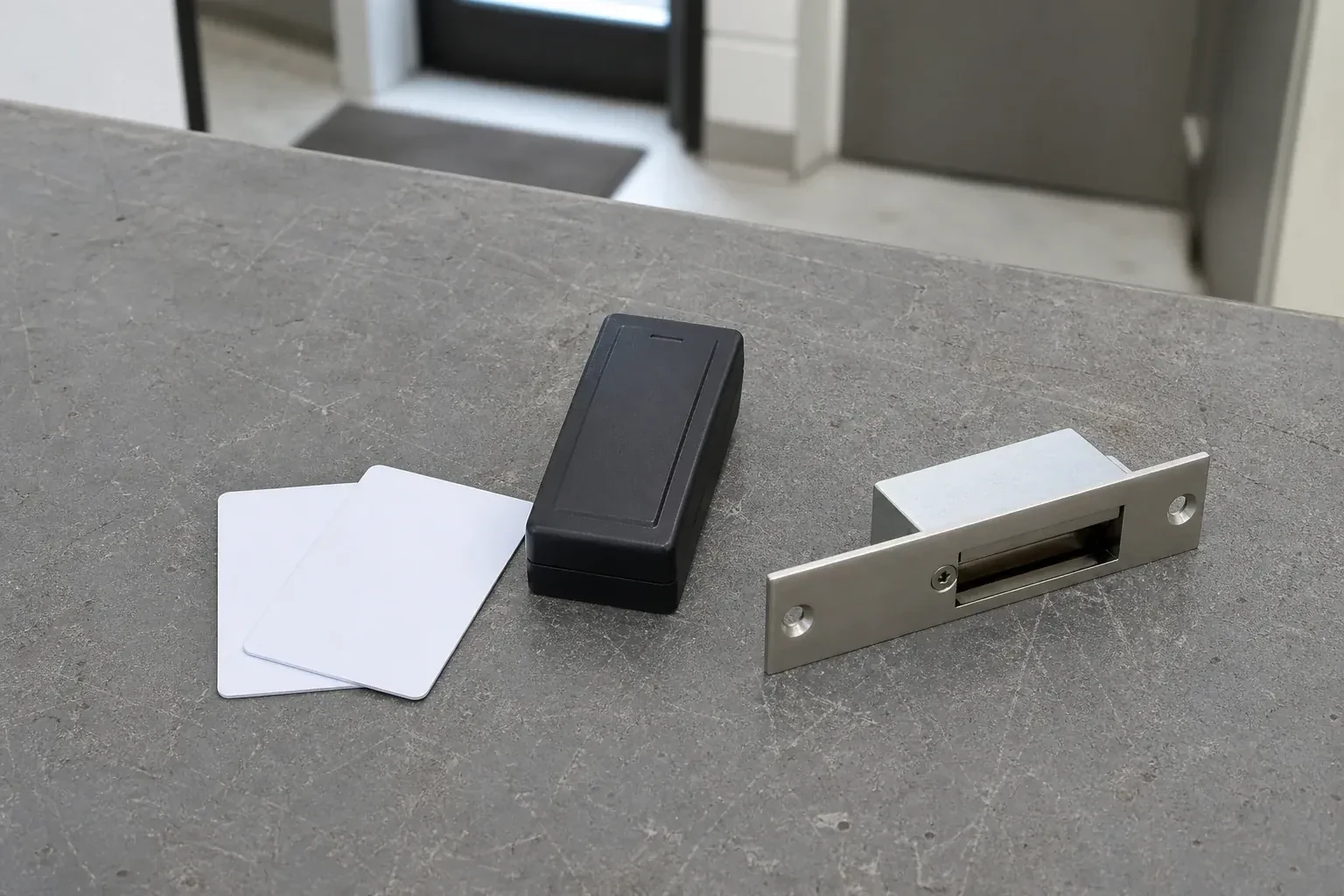
A door that leads outside along a path people use to leave the building gets special attention, no matter what lock currently sits on it, so the survey flags every one of those openings early. On an exit door, a magnetic lock only gets considered alongside a request-to-exit device and a tie-in to the fire alarm system, while an electric strike paired with a standard latch usually needs no extra hardware to let people out. Sorting exit doors from interior doors before any hardware is ordered keeps a smooth, one-motion exit part of the plan from day one rather than a fix added afterward.
Testing every opening before calling it finished
Each door is tested the same way regardless of how simple or complex its hardware is: a valid credential releases it, a disabled one does not, the request-to-exit device or push bar releases a magnetic lock on demand, and the door position switch correctly reports open and closed. Where a fire alarm interface is fitted, the locksmith confirms the lock actually releases when the alarm activates, not only when it is reset afterward. The battery backup is tested by removing main power briefly and confirming every door still behaves the way it is meant to.
What the system adds to the rest of the building's security
Once the installation settles into daily use, its value tends to show up alongside whatever else the business already runs: an alarm event that lines up with the person who unlocked the door that morning, a camera clip that can be matched to a specific credential instead of just a timestamp, or a plain answer, finally, to who was in the building last weekend. Getting there can mean linking the access system to the alarm panel or the camera platform, which sometimes calls for extra configuration or an integration licence beyond the original installation, but the controller and the log it already keeps are the starting point either way.
Access Control Installation
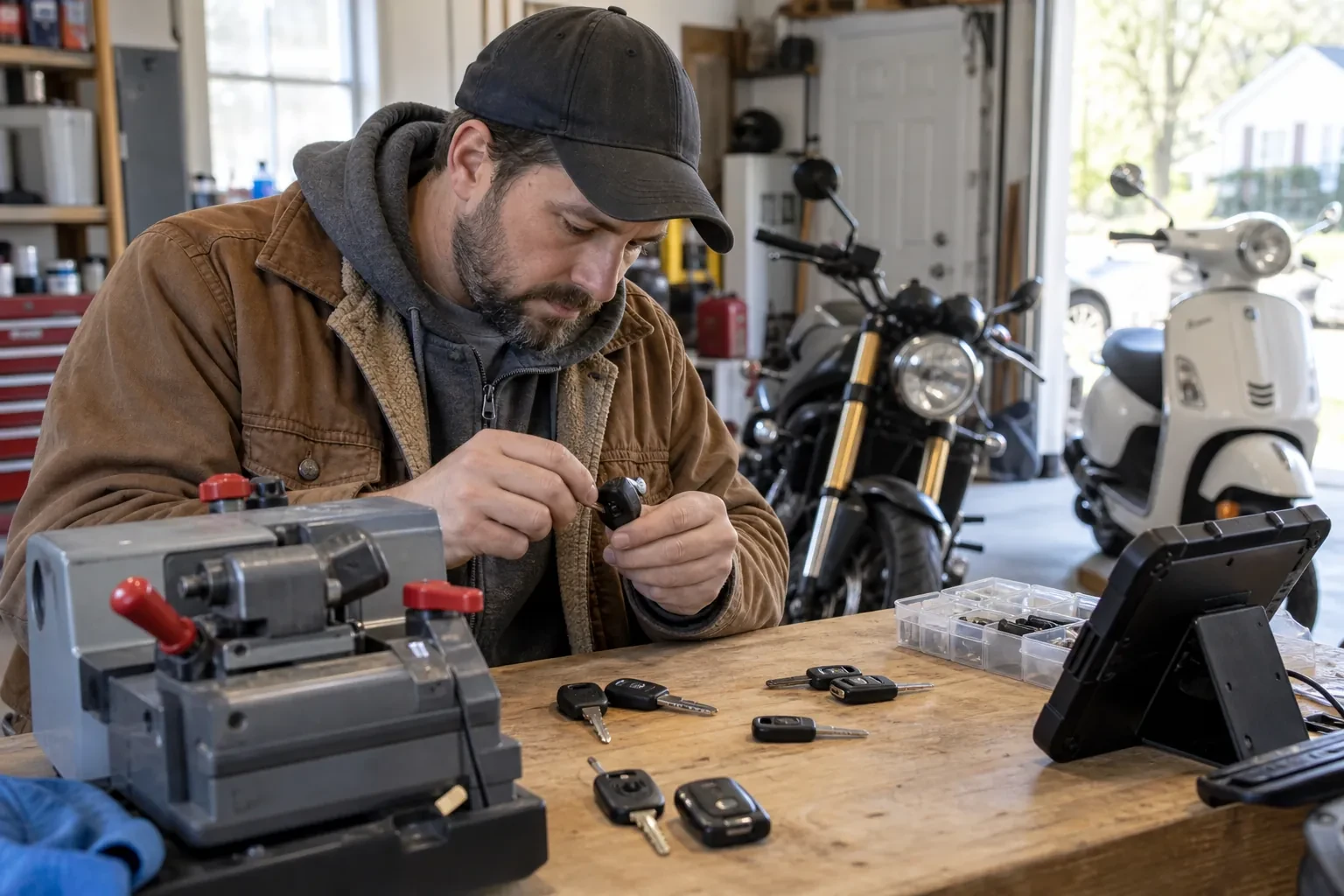
In the van
Mechanical override cylinders
Low-voltage cable
Card and fob readers
Request-to-exit devices
Magnetic locks
Access Control Installation
What affects the quote
How much door and frame preparation is needed
A frame that already suits an electric strike needs less preparation than one that must be mortised, reinforced, or matched with a different strike body, and an older or non-standard door can add its own preparation.
Network readiness for a networked system
A networked controller needs a suitable connection point and technology-department approval to join the building's network; where that is not already in place, preparing it is a separate piece of the job from the door hardware itself.
Standalone or networked
A self-contained reader at one door is simpler than a networked controller managing several openings with shared schedules and a combined log, and the choice between them changes both the hardware list and the wiring involved.
What to have ready
- Roughly how many people will need a credential to enter?
- Do any doors need different hours than the rest of the building?
- Do you expect to add more controlled doors later on?
Access Control Installation: questions
QuestionsDoes a door still need a mechanical key at all once it's on the system?
Not always — it depends on the hardware chosen for that door. Where a mechanical override cylinder is fitted and keyed in, it can still be opened by key regardless of what happens to the electronics, the network, or the power supply, and it is meant as a backup rather than a daily habit, since using it routinely bypasses the entry record the system is there to keep.
Can the system be expanded to more doors later?
Yes. A system installed with some spare capacity in its controller and power supply can usually take another door or two by adding a reader and lock and wiring it back in. A door far from the existing wiring can instead run its own standalone unit. Either way, existing schedules and credentials do not need to be rebuilt from scratch.
Do we still need physical keys after this is installed?
On hardware that supports it, yes: a conventional cylinder sits alongside the electronic reader, cut to work like any other key on the property, though some access-controlled locks are built without one. Where it is fitted, it is meant as a fallback rather than the everyday way in: if a battery dies, a controller faults, or the power stays out longer than the backup lasts, the door still opens by key while the issue is sorted out.
Related services
- Master Key System DesignAfter a busy shift the manager counts the keys coming back in and loses track of who still has one.
- Panic & Exit HardwareTwo doors used to swing as a pair at the community hall entrance, but one leaf has started closing before the other, catching the astragal and leaving a gap wide enough to worry the caretaker.
- Commercial-Grade Lock ReplacementA new tenant moved into the unit next door, and the property manager just found three different cylinders on three doors, none of them cut to the same key.