Lockouts · Oshawa
Seized & Jammed Lock Opening
Every time you pull the key out of the side door it comes away gritty.
In plain words
Most seized locks can be saved, and keeping your existing hardware is the aim. A cylinder that has stopped turning is usually recoverable with cleaning and fresh internal parts. A failed tailpiece is a small component swapped without touching the rest of the lock. A bolt bound by the door needs adjustment, not new hardware. Replacement is the answer for a plug or shell that is worn, damaged or hollowed out by corrosion beyond what cleaning and parts can fix, and then the new cylinder is matched to your keyway and finish and, where possible, keyed to the key already in your pocket.
How the visit goesThe key turns a full circle without any resistance and the deadbolt stays exactly where it is. There is no click, nothing moves behind the face of the lock, and the door is as closed as it was before you touched it.
Seized & Jammed Lock Opening
How the visit goes
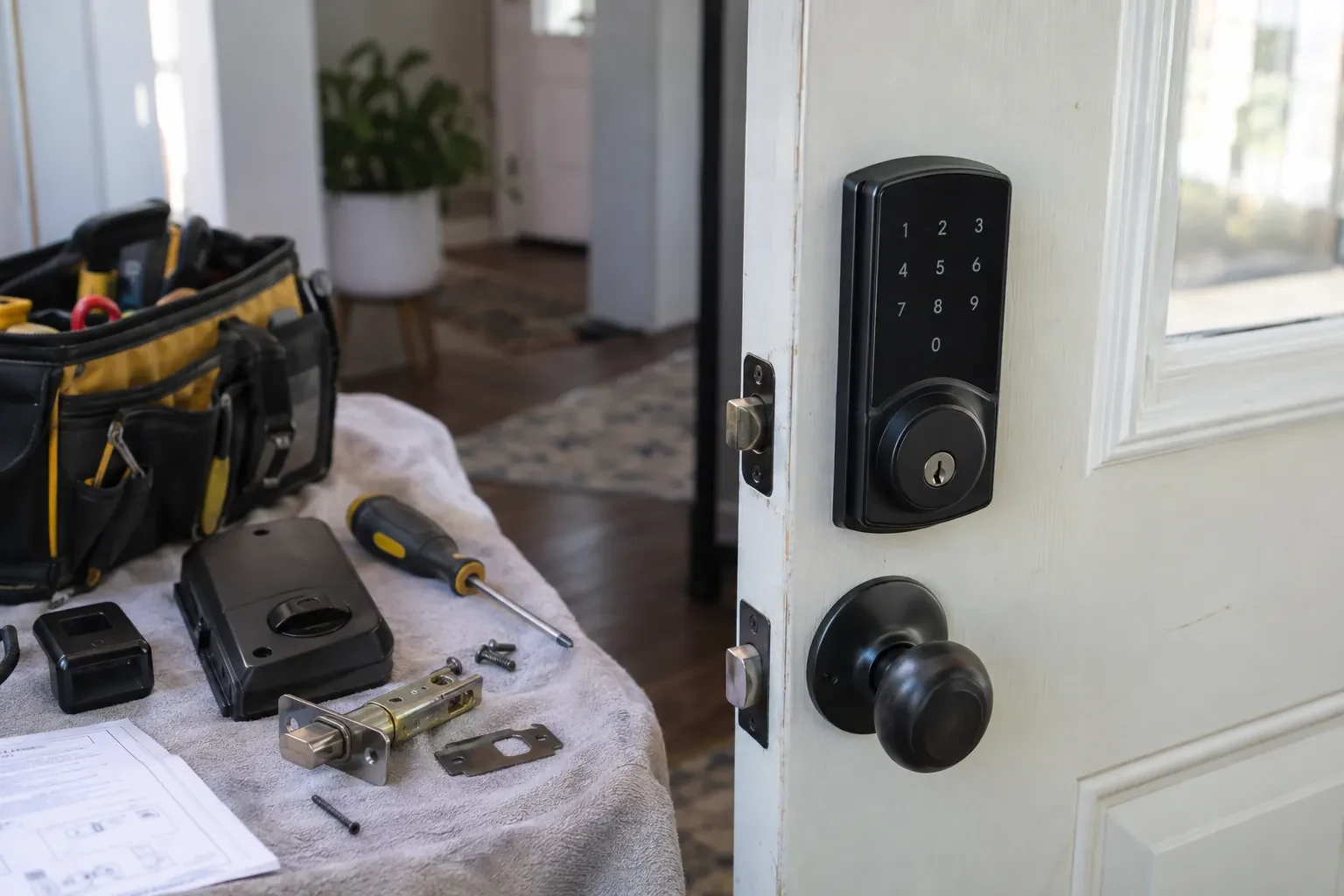
Levers, thumb-turns and mortise cases
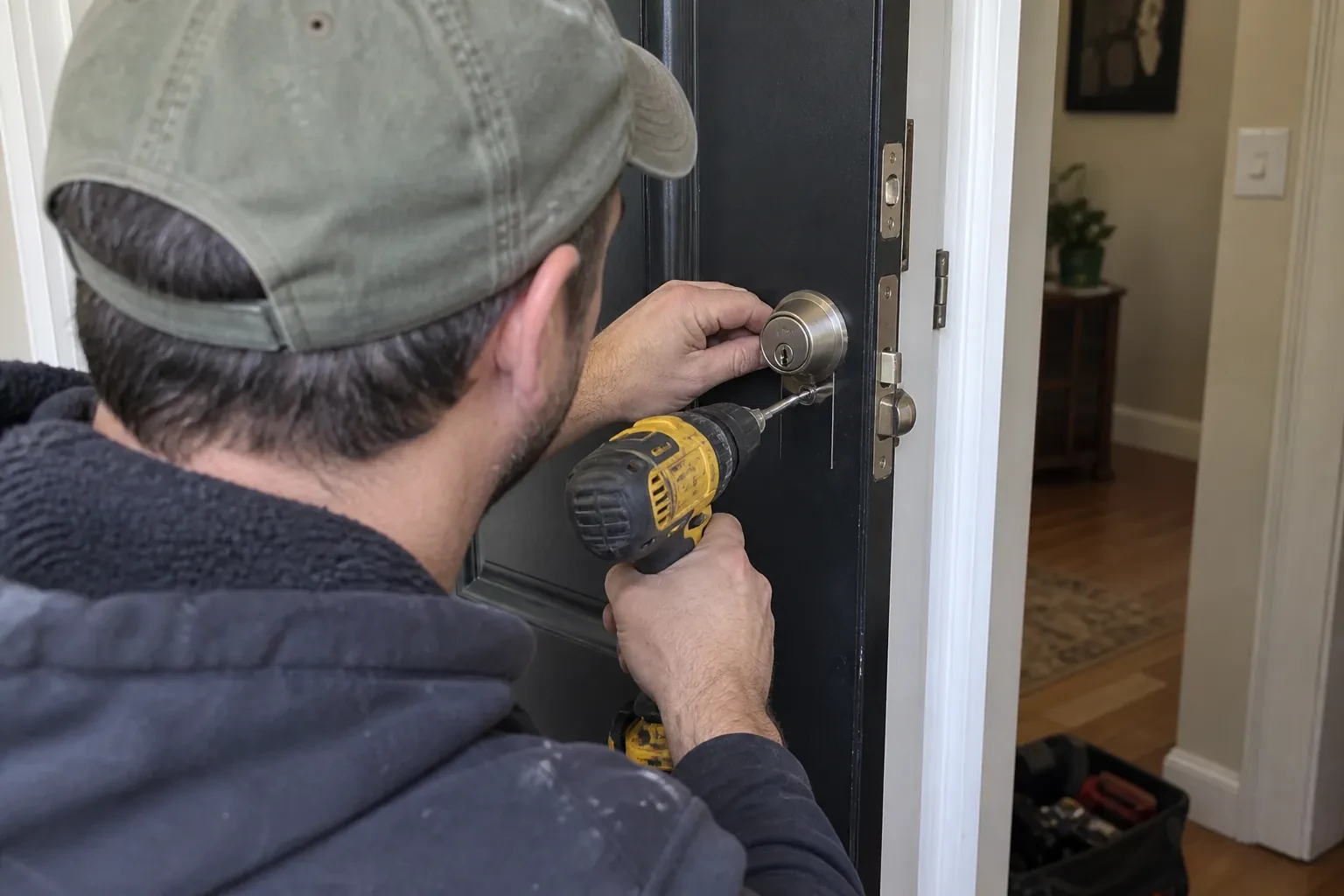
Lever handles and mortise locks add parts that a plain deadbolt does not have, and each can jam on its own. A lever that drops without retracting the latch can have a tired return spring or a worn hub inside the case, though latch engagement, linkage, or the spindle can produce the same symptom. A thumb-turn that will not move can be a bent spindle, a stripped drive or a bolt pinned by the frame. On older houses and commercial doors the mortise case itself may be packed with decades of dust and dried grease. The locksmith works the lever, key and thumb-turn separately and feels where resistance starts, which locates the fault before the case is opened.
Freeing a seized cylinder without forcing it
A plug that will not turn is coaxed, not wrenched. The locksmith flushes the keyway with an electronic contact cleaner to lift out grit and old residue, then applies a penetrating lubricant sparingly, since too much simply carries dirt deeper. The key is worked in small movements, in and out and a few degrees each way, letting the pins settle back into their stacks. If the cylinder cap has loosened, it is snugged so the plug sits square. As the plug begins to move, tension is kept light so nothing inside is bent. Once the door is open, the cylinder is removed for proper cleaning rather than left with lubricant masking the wear.
A door that closes without a fight
If the door was the cause, the hinges, strike and seal have been set so the bolt has room. Keeping it that way is a seasonal habit: each spring and fall, try the lock with the door closed and no pressure on it, and snug the hinge and strike screws if the door has begun to drop. Wood keeps moving with humidity, so a door that swells in August may need a touch on the strike in September. A door that suddenly needs a push to lock is telling you early, while the fix is still a screwdriver and not a seized bolt.
Seized & Jammed Lock Opening
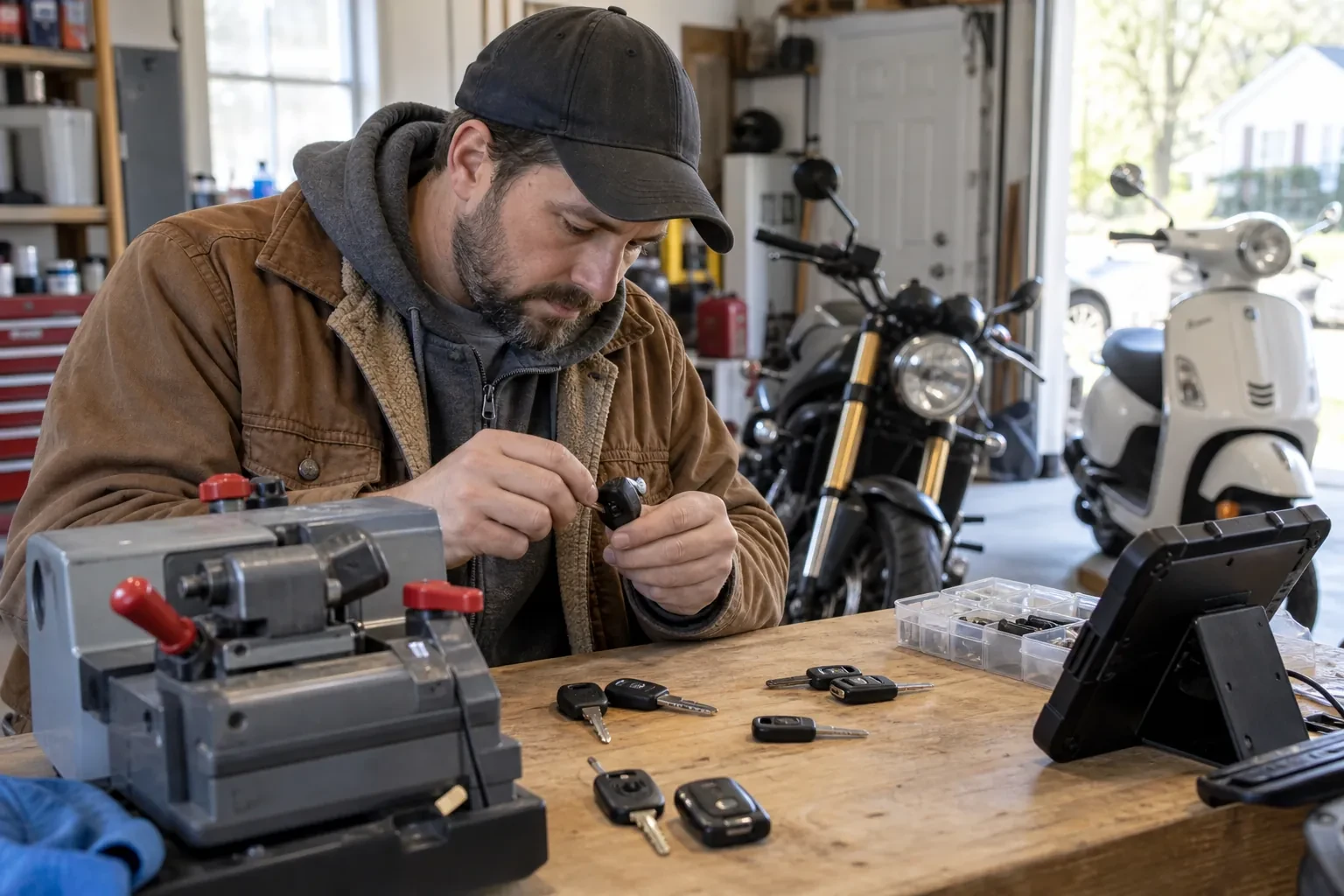
In the van
Lock de-icer
Dry PTFE or graphite lock lubricant
Electronic contact cleaner
Penetrating lubricant
Cylinder springs, pins and cap
Seized & Jammed Lock Opening
What affects the quote
Inside door or outside door
A jammed bedroom or office privacy lock is generally a lighter job than a weather-exposed exterior deadbolt, and a mortise lock on an interior door sits between the two.
Upgrades you choose on the spot
A keyhole cover, a storm door latch, a reinforced strike or a new deadbolt are optional extras some people add while the locksmith is there, each shown as its own line.
Type of lock on the door
A residential deadbolt, a knob latch, a lever set, a mortise case in an older house and a high-security cylinder each take different tools and time to open and to service.
What to have ready
- Has there been a thaw and freeze, or a stretch of humid weather, this week?
- Was the door painted, re-hung or fitted with new weatherstripping recently?
- Do you have a spare or original key you could try?
Seized & Jammed Lock Opening: questions
QuestionsHow can I tell whether the lock or the door is the problem?
Try the key while gently pushing, pulling and lifting the door. If it frees up in one position, the bolt is being pinched by the frame and the door is the cause. If nothing changes, look at the key: does it go fully in and refuse to turn, or spin freely? The first points to the cylinder, the second to the tailpiece behind it. Tell the locksmith which you found and the right parts come in the van.
What is a tailpiece, and why does it matter here?
The tailpiece is the flat bar that sticks out of the back of a deadbolt cylinder and turns the bolt mechanism when the key turns; on a knob or lever set the equivalent part is a cam or spindle. It carries all the twisting effort, so a bent, worn or broken one is the reason a key can turn without anything happening. It is a small part to replace, it comes in several lengths, and the right length matters.
How long does a jammed lock opening take?
It depends on which family the jam belongs to. A bolt bound by the door is often freed in minutes and the adjustment afterwards takes a little longer. A seized cylinder needs patient cleaning before it turns and a bench service after, and a frozen one needs thawing time. A tailpiece swap is short once the door is open; a mortise case service is longer. The locksmith gives a sense of the time once the cause is identified at the door.