Car keys · Oshawa
Motorcycle & Scooter Keys
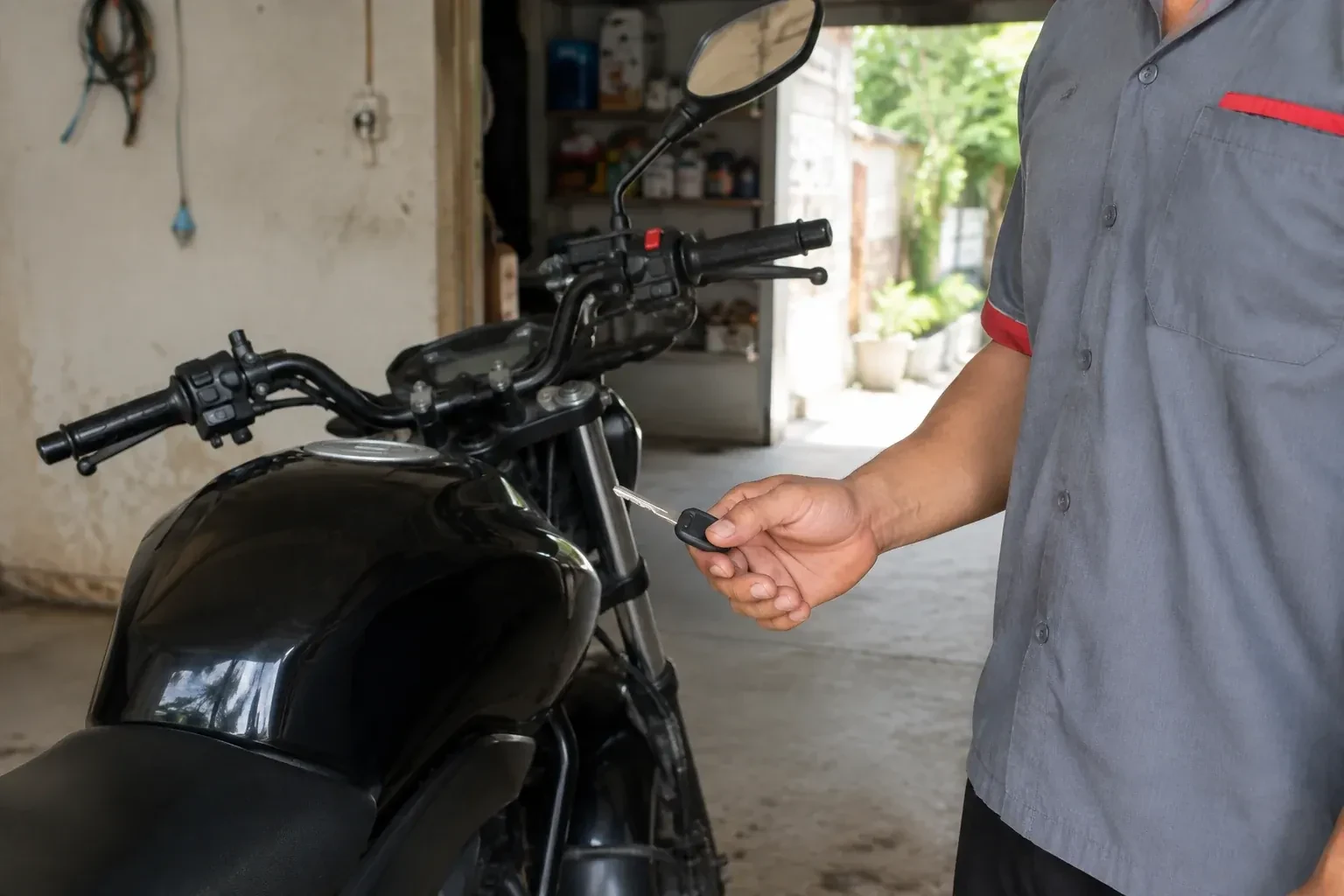
Two keys came with the scooter: one for the ignition and steering, an entirely different one for the seat and the storage compartment underneath it, so opening the seat means carrying twice the metal.
In plain words
What is actually possible depends on whether a working key still exists somewhere. If one does, even a spare kept by a family member or a dealership record of the code, a fresh key can usually be cut or duplicated directly from it. If every key for the machine is gone, the locksmith reads the lock itself, translating wafer depths into a cut, or, on a machine with an immobiliser, pairs a new transponder where that system allows it, since some instead need the whole unit replaced. Either route aims for a key that starts the engine and operates the other locks the owner wants included.
How the visit goesThe bike came home from its previous owner with a single worn key that starts the engine but does nothing for the seat latch or the fuel cap, both of which answer to keys nobody handed over.
Motorcycle & Scooter Keys
How the visit goes
Checking the steering lock's condition
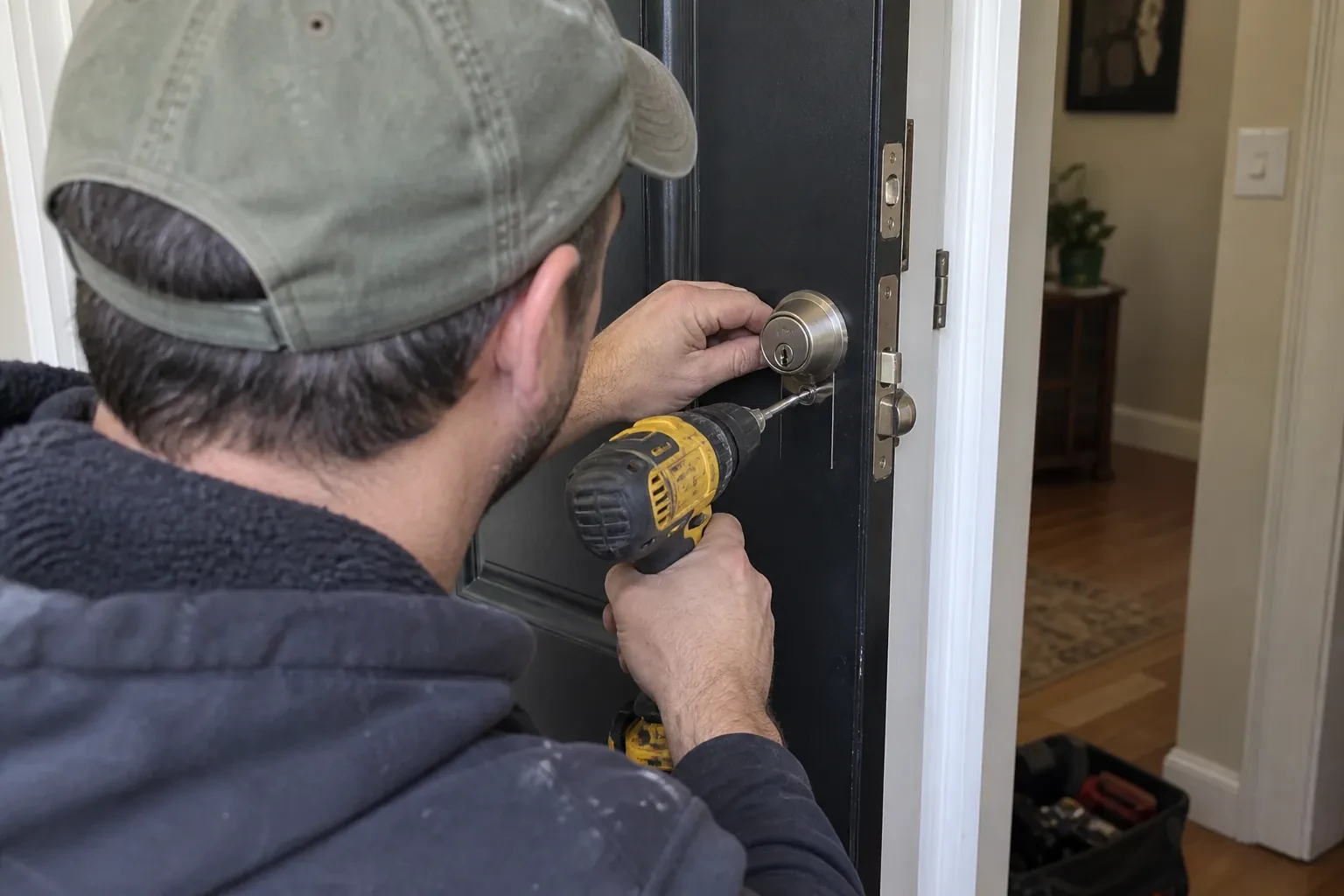
Where the steering lock is a separate mechanism from the ignition switch, or has simply sat unused through a season of storage, the locksmith tests how freely it turns before relying on it to hold the front wheel. A lock that resists turning, catches partway, or needs unusual pressure is flagged early, since forcing it with a new key risks the same snapped blade that likely affected the old one. This check takes only a moment but matters, because a steering lock that will not release properly can leave the machine effectively immobile even with a working key in hand.
Pairing a new transponder
A machine with an immobiliser needs its electronics satisfied as well as its lock. Using either a remaining working key or programming equipment built for that system, the locksmith teaches the vehicle's module the new transponder's code where that system supports it, though some manufacturers require their own code key and a dealer procedure instead. The mechanical cut and the electronic pairing are separate steps and both have to succeed: a key can be shaped correctly and still fail to start the engine if the chip inside it was never taught to the machine, which is why this step is tested with a full engine start rather than just a turn of the switch.
What the immobiliser now expects
On a machine with an immobiliser, the electronics now recognise every key that was paired during the visit and nothing else, which is worth knowing if an old key turns up later: it will still fit the ignition mechanically but will not start the engine on its own. Any spare transponder key made afterward should go through the same pairing process rather than being assumed to work by shape alone. Keeping a note of how many keys are currently paired to the machine makes a future visit, whether for a lost key or an added spare, easier to sort out.
Motorcycle & Scooter Keys
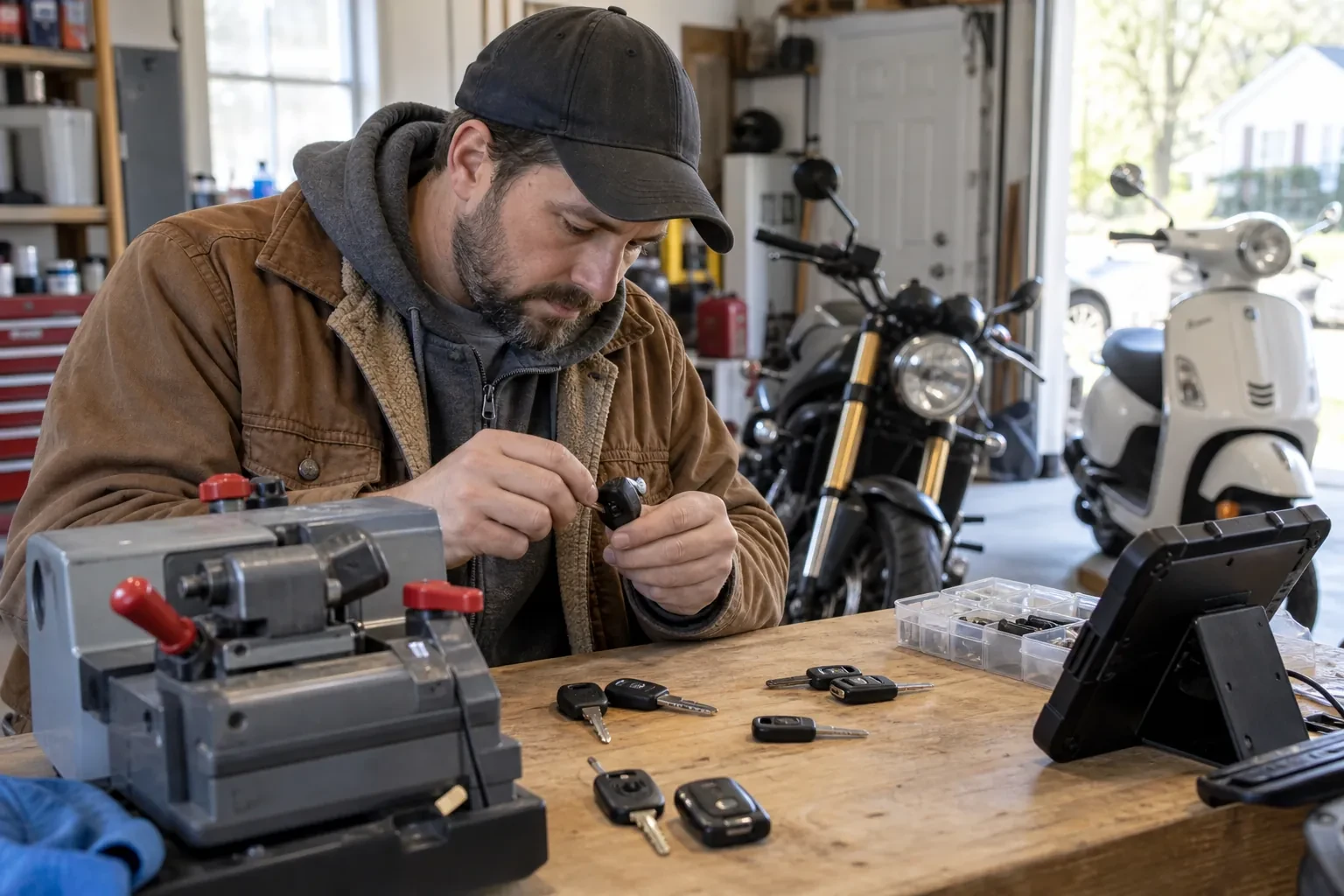
In the van
Replacement transponder chips
Wafer lock decoder
Torx and security bits
Contact cleaner
Manufacturer-approved lock cleaner or lubricant
Motorcycle & Scooter Keys
What affects the quote
Condition of the existing lock
A clean, well-maintained lock accepts a new key with little extra work. One affected by corrosion or grit may need cleaning or light service before a key can be tested reliably against it.
Whether the lock needs replacing
Where wafers, springs or the housing itself are worn or damaged beyond a clean repair, replacing the lock rather than continuing to chase a fit is the more practical route, and is quoted as its own item.
Transponder and fob hardware
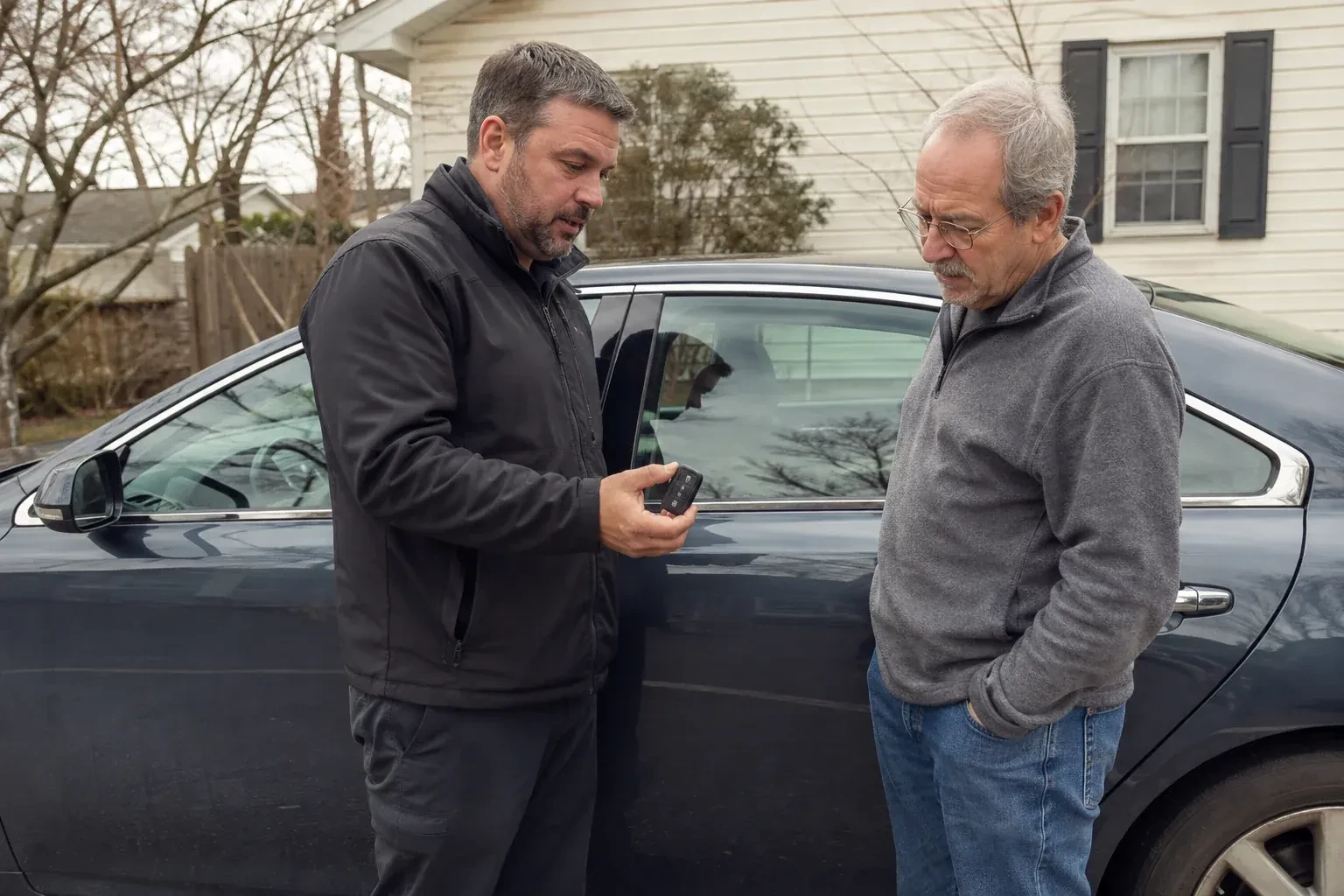
A transponder key needs a chip and, on some systems, a fob shell in addition to the cut blade, and that hardware is a separate line from a plain mechanical key.
What to have ready
- Is the machine's VIN accessible on the frame or paperwork?
- Does the engine crank but fail to start with the current key?
- Would you like every lock brought onto one key?
Motorcycle & Scooter Keys: questions
QuestionsWhat should I do to look after a new key or lock afterward?
Very little beyond two simple habits: wipe the key clean before use, especially after a wet ride, and, where the lock's own maker calls for it, a light dose of the specified lubricant once or twice a year. Storing a spare somewhere other than on the machine itself rounds out the care a new key or lock generally needs.
Do all motorcycles have an immobiliser these days?
Not all of them. Many machines built in roughly the last two decades carry a transponder chip and an ignition module that checks it, but plenty of smaller-displacement bikes, scooters and older machines still use a purely mechanical lock with no electronic layer at all. The locksmith checks for a coil around the ignition barrel and asks how the engine behaves with the current key to tell which type is on hand.
Would a copy from a general hardware-store machine work just as well?
It can, but motorcycle wafer locks vary between manufacturers even when they look similar, and a generic cutter is not always set up to read the specific depths and keyway profile correctly. A copy that is slightly off shows up as a key that catches or needs a wiggle, which is often what brings someone in after trying that route first. Cutting from the lock's actual code avoids that guesswork.
Related services
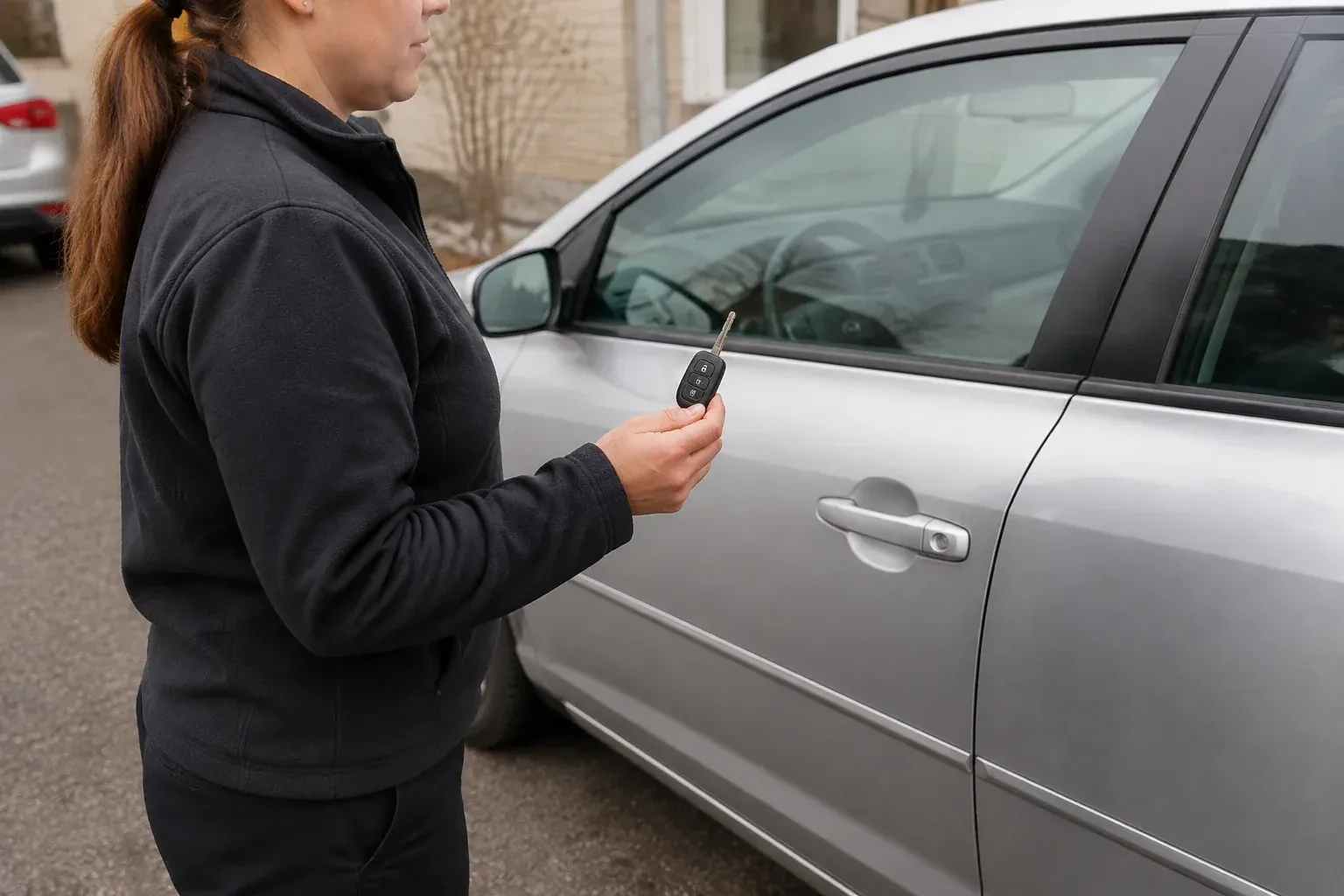
- Car Key ReplacementThe engine cranks, catches for a second and dies, and a small key-shaped light keeps blinking on the dash.
- Spare Car Key DuplicationA lockout last month ended with a locksmith opening the door and going home, and the same single key has been carried ever since with nothing behind it.
- Key Fob ProgrammingA new driver has joined the household, and the one existing fob is the only key anyone has ever had cut for this vehicle.