High security · Cedar Dale
Safe Opening & Combination Change in Cedar Dale
A software update reset the clinic's small safe overnight, and the receptionist's usual code now does nothing on a keypad that lights up but goes no further.
In plain words
A safe opening and combination change service is built around confirming who has the right to be inside the safe before any tool touches it. Once that is settled, the locksmith identifies the safe's make, model and lock type, then works through the least invasive method that fits it, whether that means reading a dial by feel or resetting an electronic keypad. The final step sets a new combination chosen by the current owner, tested repeatedly, so the visit ends with a working safe under a code only they hold.
How the visit goesThe new manager took over the shop last month and only now needs the back-office safe open, but the combination the previous owner was supposed to leave in writing never turned up anywhere in the handover file.
Safe Opening & Combination Change
How the visit goes
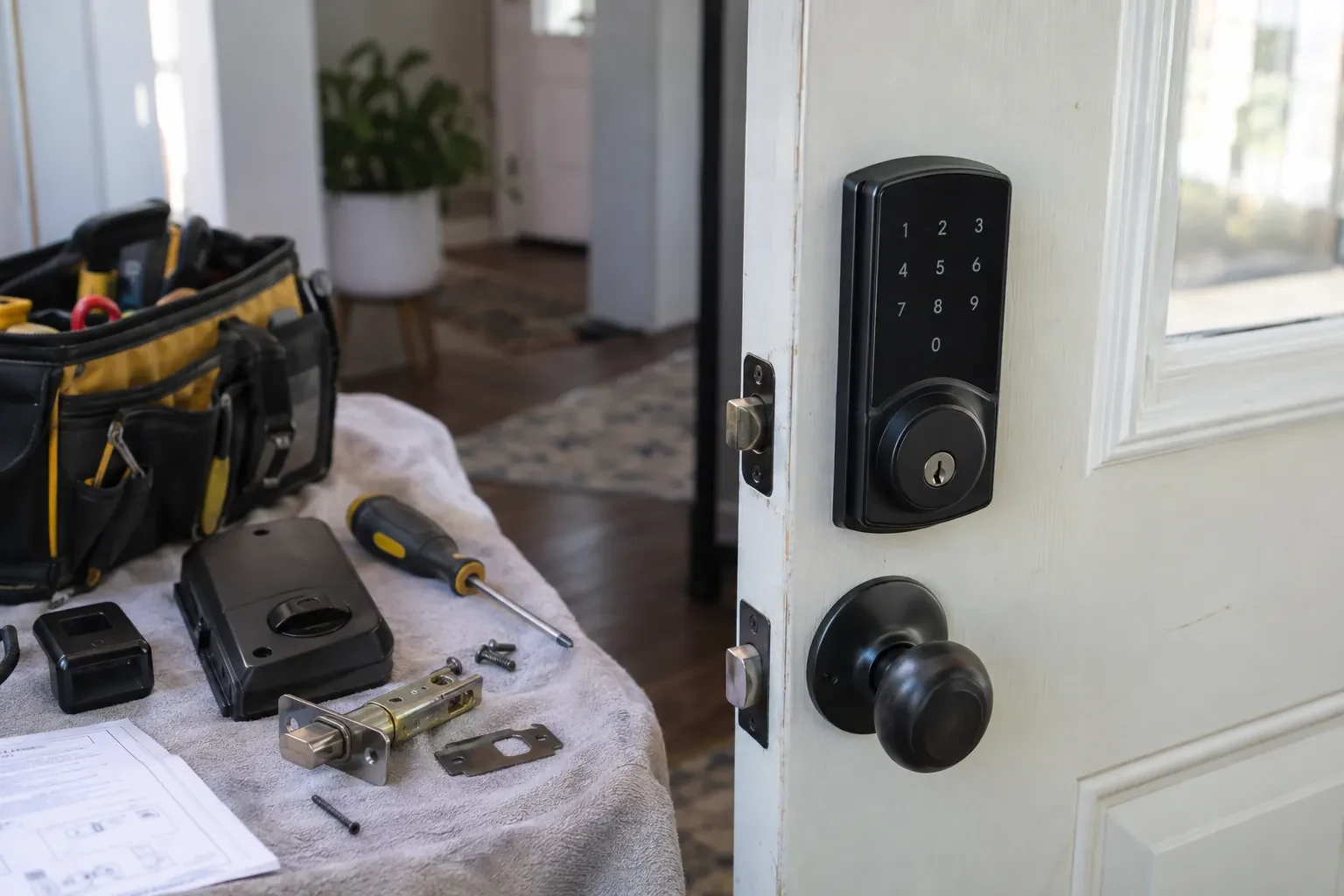
Where the combination actually went
The history behind a lost combination shapes what happens next as much as the lock does. A code forgotten after months of the safe sitting closed still depends on that lock's own options: some models support a straightforward reset, others need a valid recovery code or a professional opening regardless. A combination that left with a departing bookkeeper or manager points toward recombining even a safe that still opens perfectly well, since the old numbers are now outside anyone's control. A safe with no known history, inherited or bought without paperwork, is treated as unknown from the start. A few honest questions about how the combination was lost shape the whole visit.
Handling a broken key, handle or spindle
Not every safe problem is a combination problem. A snapped key is extracted the same careful way a broken door key would be, without pushing it further into the lock. A stripped or broken handle is removed and matched to a replacement of the same fitting, or repaired where the internal parts allow it. A spindle that has sheared inside the door is drawn out and replaced so the dial once again turns the wheel pack rather than spinning freely on its own. Each of these is diagnosed and resolved on its own terms alongside whatever combination work the visit also involves.
A little care keeps the lock reliable
A mechanical dial benefits from being turned through a full combination cycle occasionally even when the safe is not otherwise in use, since a dial left untouched for years is more likely to develop the stiffness that led to this visit. An electronic keypad benefits from a battery change on a set schedule rather than waiting for a low-battery warning to appear, since a dead battery at an inconvenient moment is the more common failure than the lock itself. Wiping the keypad and dial face of dust occasionally, without any liquid cleaner, keeps both types responding the way they should.
Safe Opening & Combination Change
In the van
Replacement wheel pack
Manufacturer reset tool
Replacement dial and ring
Borescope for internal viewing
Combination change key
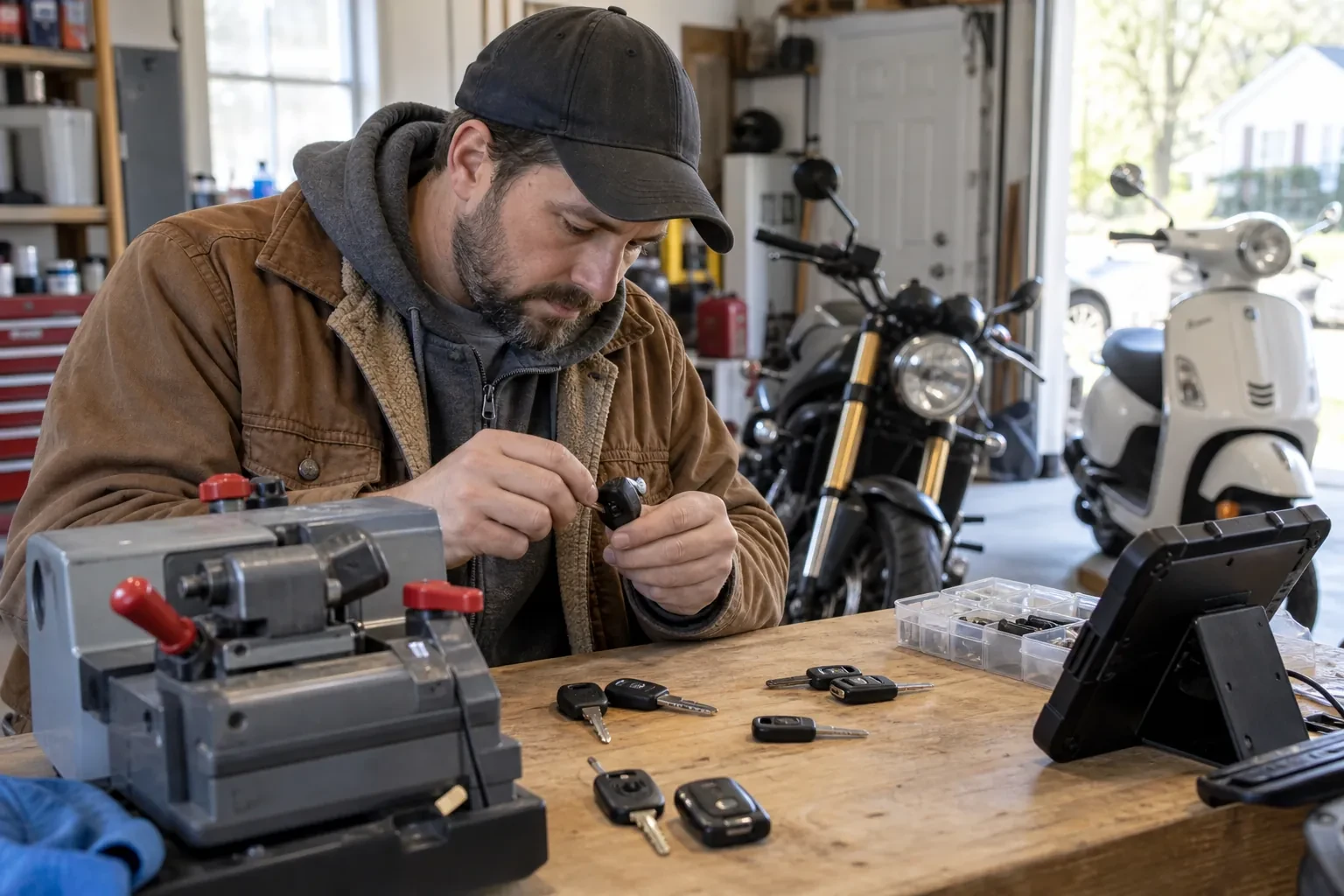
Safe Opening & Combination Change
What affects the quote
Whether drilling turns out to be necessary
Manipulation, decoding and manufacturer reset paths are tried first; drilling, a repair plug and any replacement lock only enter the picture once those routes are exhausted.
Security rating of the existing lock
A higher-rated lock, such as a UL Group 1 mechanical lock, generally takes longer to manipulate or decode than a basic Group 2 lock, and that time is reflected in the visit.
Lock type: mechanical dial, electronic keypad or key
Each lock family calls for different tools and a different amount of time on site, and a safe with more than one lock, such as a keypad backed by a mechanical dial, involves assessing both.
What to have ready
- Does the handle turn normally, or does it feel stuck?
- What brand and model is the safe, if you know it?
- Is the safe bolted down, built in, or freestanding?
Safe Opening & Combination Change: questions
QuestionsMy electronic safe lock has a dead battery. Do you still need to drill it?
Usually not. It depends on the model. Some electronic locks offer an external contact for a fresh battery, or a mechanical override key behind a cover plate; restoring power this way wakes a dead keypad but does not bypass a lost code on its own. Others have a reset port on the lock body, which sits inside the safe and still needs the door opened by other means first. The locksmith works through that model's own documented procedure before considering anything more invasive.
Can a mechanical dial safe be opened without drilling it?
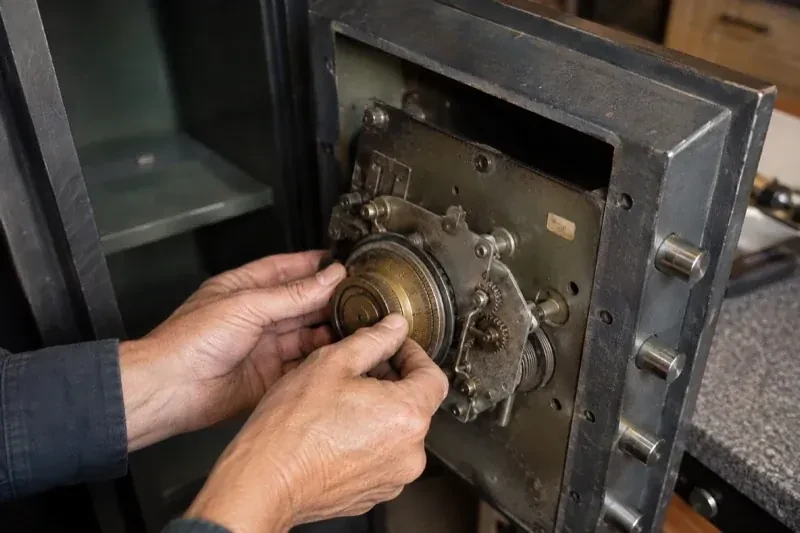
Most of the time, yes. Manipulation reads the wheel pack through the dial by feel, and decoding tools built for a specific lock family read the gate positions directly, both without any lasting effect on the lock. Whether either works depends on the lock's own security rating and condition, since a high-security Group 1 lock resists these methods far longer than an older Group 2 one, but drilling is only used once both routes are ruled out.
Do you need to see proof that I own the safe before opening it?
Yes, and it is meant as a protection rather than a hurdle. For a business, identifying yourself as the owner, manager or an authorized employee is usually enough. For an estate, a secondhand purchase or a change of ownership, a bill of sale, transfer document or executor's paperwork fills the same role. This step protects whoever actually has a claim on what is inside the safe, which includes you.