Lockouts · Oshawa
Business Lockout Service
A cook stepped into the alley with the recycling and the rear door swung shut behind him.
In plain words
Authority for a business is a question about the company, not just the individual at the door. An owner shows identification and something connecting them to the premises, such as the lease or the business registration. A manager or employee adds a call to the owner or head office, or a property manager who can vouch for them. A commercial landlord brings the lease terms or written instruction that supports the request. Good locksmiths treat this as the opening step of every business lockout and help find the right document rather than guessing, because the same care protects the business the next time a stranger claims to work there.
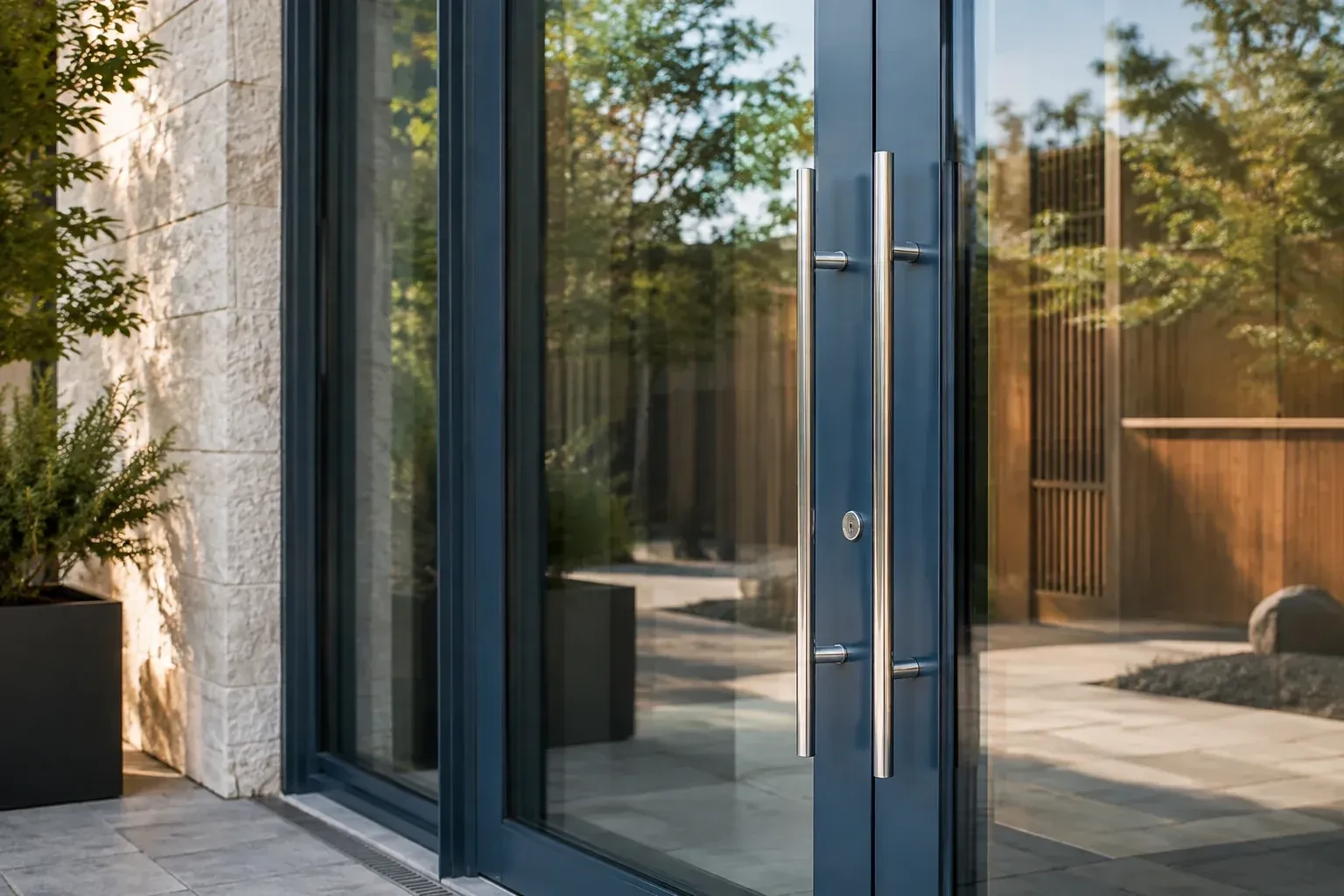
How the visit goesThe heavy glass door has been scraping the threshold for weeks. This morning the key turns, you can hear the bolt trying to move, but it is jammed hard in the strike and the door stays shut no matter how the handle is pulled.
Business Lockout Service
How the visit goes
Who is asking, and for which company
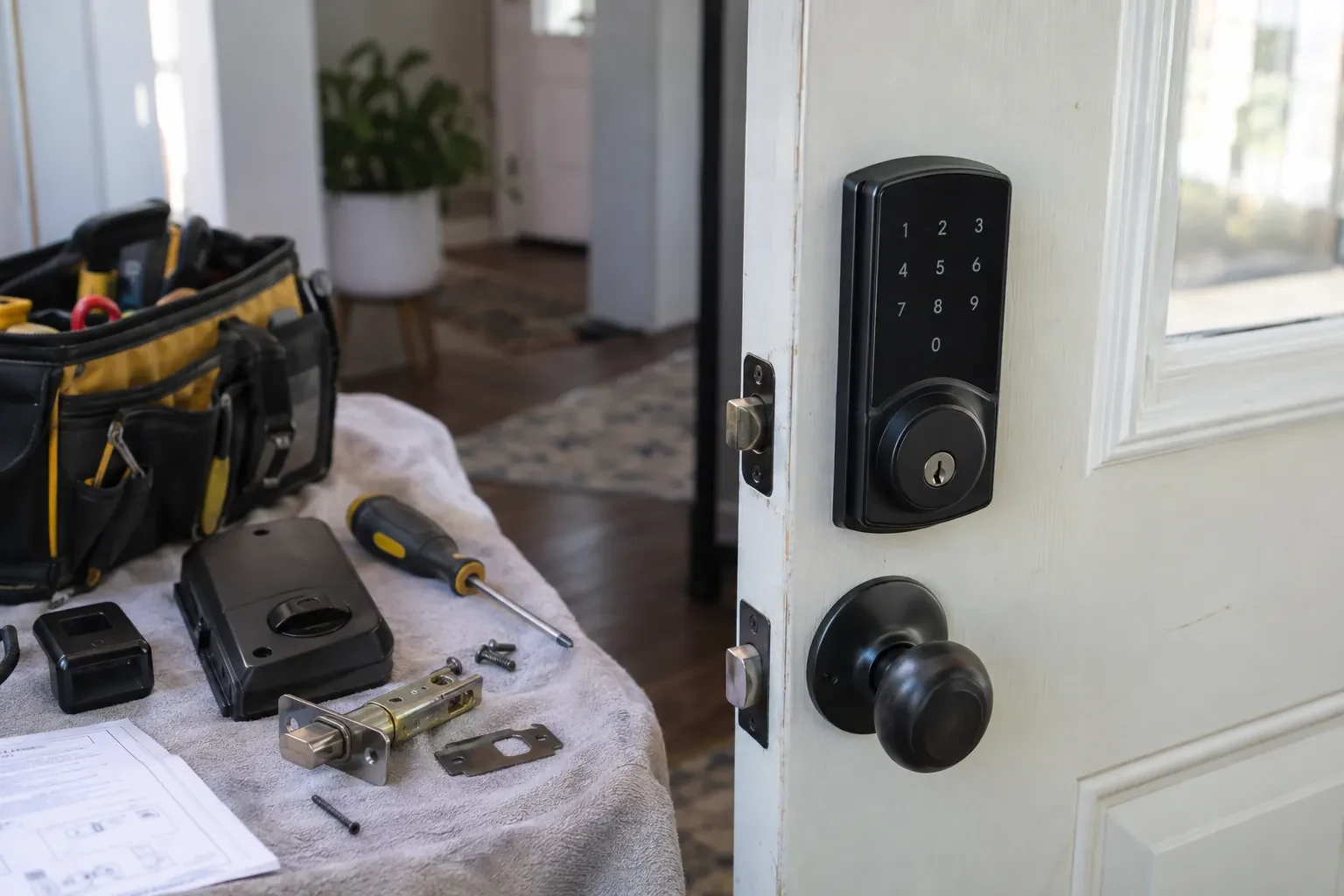
The first check is about authority to act for the business. An owner or director shows photo identification and a document that ties them to the premises, such as the lease, the business registration or a supplier invoice addressed to the unit. A manager or staff member is confirmed by a call to the owner, the head office or the property manager, using a number the locksmith can look up rather than one written on a scrap of paper. A landlord or their agent shows the lease clause or written instruction behind the request. When the paperwork is behind the locked door, the check is completed inside before the locksmith leaves.
Non-destructive first, on every commercial door
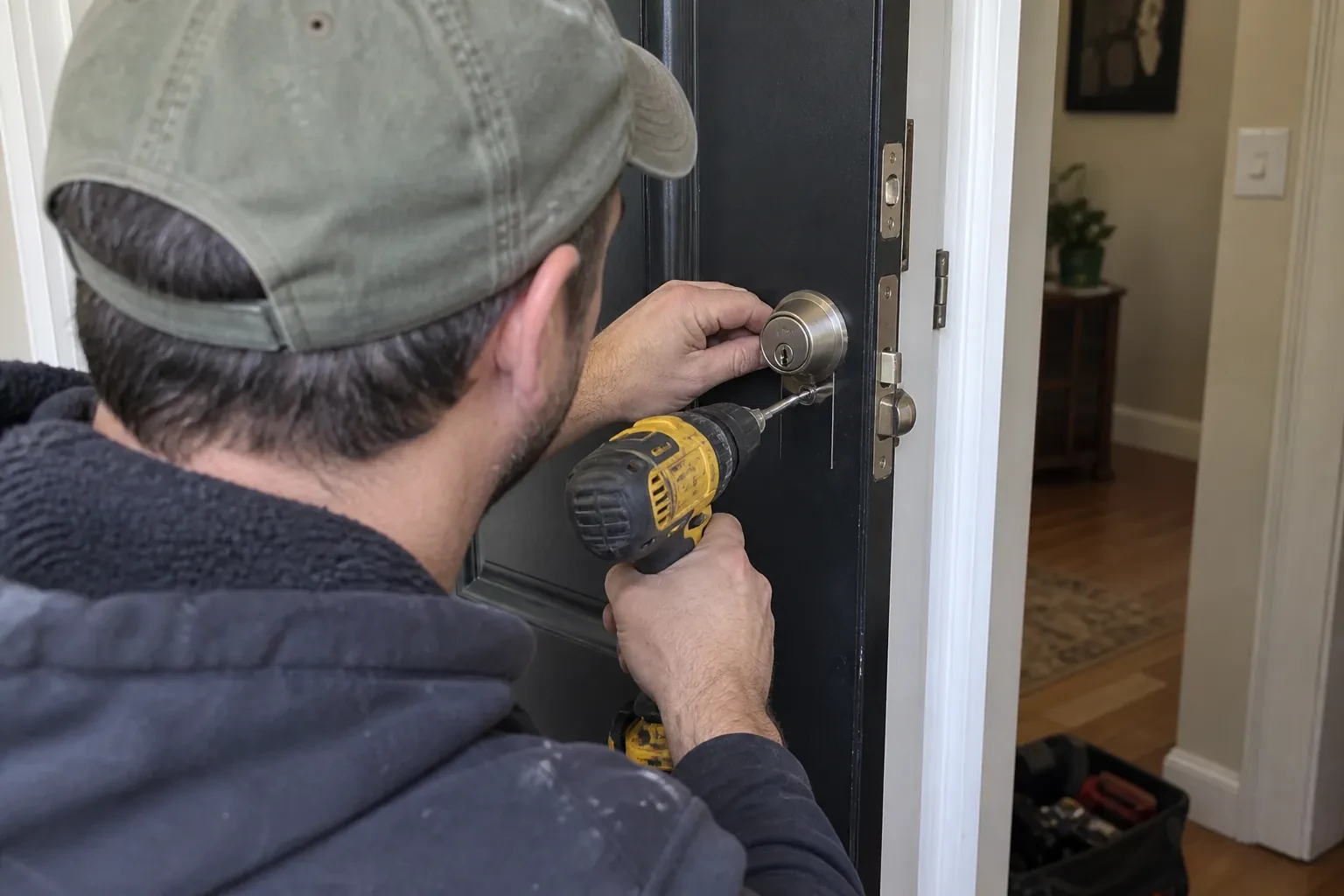
Commercial cylinders are built to a higher standard than most residential ones, but the order of work is the same. The locksmith begins with methods that operate the mechanism as a key would: picking or decoding the mortise or rim cylinder, or pulling a removable core with a control key when the building uses one. Next come bypasses that suit the specific hardware without cutting anything. Drilling sits at the end of the list and is discussed before it begins, aimed only at the cylinder, with a replacement fitted in the same visit. Working in this order keeps the storefront, the trim and the lock body as they were, and the business back on its own keys.
Exit doors that still let everyone out
Whatever was replaced, a door on the way out of the building still opens from inside with a single motion and no key while people are in it. That standard is why a storefront gets a thumb-turn or paddle inside, a rear door keeps its push bar, and a double-cylinder deadbolt does not go on an exit route. The locksmith checks each door for this before leaving and points out any older hardware, such as a chain or a keyed-inside bolt on a back door, that the business may want to bring into line.
Business Lockout Service
In the van
Storefront deadlatch and hookbolt bypass tools
Exit device trim cylinders and dogging keys
Lock de-icer and dry PTFE lubricant
Broken key extractors
Commercial pick and tension tools
Business Lockout Service
What affects the quote
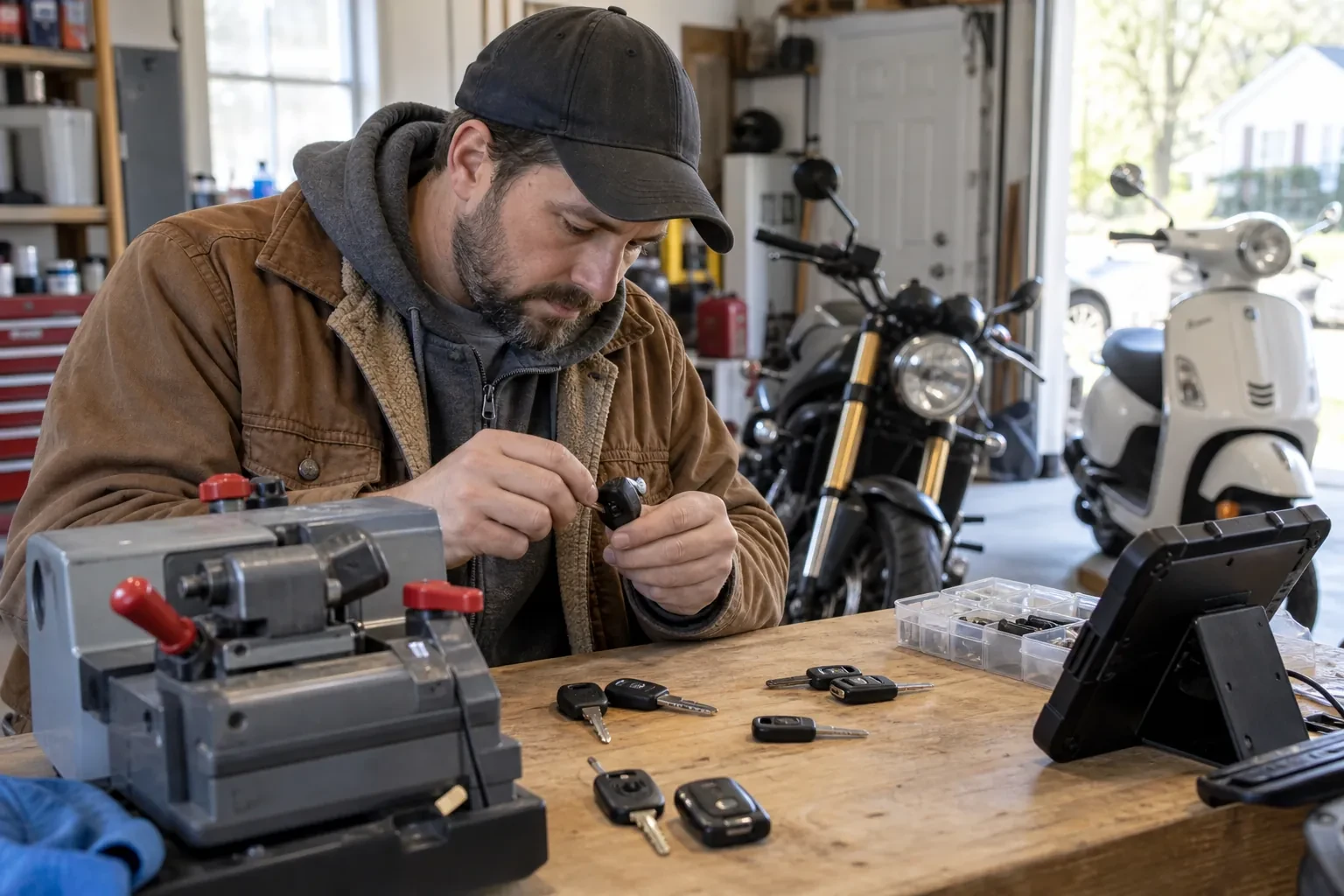
Keys cut and recorded
Each new key is cut and counted individually. Two for the owners and four for the opening staff is a different line from one spare, and restricted blanks are priced above ordinary ones.
Upgrades you choose while the locksmith is there
Some businesses use the visit to move to a heavier storefront deadlock, a restricted keyway, interchangeable cores, a lockbox for keyholders or a reinforced strike. None of it is needed to get you open; each is priced as its own option.
Rekeying or swapping cores afterwards
Making a lost or unreturned key useless is separate work, priced per cylinder or per core, and the count of doors sharing that key decides how much of it there is.
What to have ready
- Which door are you locked out of, and what does the lock on it look like?
- Has the door been dragging, scraping the threshold or failing to latch at closing recently?
- Can you send a photo of the lock face and the edge of the door?
Business Lockout Service: questions
QuestionsHow many keys should a business have, and who should hold them?
Fewer than most businesses think, and every one of them named. Two people who can open, one of whom can be reached on a day off, cover the door. Cleaners and contractors get a key only if they need one and hand it back when the arrangement ends. Write down who has what, collect keys when people leave, and rekey when one does not come back. Interior keys for the cash office or stockroom follow the same rule on a shorter list.
I am an employee, not the owner. Can you still open the door for me?
Yes, with the owner or a manager in the loop. Tell the locksmith who can confirm you work there and how to reach them. A call to the business owner, the regional manager or the property manager, ideally on a number that can be looked up rather than one you supply, settles it. Staff on an opening shift arrange this on the phone before the locksmith arrives so nothing waits at the door.
What should I have ready when I call?
The address and unit number, which door you are outside, what the lock looks like, and where the keys are: with someone, lost, broken or simply refusing. Say whether there is an alarm or a card reader on the door, who can disarm or confirm your authority, and whether the building has a property manager. If you can send a photo of the lock and the door edge, the right cylinders and cores come on the first trip.