Change or rekey · Oshawa
Deadbolt Installation
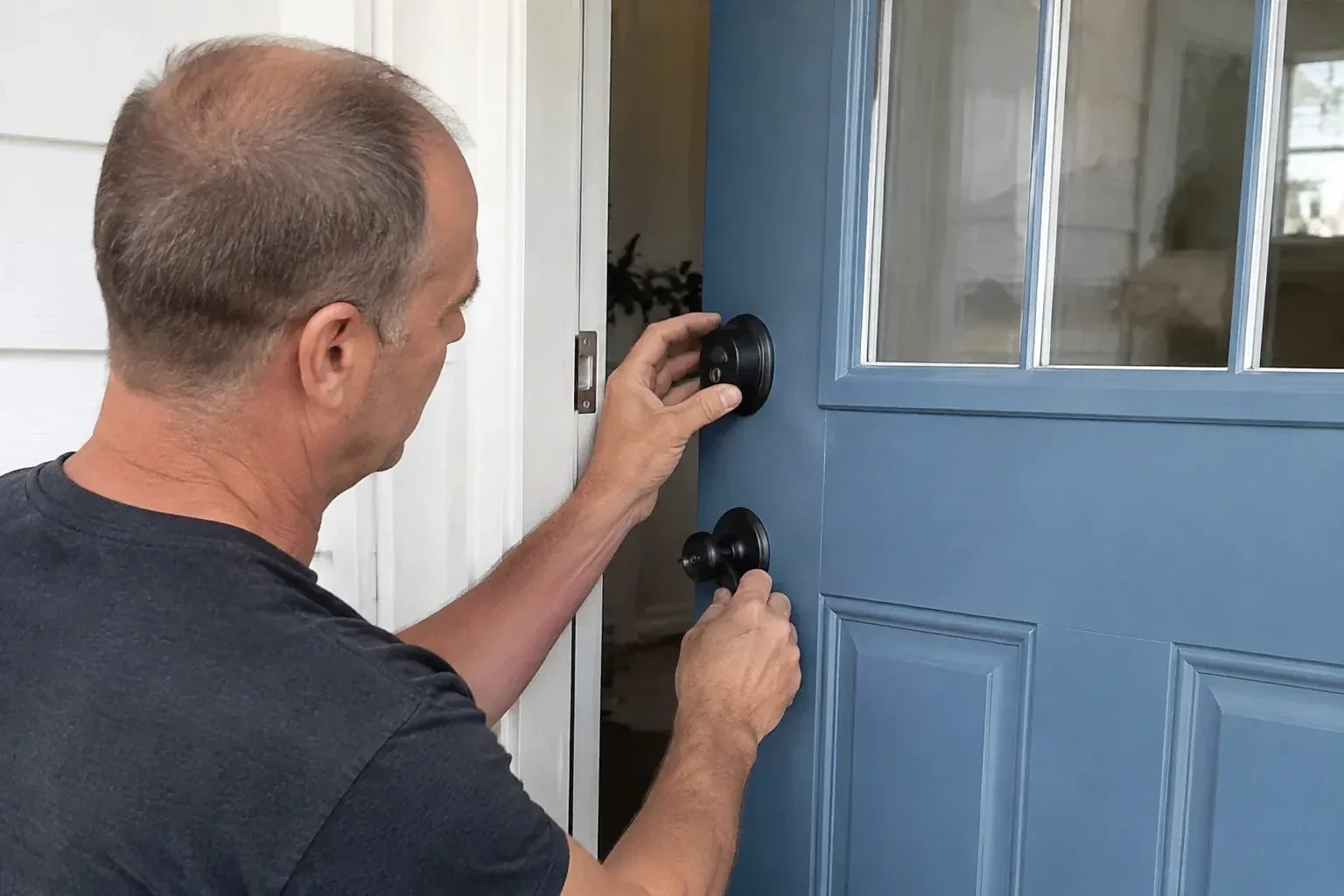
The front door has a handsome lever and a keyed knob, and that is all.
In plain words
Replacing an existing deadbolt is usually a matter of matching rather than cutting. The locksmith measures the cross bore, the edge bore and the backset, checks the door thickness, and picks a bolt that drops into the holes you already have. Where the old lock was a builder-grade unit, the replacement can step up to a heavier grade with a hardened bolt, a free-turning collar around the cylinder and a low-profile face that gives a wrench nothing to grip. The old strike is checked against the new bolt's instructions, and where it calls for it, a reinforced strike and long screws go in while the door is already apart.
How the visit goesThe front door has a handsome lever and a keyed knob, and that is all. Nothing above it. When the door is shut, the only thing keeping it closed is a spring latch the width of a thumbnail, and you have started to notice.
Deadbolt Installation
How the visit goes
Measuring the bore and the backset
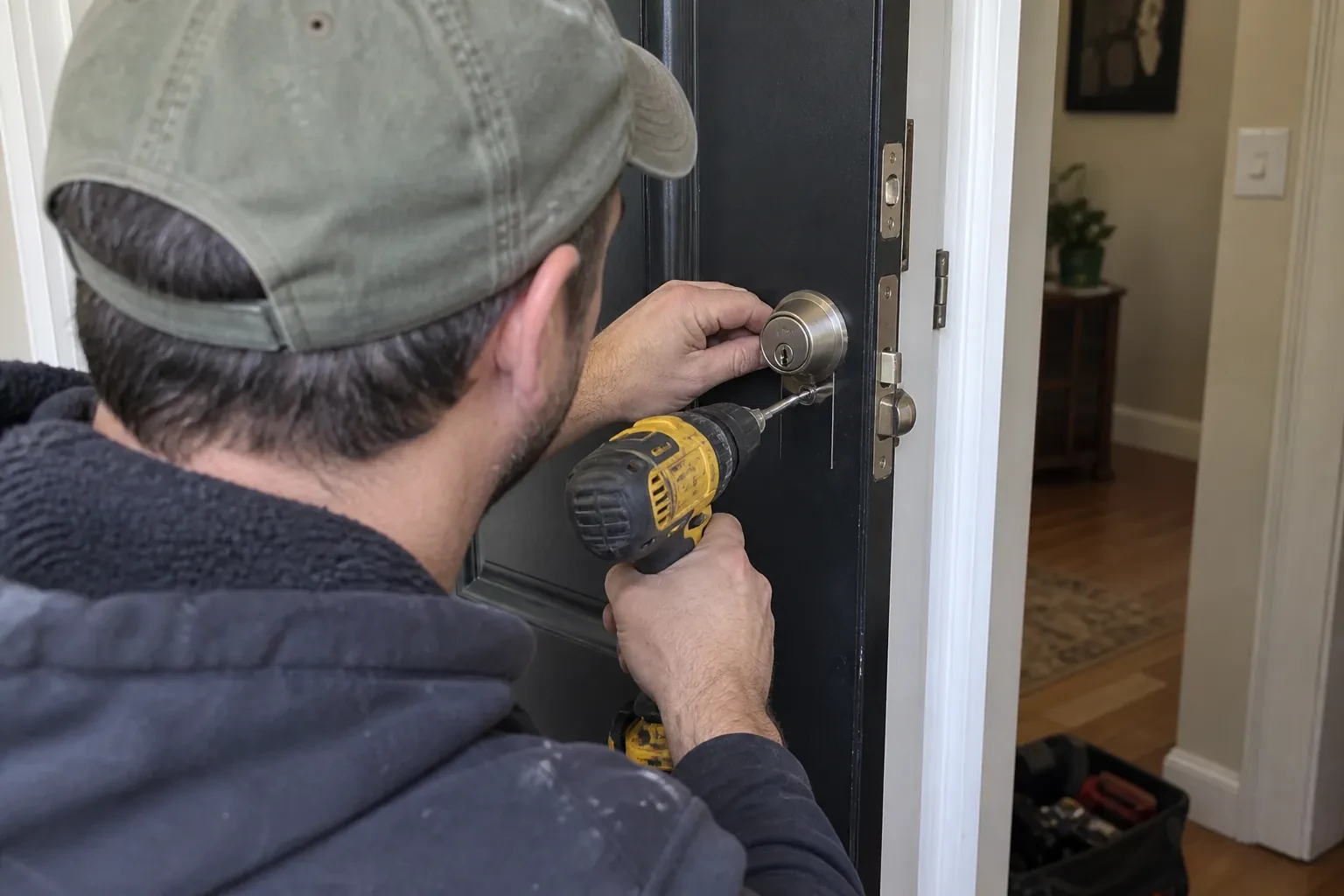
Deadbolts are built around two dimensions. The cross bore is the large hole through the face of the door, 54 mm on most residential hardware, though some older or imported locks used 38 mm. The backset is the distance from the door edge to the centre of that hole, 60 mm or 70 mm on nearly every door in this part of the world. If a deadbolt is being replaced, both are measured so the new lock lands in the existing holes without a shim or a gap. On a new installation they are chosen to match the knob below, so the two locks line up and any future keypad or smart deadbolt drops straight in.
Assembling the cylinder and thumb-turn
The outside housing goes on first, with its tailpiece threaded through the slot in the bolt cam and its mounting posts through the matching holes. Any plastic alignment bracket that ships with the lock is used on a 54 mm bore and removed on a smaller one. The inside thumb-turn plate is set against the door and the two long tapered screws are driven through it into the outside housing, snug rather than crushed, so the housings pull tight to the door without distorting the mechanism. The locksmith turns the thumb-turn before the door is closed to confirm the bolt throws its full length and returns without a catch.
A bolt with a full, deadlocked throw
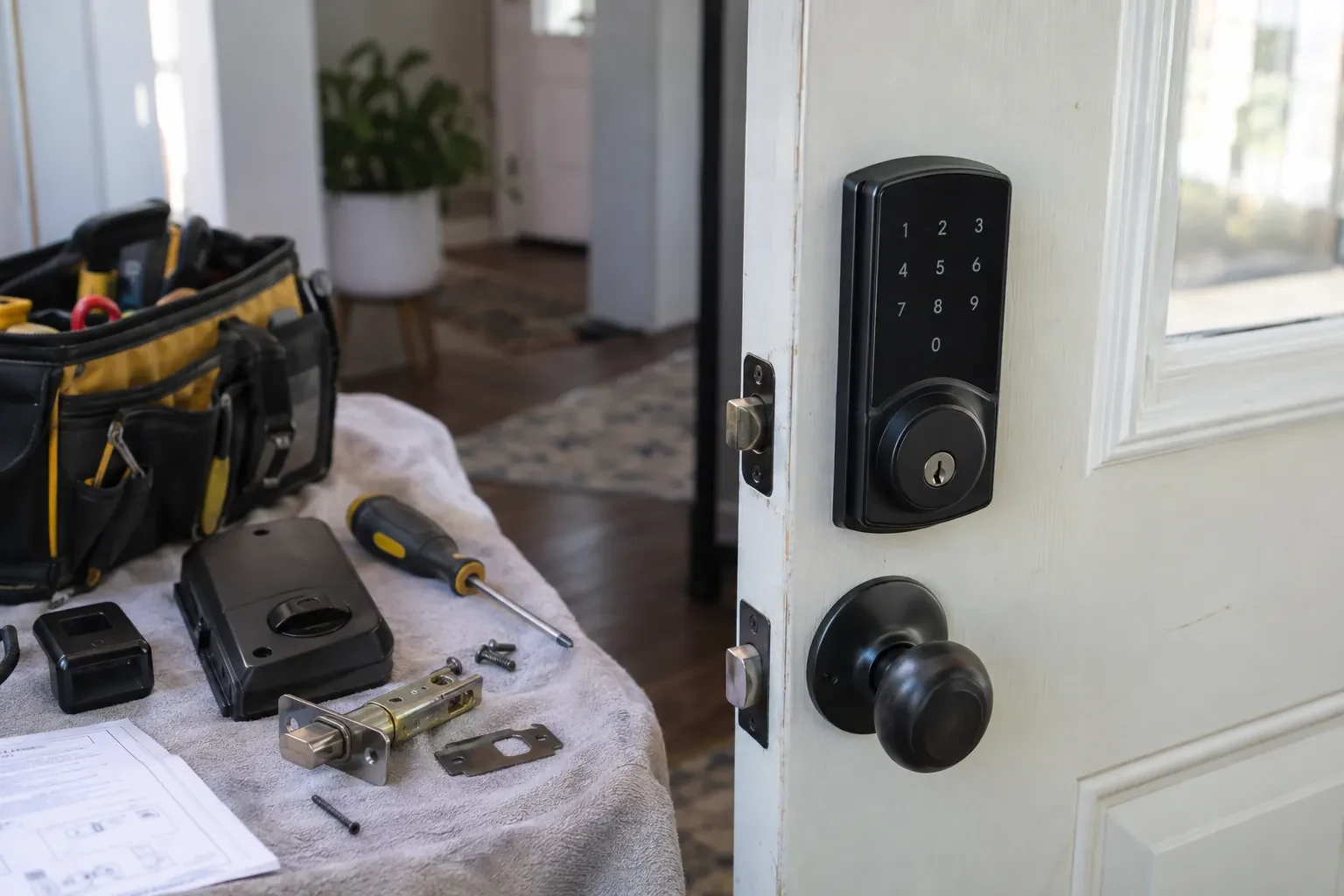
What you feel at the end is a bolt that travels its whole length into the frame with one turn and stops with a definite click, which is the deadlocking position that stops the bolt being pushed back from the edge. From outside, the key turns a cylinder that sits in a collar which spins if gripped. From inside, the thumb-turn moves the same bolt without a key. The locksmith shows you both, throws the bolt with the door closed so you hear it seat, and hands over the packaging with the model, finish and backset written on it for the day a matching lock is wanted on another door.
Deadbolt Installation
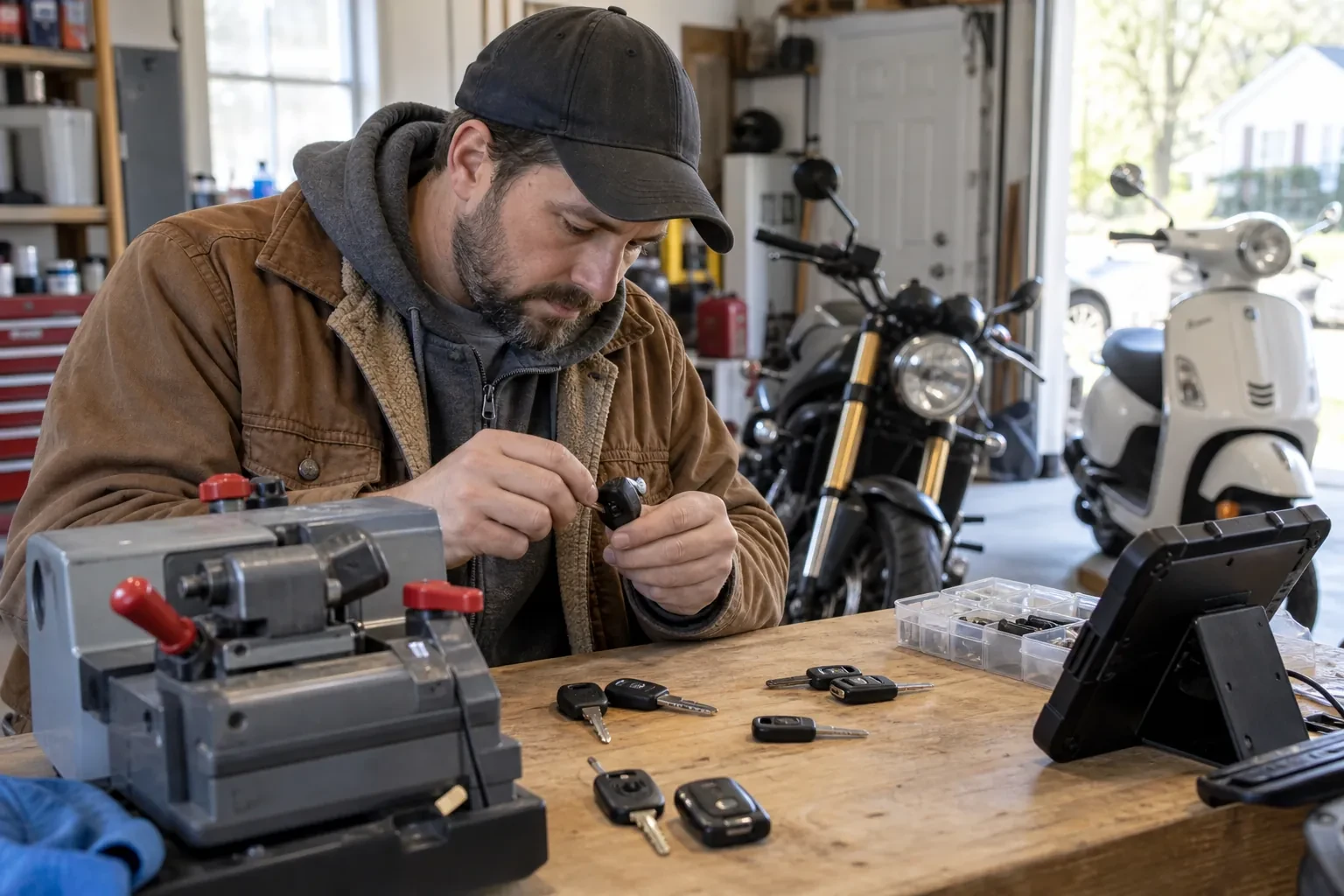
In the van
Bolt faceplate or drive-in collar
Manufacturer's bore template
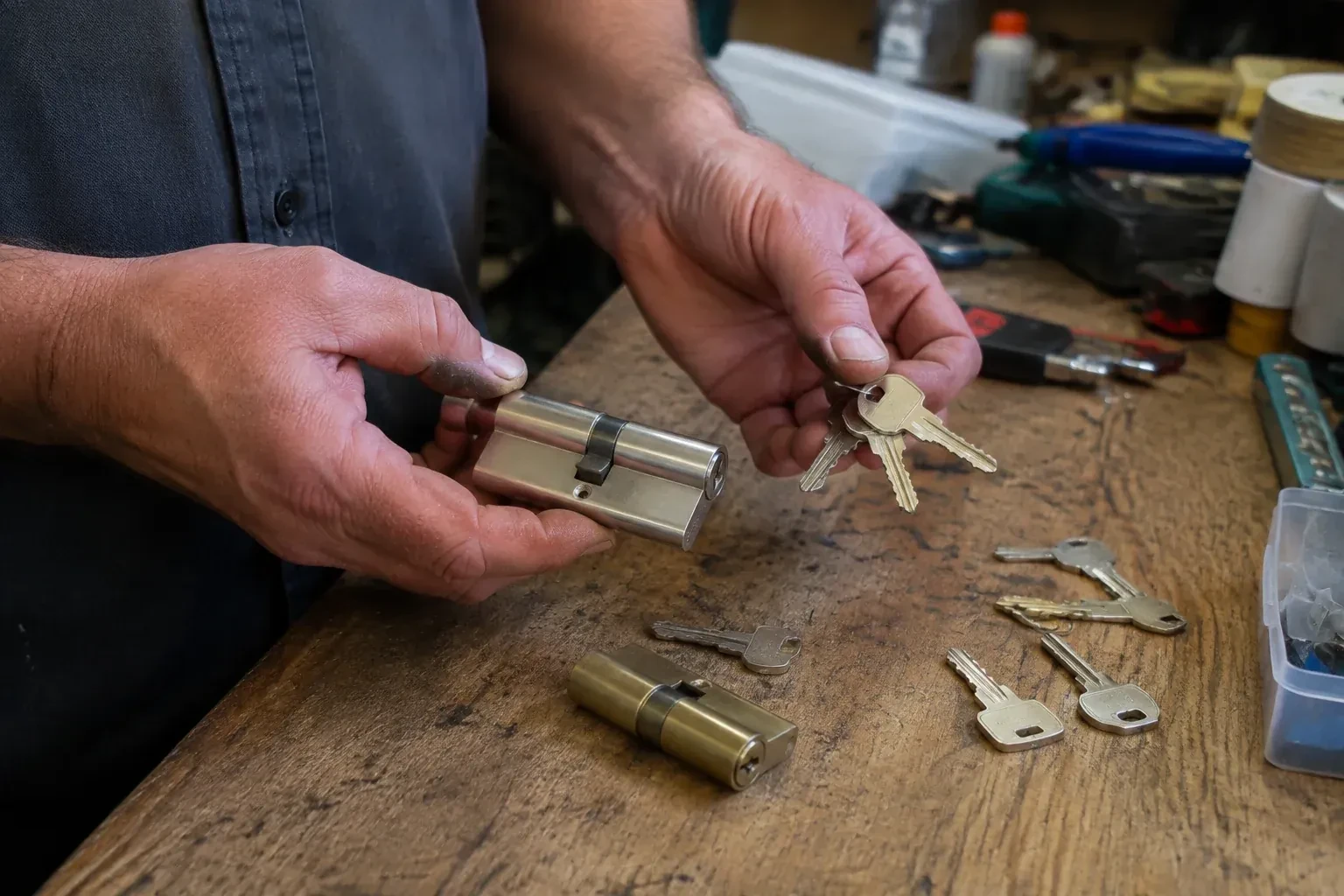
Rekeying pins and key blanks
25 mm auger bit
Strike box
Deadbolt Installation
What affects the quote
Strike and frame reinforcement
A reinforced strike with long screws is standard; a full-length jamb reinforcer, a strike box or repairs to a split jamb after a forced entry are extra items quoted on their own.
Hardware supplied by you or by the locksmith
If you have already bought the lock, the quote covers labour and any adaptation of the door to that kit. Hardware supplied from the van is listed separately with its grade and finish.
Non-standard bore or backset
Older doors with a small cross bore, an unusual backset or a mortise lock case need adapting or filling before a modern deadbolt fits, and that preparation is quoted before work begins.
What to have ready
- Would you like a keyed deadbolt, a keypad, or a smart lock you can control from a phone?
- Do you want the new deadbolt to work on the same key as your other doors?
- Is there glass in the door or a sidelight beside it within arm's reach of the lock?
Deadbolt Installation: questions
QuestionsHow high above the knob does the deadbolt go?
The usual position is 140 to 150 mm above the centre of the knob, which lines the two locks up and keeps both within one reach. Manufacturers' templates assume that spacing, which helps a later keypad or handleset line up, though many handlesets still need their own lower hole drilled to that model's template. The height is nudged if it would land on glass, a decorative panel or a hollow spot inside an insulated door, and to make sure the frame behind it is solid.
Do I need a deadbolt on the door from the garage into the house?
It is worth having. The door between an attached garage and the living space is in practice often the softest way in, since a garage door left open leaves a passage knob as the only barrier. A thumb-turn deadbolt there costs a few minutes a day and closes that gap.
I rent. Can I have a deadbolt installed on my unit door?
You can, with a conversation first. Tenancy rules in this province expect a tenant to have the landlord's consent before changing locks and expect the landlord to hold a key, so ask in writing and share the plan. Many landlords welcome a proper bolt. The locksmith can key the new cylinder to the building's existing key where the keyway allows, and leave a note of the model and keys cut for the building manager.
Related services
- Lock Replacement & UpgradeEvery morning the front door key needs the same little dance: push in, lift, wiggle, turn.
- Vintage Mortise Lock ServiceThe interior bedroom doors on the second floor have the original mortise latches, and none of them close any more.
- Smart Lock InstallationArthritis has made the small house key hard to grip and turn, especially with gloves on in January.