Change or rekey · Cedar Dale
Vintage Mortise Lock Service in Cedar Dale
The interior bedroom doors on the second floor have the original mortise latches, and none of them close any more.
In plain words
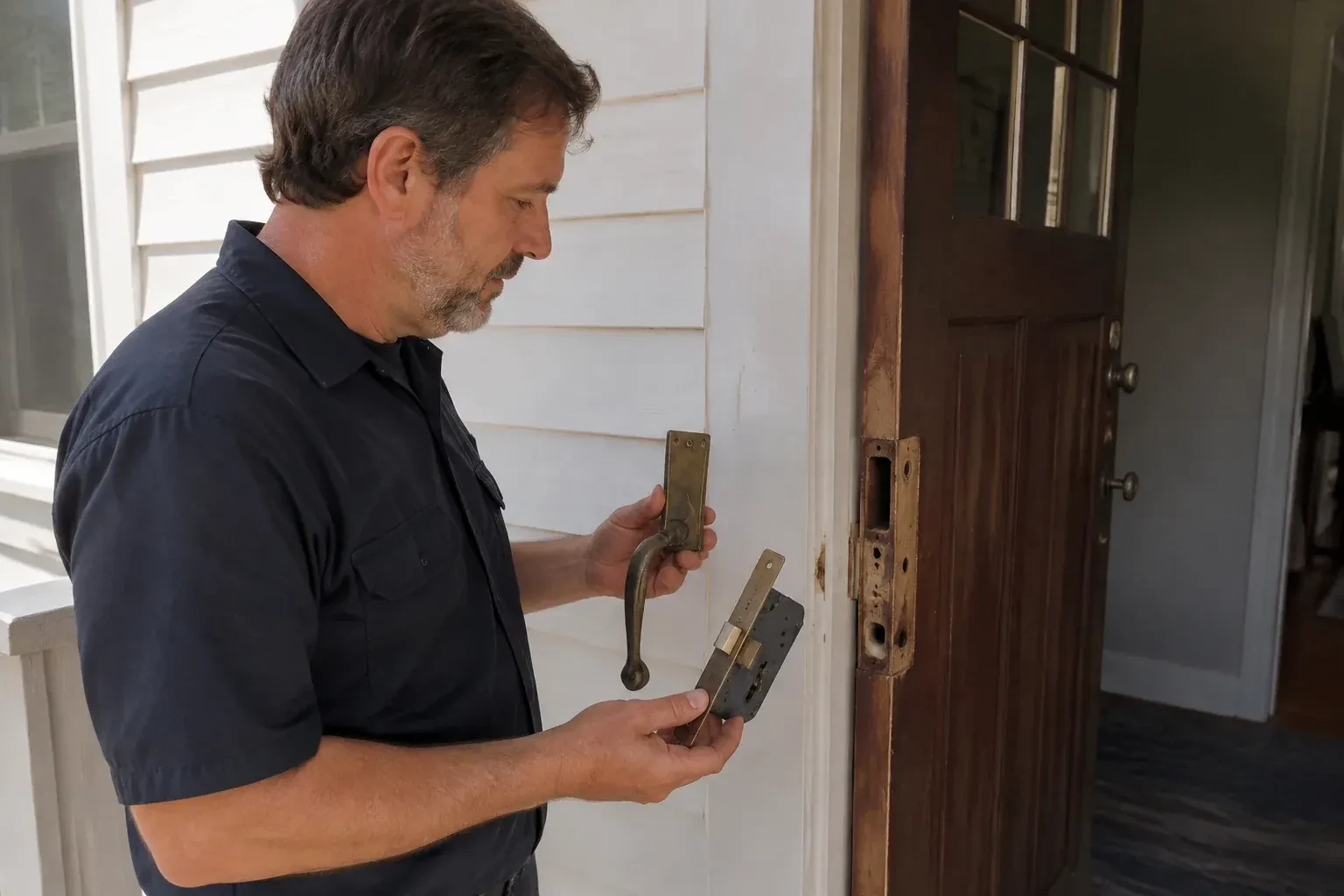
Where the door has moved, the lock gets blamed. Solid wood doors in older houses swell in humid weather, shrink in winter and settle on their hinges, and a mortise lock that was set decades ago ends up with its latch and bolt aiming a little below the strike. Part of every vintage lock service is reading how the door hangs, tightening or packing the hinges, and moving or filing the strike so the latch catches and the bolt throws without lifting the handle. Often that alignment work, plus a clean and new springs, is the entire repair, and the customer gets back a door that closes with one hand.
How the visit goesThe brass knob on the front door of your century home turns, but nothing happens on the other side. The latch stays tucked in, the door swings free, and the only thing holding it shut is the deadbolt and a bit key that has worn down to a nub.
Vintage Mortise Lock Service
How the visit goes
Repair, replacement cylinder or replacement case
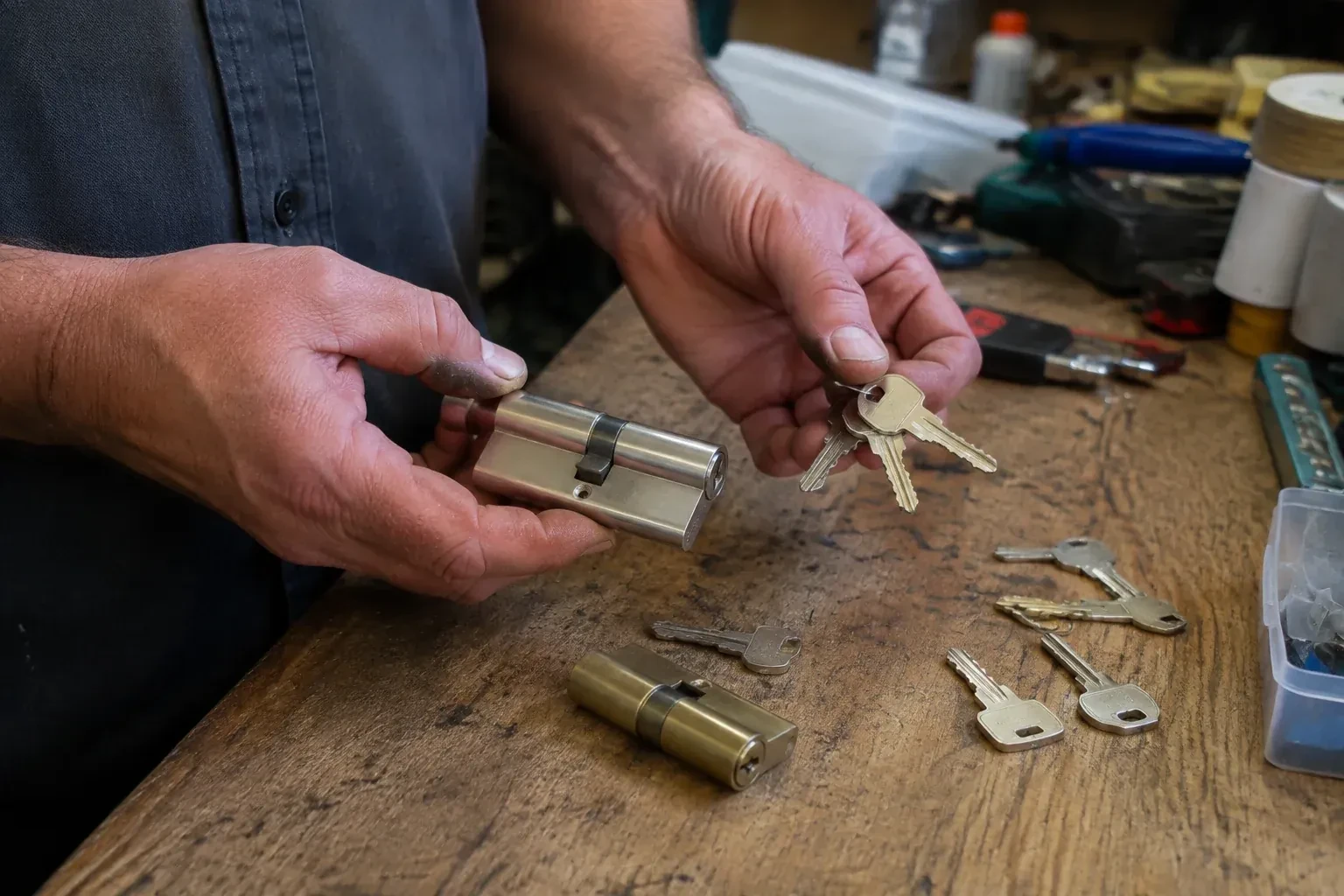
The last step of the check is deciding what the lock needs, in plain terms, before any of it is done. Most cases need cleaning, springs and adjustment, and that is the recommendation. A cylinder lock with a worn plug may be better served by a new mortise cylinder of the same thread and cam, keeping the case. A cracked case, a bolt worn thin or a hub broken through calls for a replacement case in the same pocket, and the locksmith measures for it on the spot. You hear which of these applies and why, and if the answer is a replacement case, the choice between a reproduction and a modern case is yours to make.
When a case is fitted new
If the old case could not be saved, the replacement is fitted to the door rather than the door to the replacement. A reproduction or modern mortise case matching the measured height, depth, backset, faceplate and hub is chosen with the goal of it dropping into the existing pocket; where a small difference remains, the pocket is trimmed with a chisel by the least amount that works, never bored out. The original knobs, escutcheons and strike are refitted wherever their spacing allows, and a new cylinder is keyed to match the rest of the house if wanted. The result reads as the original lock from either side of the door, with the reliability of a fresh mechanism.
Watching the door through the seasons
The lock is aligned to the door as it hangs today, and a solid wood door in an older home will move again. Through a humid summer it swells, through the heating season it shrinks, and each year the hinges settle a fraction. Twice a year, close the door and try the latch and bolt; if either has started to scrape or needs the door lifted, the strike wants a small adjustment or the hinge screws want snugging, which is a five-minute job. Doing that early keeps the rebuilt case from being strained, and it is the single habit that makes a vintage lock last another few decades without fuss.
Vintage Mortise Lock Service
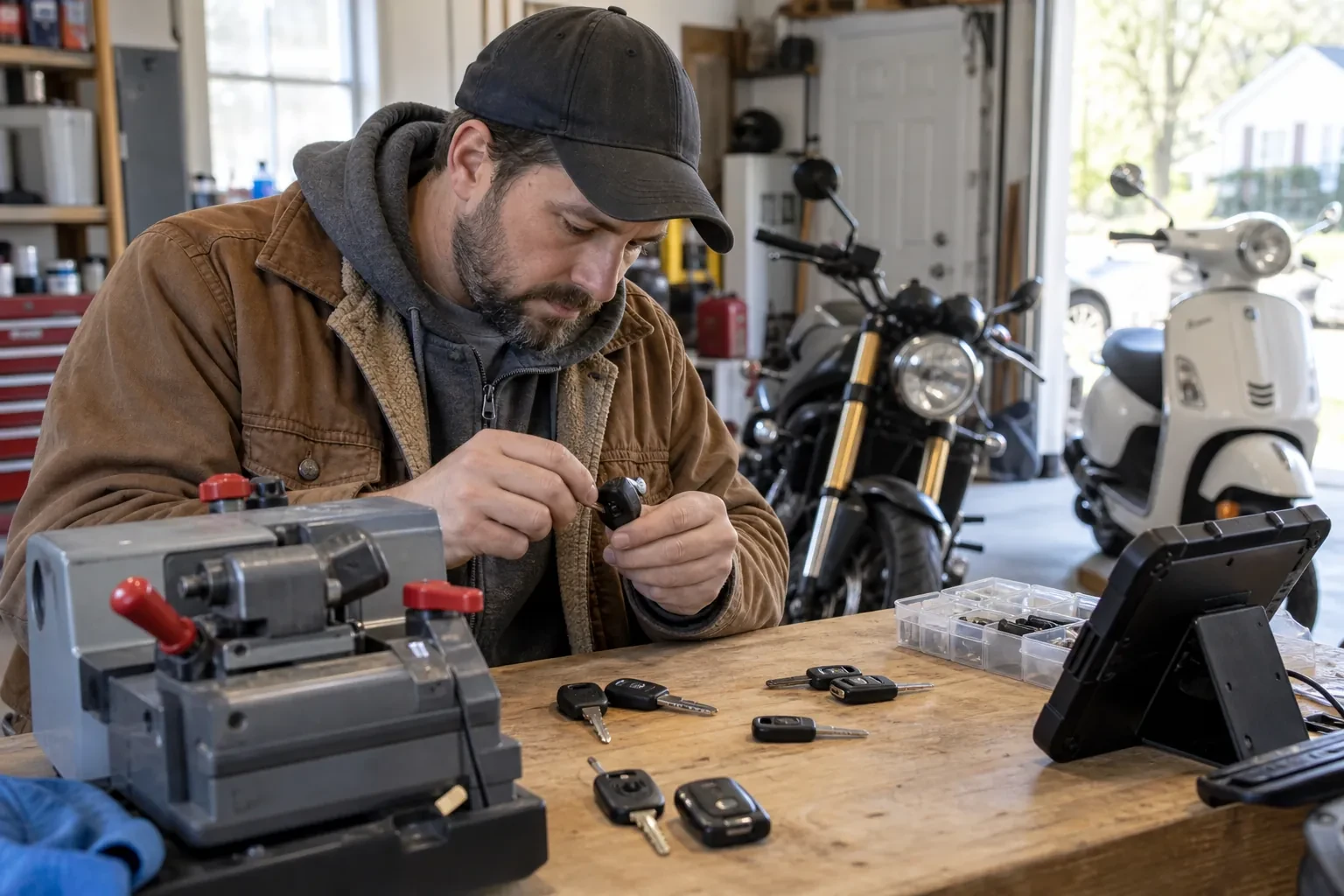
In the van
Cylinder set screw
Light lock oil
Latch and hub springs
Reproduction mortise case
Spindle and knob set screws
Vintage Mortise Lock Service
What affects the quote
Travel and access
Distance to the property and how easy it is to work at the door, on a busy entry or a third-floor walk-up, are part of any call-out and are stated when the visit is booked.
Paint and seized parts
Hardware buried under decades of paint takes time to free and clean without damage. A faceplate, strike and thumb-turn that have to be stripped back add to the visit and are noted in the quote.
Keying doors alike
Bringing several interior locks onto one bit key, or several cylinders onto one flat key, is extra bench work per lock and is simplest to arrange while all the cases are out on the same visit.
What to have ready
- Roughly when was the house built, and is the door original to it?
- Can you send a photo of the plate in the door edge and one of the keyhole?
- Does the deadbolt throw fully with the key or the thumb-turn?
Vintage Mortise Lock Service: questions
QuestionsWhich parts usually need replacing?
Springs, first and foremost: the latch spring, the hub spring that returns the knob, and the small springs on the deadbolt levers. After that, the spindle and knob set screws, a hub whose square has worn round, a worn deadbolt lever or follower, and on later locks the cylinder set screw or the cylinder itself. Bolts, cases and trim are almost always kept, cleaned and refitted rather than replaced.
What does the service visit involve, step by step?
The locksmith checks your authority to request the work, examines the door and lock, and tells you what it needs. The knobs, plates and cylinder come off, the case slides out of the door edge and is opened on a bench, cleaned, re-sprung and repaired. Keys are made or the cylinder rekeyed, the door pocket is tidied, everything goes back on, and the strike is adjusted. You test the finished lock from both sides.
The lock works with the door open but not when it is closed. Is the lock broken?
Almost certainly not. That pattern means the door has moved in its frame so the latch and bolt no longer meet the strike squarely. Solid wood doors in older houses swell in humid weather and settle on their hinges over the years. The service adjusts or shims the strike and tightens or packs the hinges so the bolt throws without lifting the door, and the lock itself is usually cleaned and lubricated at the same time.
Related services
- Deadbolt InstallationThe front door has a handsome lever and a keyed knob, and that is all.
- Lock Replacement & UpgradeEvery morning the front door key needs the same little dance: push in, lift, wiggle, turn.
- Smart Lock InstallationArthritis has made the small house key hard to grip and turn, especially with gloves on in January.