Change or rekey · Oshawa
Vintage Mortise Lock Service
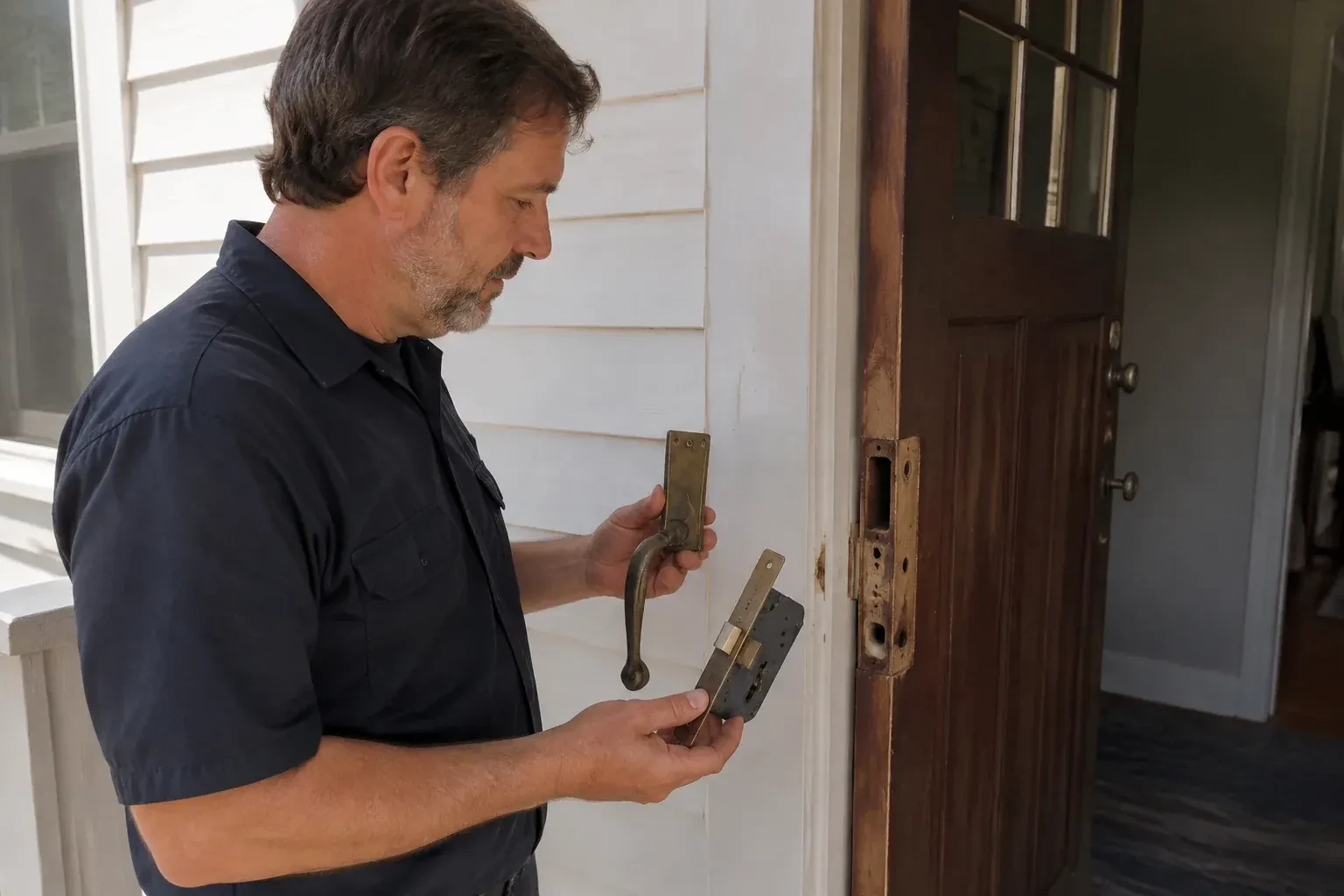
The interior bedroom doors on the second floor have the original mortise latches, and none of them close any more.
In plain words
Most old mortise locks fail for boring reasons. A coil spring that has been compressed a hundred thousand times since the house was built finally breaks, or the grease inside the case dries into something like wax and the levers stick in it. Neither justifies cutting a new hole in a solid oak door. The service opens the case, cleans out the old lubricant, replaces the springs with the right size, matches any worn follower or lever and lubricates the mechanism lightly. The same case goes back into the same pocket, and the knob returns to level with the crisp snap it had decades ago.
How the visit goesThe knob flops loose on its spindle and never springs back to level. When you turn it the latch pulls in, but you have to push the knob back yourself, and lately the latch has started staying inside the door instead of catching.
Vintage Mortise Lock Service
How the visit goes
How the knob and key actually behave
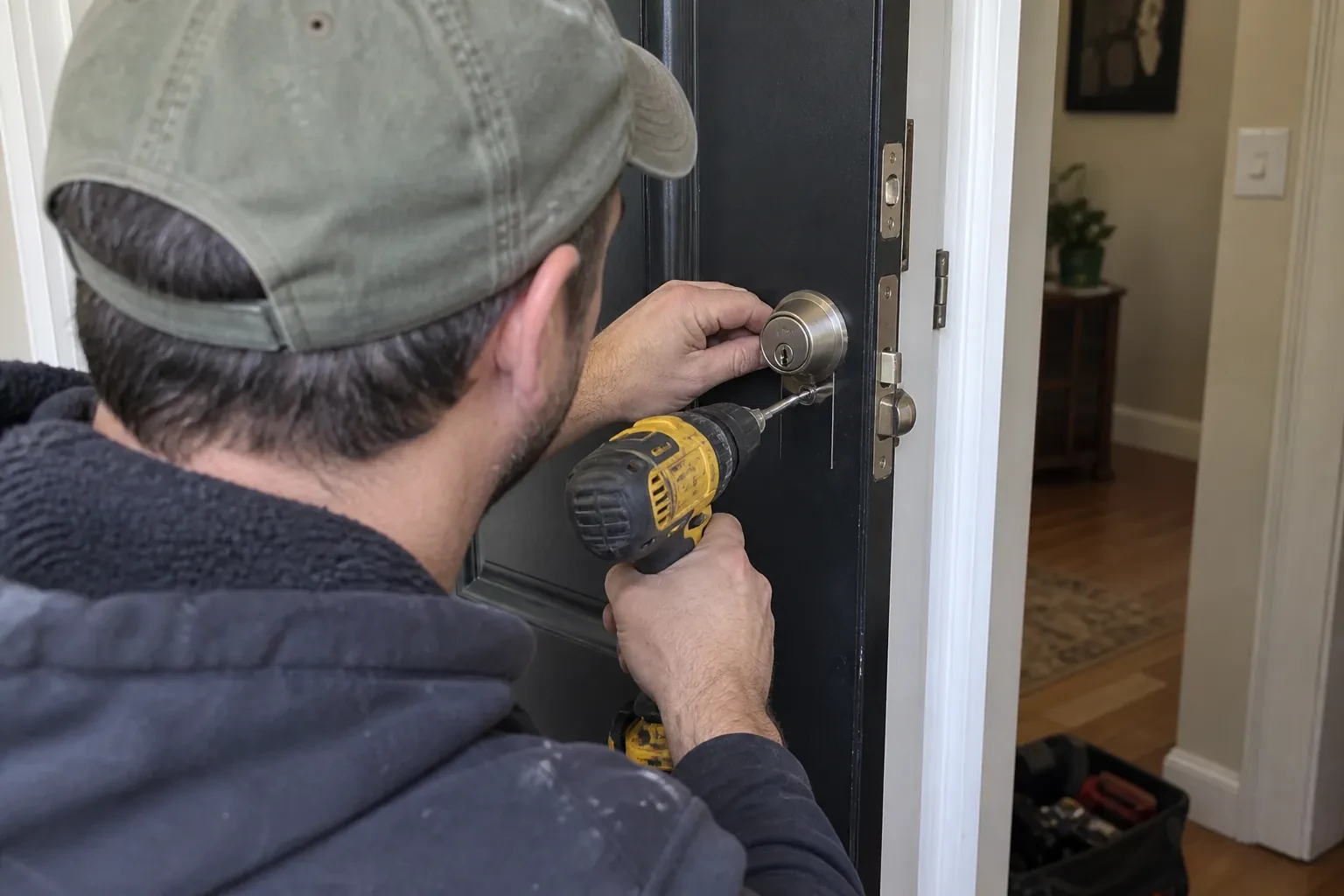
A short conversation with the hardware comes next. The knob is turned and released: does it return smartly, sag back, or not return at all? Is there free play before the latch moves? The key is tried in the deadbolt with the door open: does the bolt throw fully, catch part way, or ignore the key while the key turns? The thumb-turn gets the same test. Each answer points somewhere different inside the case, a latch spring, a hub spring, a worn hub square, a deadbolt lever, a cylinder cam, and the locksmith is building a short list of likely parts before the cover ever comes off.
Reassembly and setting the trim
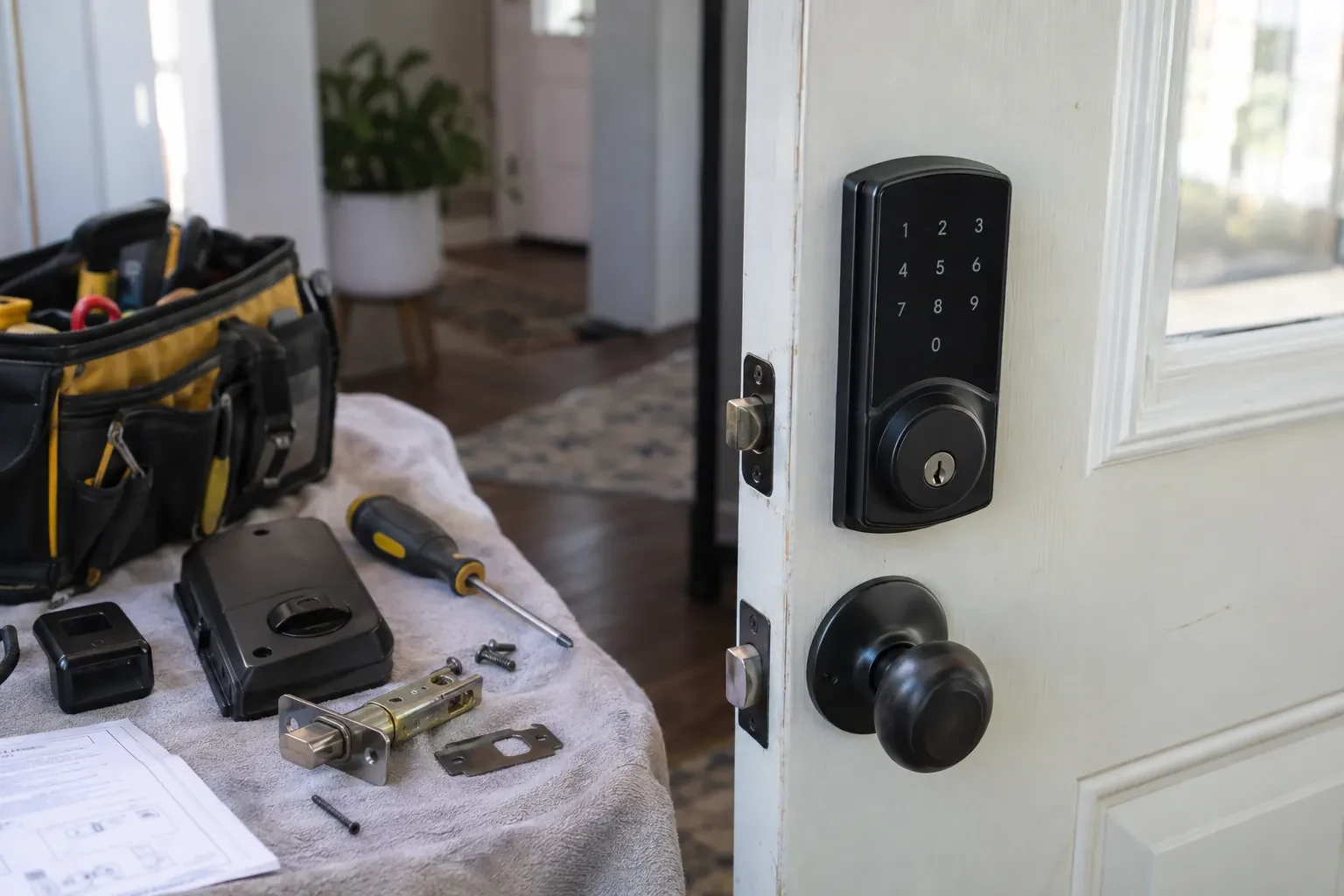
The case slides home and is screwed off, then the cylinder or keyhole escutcheon goes on, followed by the spindle, knobs and rosettes. The spindle is trimmed to length so the knobs sit against the door without pinching, and the set screws are tightened so there is no free play before the latch moves. The thumb-turn is aligned with the deadbolt tail so it throws with a light touch. Paint is cleared from the faceplate and strike edges where it was catching. Then the door is closed and the whole lock is worked from both faces with the key, the knobs and the turn, several times, listening for the latch to seat.
The interior doors in step
Where a set of interior mortise latches was serviced together, you leave with bedroom and bathroom doors that close and stay closed, privacy turns that actually lock, and, if you wanted it, a single bit key that operates every interior lock the way the builder intended. A note of which key fits which door goes into the house file. Interior cases need almost no care beyond a drop of oil every couple of years and a check that a turn button has not been painted over. A child who locks a bathroom and cannot reopen it is released from outside with the bit key, so keep it somewhere the adults can reach.
Vintage Mortise Lock Service
In the van
Cylinder set screw
Light lock oil
Latch and hub springs
Reproduction mortise case
Spindle and knob set screws
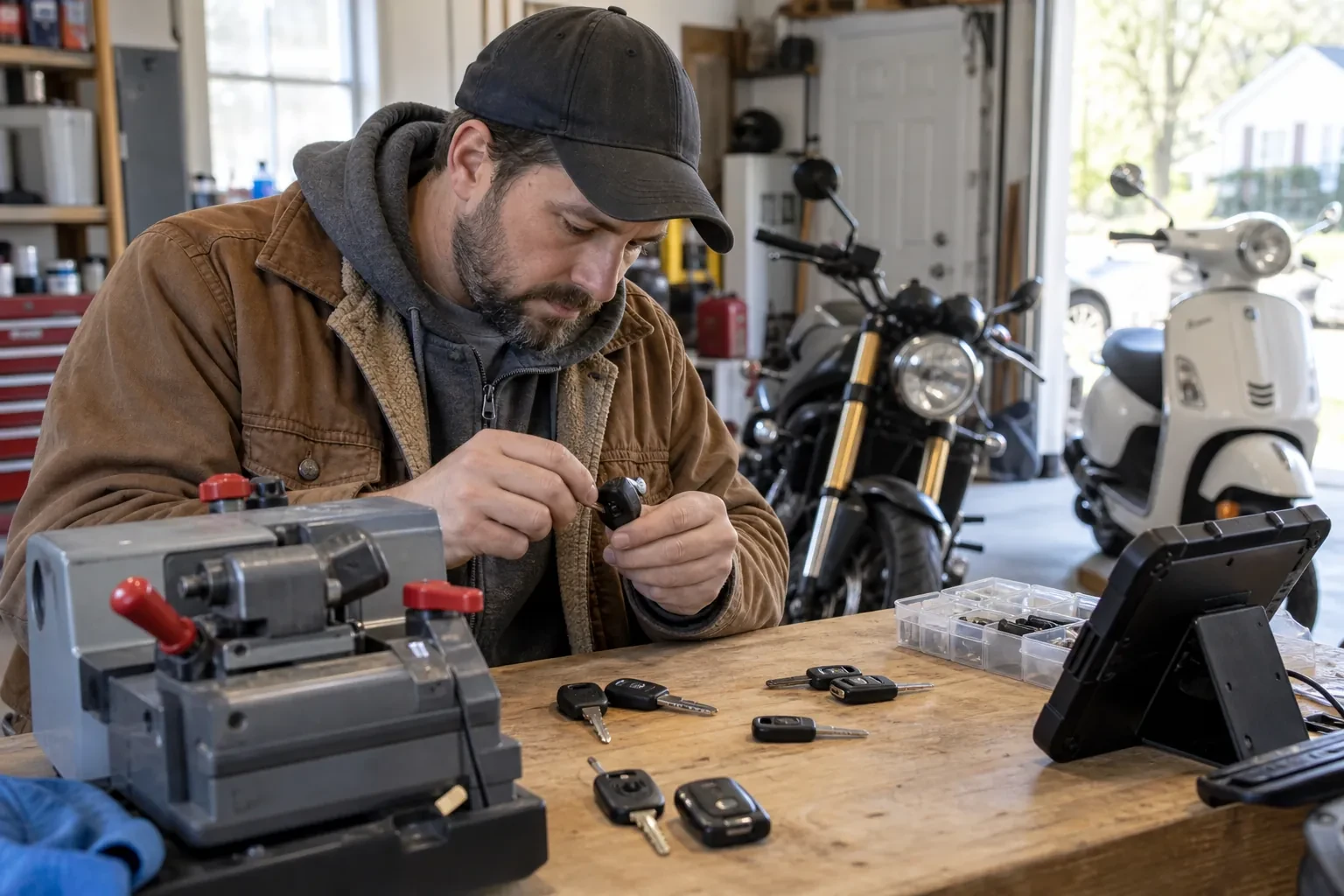
Vintage Mortise Lock Service
What affects the quote
Keying doors alike
Bringing several interior locks onto one bit key, or several cylinders onto one flat key, is extra bench work per lock and is simplest to arrange while all the cases are out on the same visit.
How many keys you want
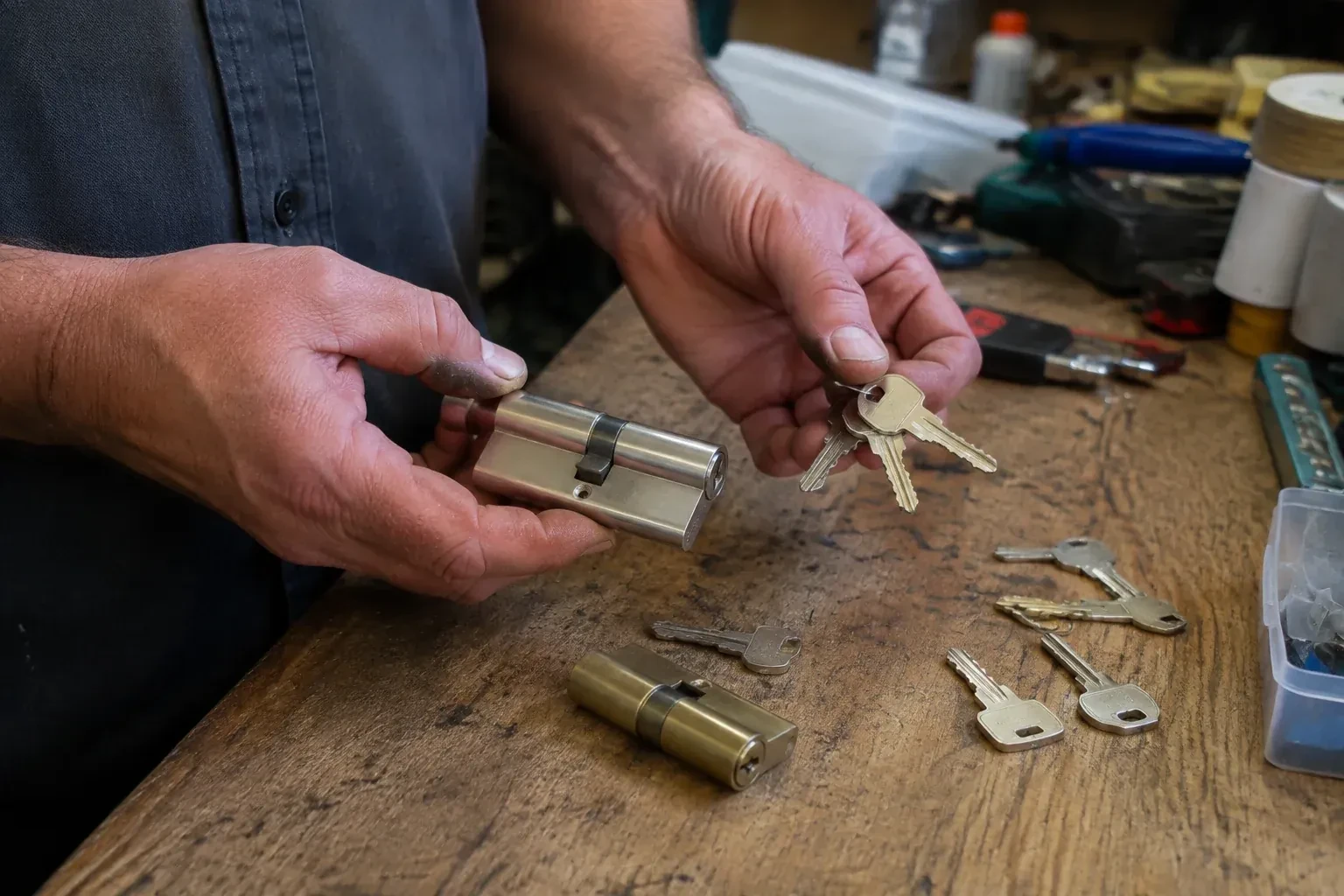
Bit keys are made individually by hand and cylinder keys are cut per copy, so the count you ask for is a line of its own. Decide who in the household needs one before the visit.
Making the inside key-free
Fitting a thumb-turn or interior release to a deadbolt that was keyed on both sides is its own small item, and one most owners of an entry door choose to include.
What to have ready
- How many keys do you have, and do any of them work?
- Can you send a photo of the plate in the door edge and one of the keyhole?
- Does the deadbolt throw fully with the key or the thumb-turn?
Vintage Mortise Lock Service: questions
QuestionsWhich parts usually need replacing?
Springs, first and foremost: the latch spring, the hub spring that returns the knob, and the small springs on the deadbolt levers. After that, the spindle and knob set screws, a hub whose square has worn round, a worn deadbolt lever or follower, and on later locks the cylinder set screw or the cylinder itself. Bolts, cases and trim are almost always kept, cleaned and refitted rather than replaced.
What does the service visit involve, step by step?
The locksmith checks your authority to request the work, examines the door and lock, and tells you what it needs. The knobs, plates and cylinder come off, the case slides out of the door edge and is opened on a bench, cleaned, re-sprung and repaired. Keys are made or the cylinder rekeyed, the door pocket is tidied, everything goes back on, and the strike is adjusted. You test the finished lock from both sides.
The lock works with the door open but not when it is closed. Is the lock broken?
Almost certainly not. That pattern means the door has moved in its frame so the latch and bolt no longer meet the strike squarely. Solid wood doors in older houses swell in humid weather and settle on their hinges over the years. The service adjusts or shims the strike and tightens or packs the hinges so the bolt throws without lifting the door, and the lock itself is usually cleaned and lubricated at the same time.
Related services
- Deadbolt InstallationThe front door has a handsome lever and a keyed knob, and that is all.
- Lock Replacement & UpgradeEvery morning the front door key needs the same little dance: push in, lift, wiggle, turn.
- Smart Lock InstallationArthritis has made the small house key hard to grip and turn, especially with gloves on in January.