High security · Oshawa
High Security Locks
After the attempted break-in the police officer pointed at your door and said the strike plate was held by two short screws.
In plain words
Most break-ins do not involve picking; they involve a boot, a pry bar or a key that should never have been copied. High security hardware answers all three. A deadbolt with a full one-inch throw and a hardened core resists sawing and kicking, a reinforced strike with three-inch screws keeps the jamb whole, and a patented keyway means a copy can only be made through the locksmith who holds your system. The pick, bump and drill resistance of the cylinder is the layer on top. The locksmith's job is to fit those layers to your particular door and your particular worries.
How the visit goesYou have lost count of how many people have had a key to your house over the years: cleaners, a contractor, a former partner, the previous owner's family. The lock still works, but you no longer know who else it works for.
High Security Locks
How the visit goes
Matching the rating to the risk
Ratings are only useful if someone explains them. A residential deadbolt carries a hardware grade for security, durability and finish based on hammer blows, pulling force and cycle testing. A high-security cylinder carries a separate laboratory listing based on how many minutes it resists picking, drilling and forcing. The locksmith explains what each figure means in practice for your door and points out the rule that matters most: the whole assembly takes the grade of its weakest part. That conversation ends with a recommendation you understand rather than a part number you have to trust.
Fitting a heavier deadbolt
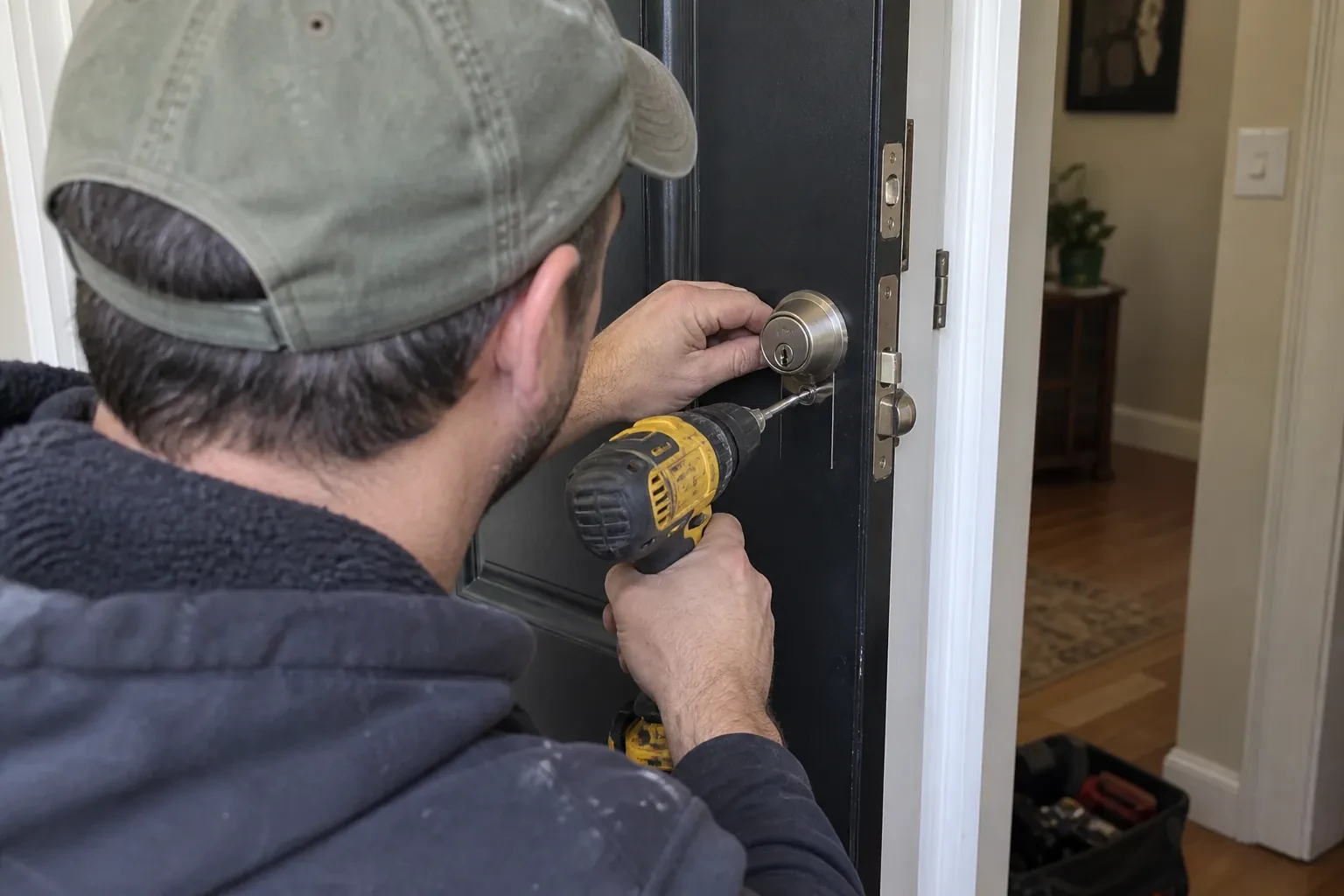
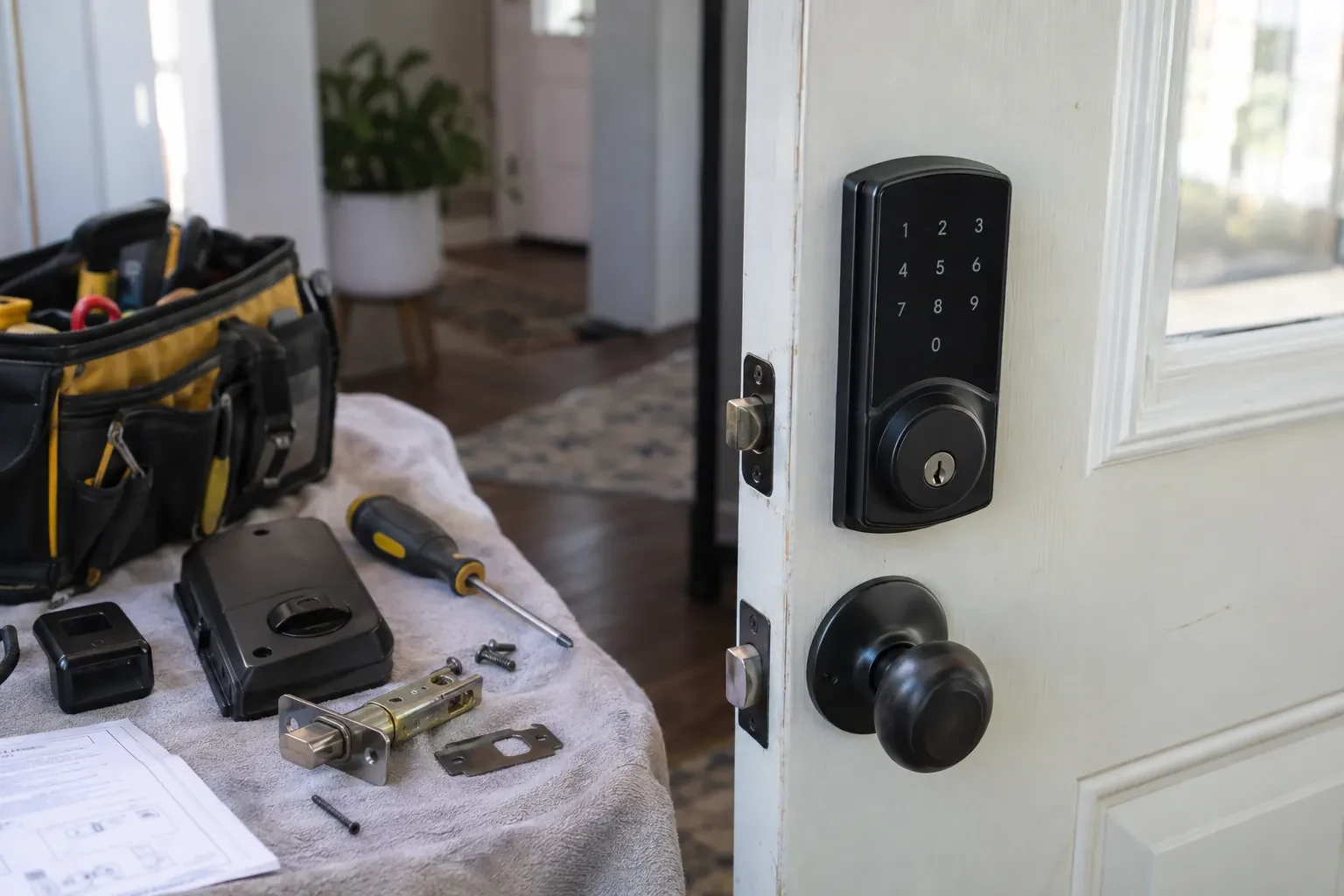
When the existing deadbolt is light or worn, the locksmith fits a graded deadbolt through the same bore where possible. The bolt throws a full inch and carries a hardened steel pin that turns under a saw blade, and the housing keeps part of the bolt supported against a kick. The latch is set in the edge bore with the correct backset, the exterior housing and interior thumb-turn are joined through the door with the long screws, and the final tightening is done by hand so nothing strips. The bolt is then thrown with the door open and closed to confirm it extends completely.
A known number of keys
The most noticeable change is not in the door but in your head. You know exactly how many keys exist, who holds each one and that nobody can add to that number without your authorisation. The system is registered in your name with the locksmith, so a request for an extra key comes back to you rather than being filled at a counter somewhere. Keep the authorisation card or login details somewhere safe and separate from the keys. When a key is lost, tell the locksmith; the record is updated and you can decide together whether that key's loss warrants any further step.
High Security Locks
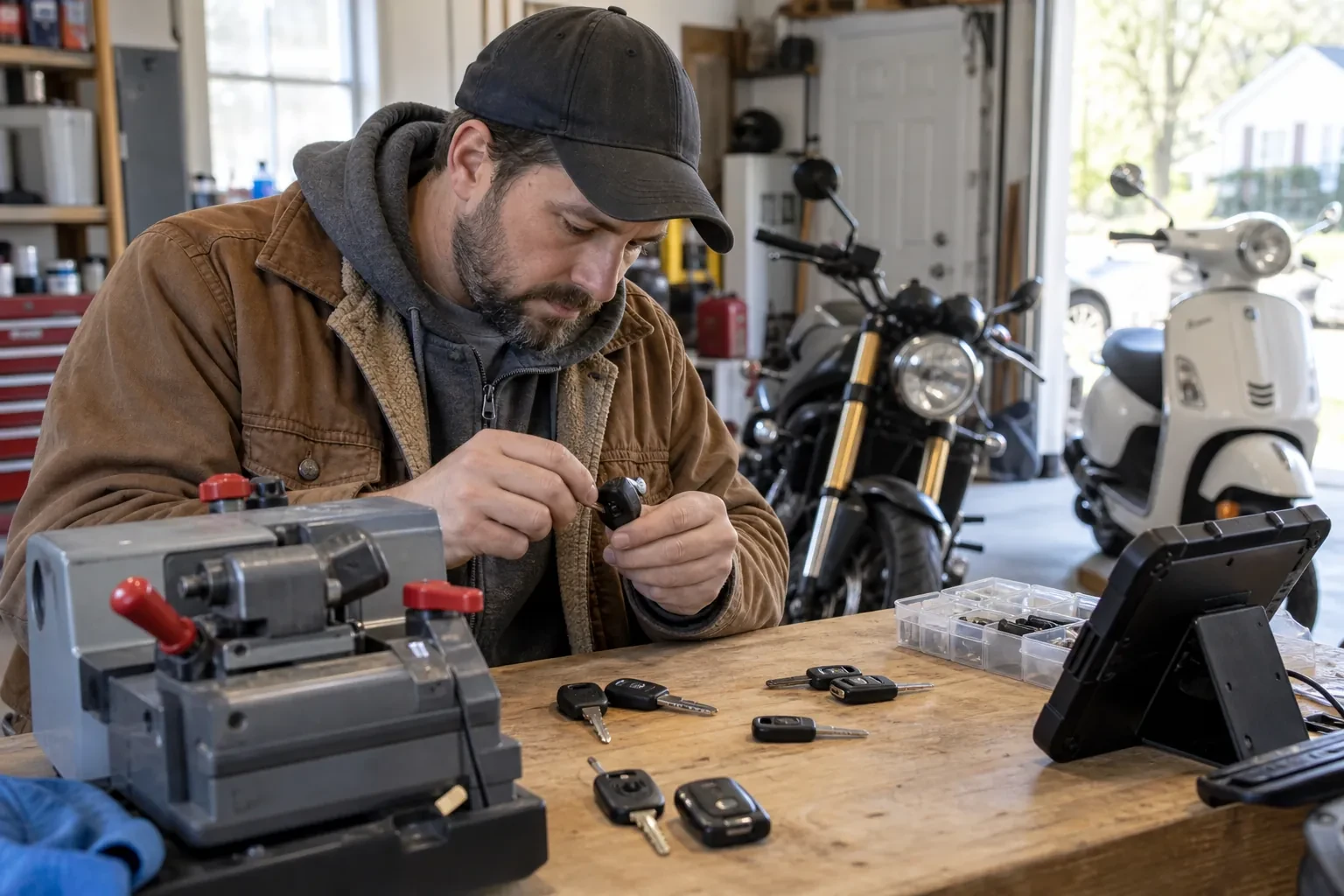
In the van
High-security cylinder
Code key cutting machine
Box strike
Commercial mortise lock body
Hardened cylinder guard ring
High Security Locks
What affects the quote
Cylinder rating and format
A patented residential cylinder, a laboratory-rated commercial cylinder and an interchangeable core sit at different points on the scale, and the format that fits your present hardware decides which lines are available.
Mortise and older doors
An existing mortise pocket, a thick slab door or an unusual backset can mean a specific cylinder or an adapted preparation, which takes longer than a standard bore.
Distance and access
A rural property, a high-rise with loading dock rules or a site that must be visited outside trading hours affects travel and scheduling, and the quote says so plainly.
What to have ready
- Would you like all doors on one key, or different keys for different areas?
- Does the door drag, stick in cold weather or need lifting to lock?
- Which locks are on the door now: knob only, knob and deadbolt, a mortise lock or a lever?
High Security Locks: questions
QuestionsWhat is the difference between restricted and patented keys?
A restricted keyway is one the manufacturer supplies to a limited set of dealers, so blanks are harder to obtain but not legally protected. A patented key design is protected by a patent for a fixed term, and making or selling the blank without permission is unlawful during that time. Patented systems give the firmer control; restricted ones give a useful step up. The locksmith explains which your chosen line uses and when any patent expires.
What is bumping, and does this stop it?
Bumping uses a specially cut key that is struck while under light turning pressure, bouncing the pins to the shear line for an instant so an ordinary cylinder opens. It works on many standard pin tumblers. A high security cylinder needs its sidebar released by separately positioned finger or rotating pins at the same moment, and a bump key cannot set those, so the plug stays locked. It is one of the clearest advantages of the upgrade.
Are high security locks only for businesses?
Not at all. Homes are the most common place they are fitted, especially after a move, a break-in nearby, or the realisation that too many keys have been handed out over the years. A graded deadbolt with a patented cylinder and a reinforced strike is a modest, quiet upgrade for a front or side door. Businesses tend to go further, with laboratory-rated cylinders, heavy lock bodies and a documented key system across many doors.