Lockouts · Oshawa
Broken Key Extraction in Oshawa
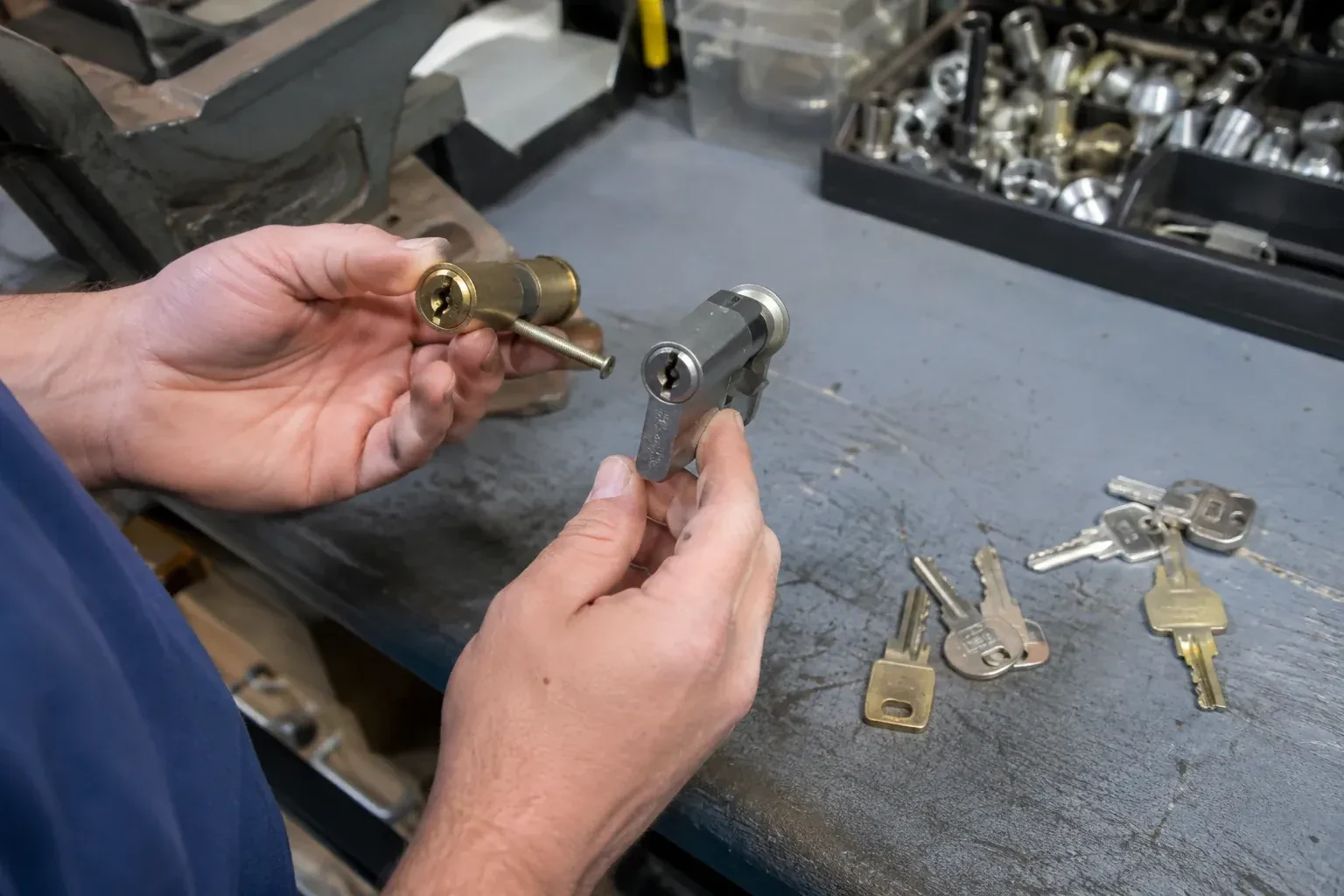
A roommate tried to help with tweezers, then by gluing the other half to it.
In plain words
Two facts shape the job before the locksmith arrives: whether the door is locked or unlocked, and whether any of the key is showing. A fragment that protrudes can often be gripped and drawn straight out. One flush or deep needs extractors worked in alongside it. If the plug turned before the key broke, it has to be eased back to its resting position first so the pins line up and release the blade. A locked door means the extraction is followed by opening the lock; an unlocked one means securing it is the priority. Either way the door ends up locking with a key that fits.
How the visit goesThe padlock on the shed has been stiff all summer. Today the key twisted, cracked at the tip, and left the end buried deep in the keyway. The rest came out in your hand, and the padlock is still closed.
Broken Key Extraction
How the visit goes
Checks particular to a vehicle
A car adds a few questions. Did the key break in the door, the trunk or the ignition? Does the head in your hand hold a transponder chip or remote, and does the car start with the spare if there is one? Is the steering wheel locked, which can hold an ignition cylinder under tension and pin the fragment in place? Do the other doors open with the same key, or is the vehicle on a different key for the ignition and doors? These answers decide whether the job is a door extraction and a new blade, or an ignition extraction that needs the wheel freed and the wafers checked first.
When the piece is standing proud
A fragment that shows above the cylinder face looks like the easy case, and it is, provided nobody pushes on it. The locksmith grips it with fine-jawed extractor pliers or needle-point tweezers made for the purpose, steadies the cylinder with the other hand, and pulls straight out along the line of the keyway. If it resists, the plug is checked for rest position rather than the pull being increased, because a piece forced against lifted pins can bend them. A trace of dry lubricant at the keyway entrance eases a tight fit. The piece comes out whole, and the lock is ready to test.
Habits that keep keys in one piece
A few small changes stop most repeat breaks. Push the key fully home before turning, and turn from the bow with a level hand, never with pliers or from the tip. Keep the house key off box-cutting and ice-scraping duty; every bend fatigues the blade at its narrowest cut. Replace a key the moment it shows a kink, a crack line or rounded cuts, and cut the replacement from code or a crisp original. Keep the ring light. If the lock itself starts to stiffen, that is the cue to lubricate or call, because a stiff lock is the one that breaks keys.
Broken Key Extraction
In the van
Vehicle key blades and chip shells
Replacement cylinder or deadbolt
Key gauge and decoder
Hook key extractors
Manufacturer-approved cylinder lubricant
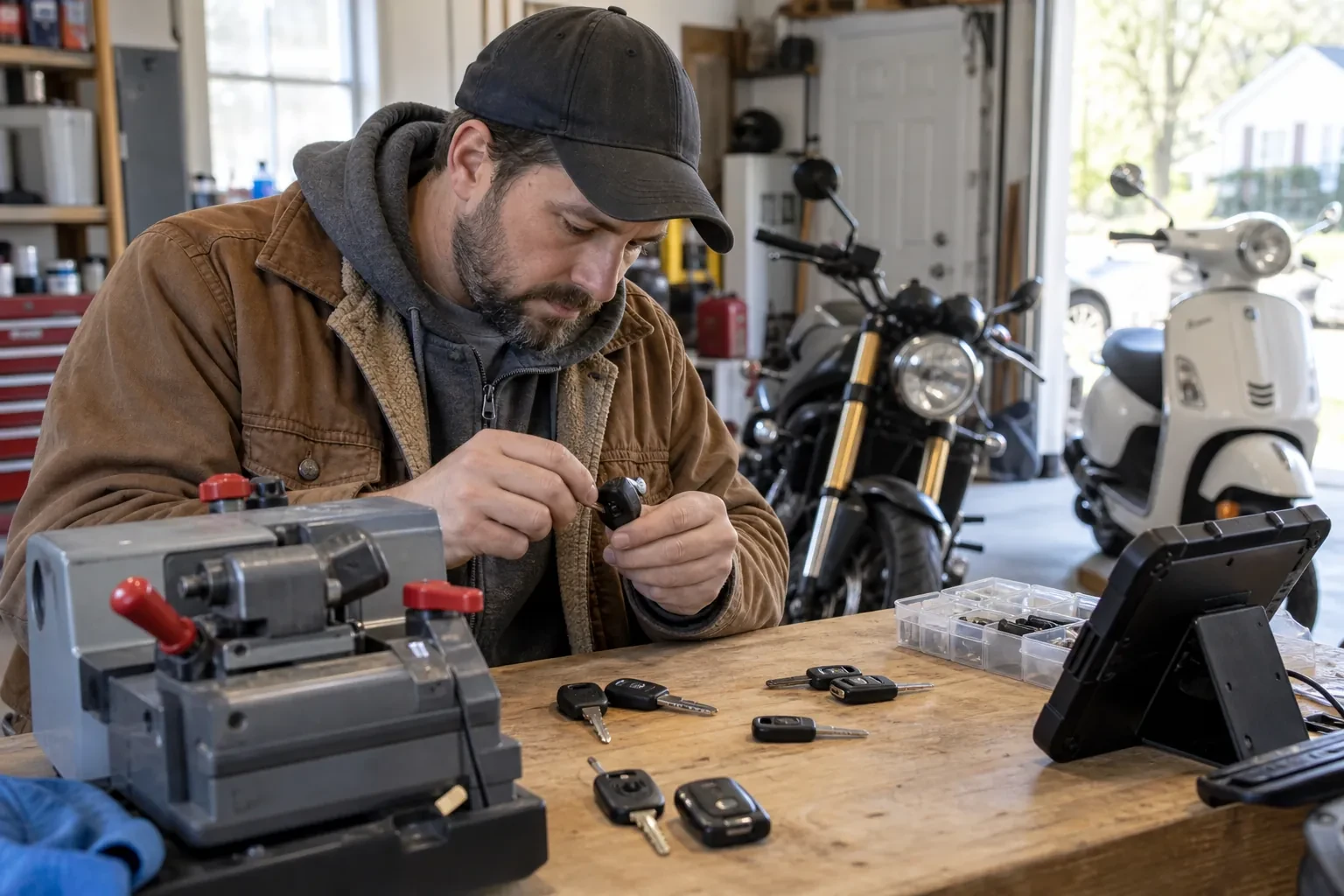
Broken Key Extraction
What affects the quote
Door or strike adjustment
When the key broke because the bolt was binding in a swollen or sagging door, correcting hinges, strike or weatherstrip is offered and quoted as its own item.
Vehicle key electronics
Fitting a new blade to a chip head, or moving the chip and remote into a new shell, is separate from the extraction and quoted as such, as is any ignition check.
Drilling and a replacement cylinder
On the rare occasion a cylinder must be sacrificed, the price includes the new cylinder or complete deadbolt plus fitting it, and that is agreed with you before the drill is picked up.
What to have ready
- Has anything been put into the keyway since, such as tweezers, glue or another key?
- Did the key turn part of the way before it snapped?
- Do you still have the other half of the key?
Broken Key Extraction: questions
QuestionsWill the lock work again once the piece is out?
In most cases yes, and it is tested in front of you with a key that fits. The inspection after extraction is where the honest answer lives: if the pins, springs and cap are sound and the keyway is clean, the cylinder goes back into service with a fresh key. If wear or damage caused the break, that is explained and a rekey or new cylinder is offered as a separate choice.
Why do keys break more in winter?
A daytime thaw sends meltwater into the keyway, and overnight it freezes with the plug held solid. The key goes in, meets resistance, and the natural reaction is to turn harder. Brass gives before ice does, especially at a deep cut that has thinned over years. Cold also stiffens old grease in the cylinder. De-icer, gentle warmth and a dry lubricant break the pattern.
My key is a restricted or high-security type. Can it still be extracted and replaced?
Extraction is the same careful process; the keyway is usually narrower and the cuts more complex, so it takes longer. The replacement key is different: restricted blanks are cut only from the system's records, so have the authorization card that was supplied with the system to hand, or the locksmith who installed it is contacted. Until then the spare, if you have one, keeps the door working.