Car keys · Oshawa
Transponder Key Programming in Oshawa
The remote fob has gone silent, the doors won't unlock with a button press, and the little emergency blade tucked inside it has not been used since the day the car was bought.
In plain words
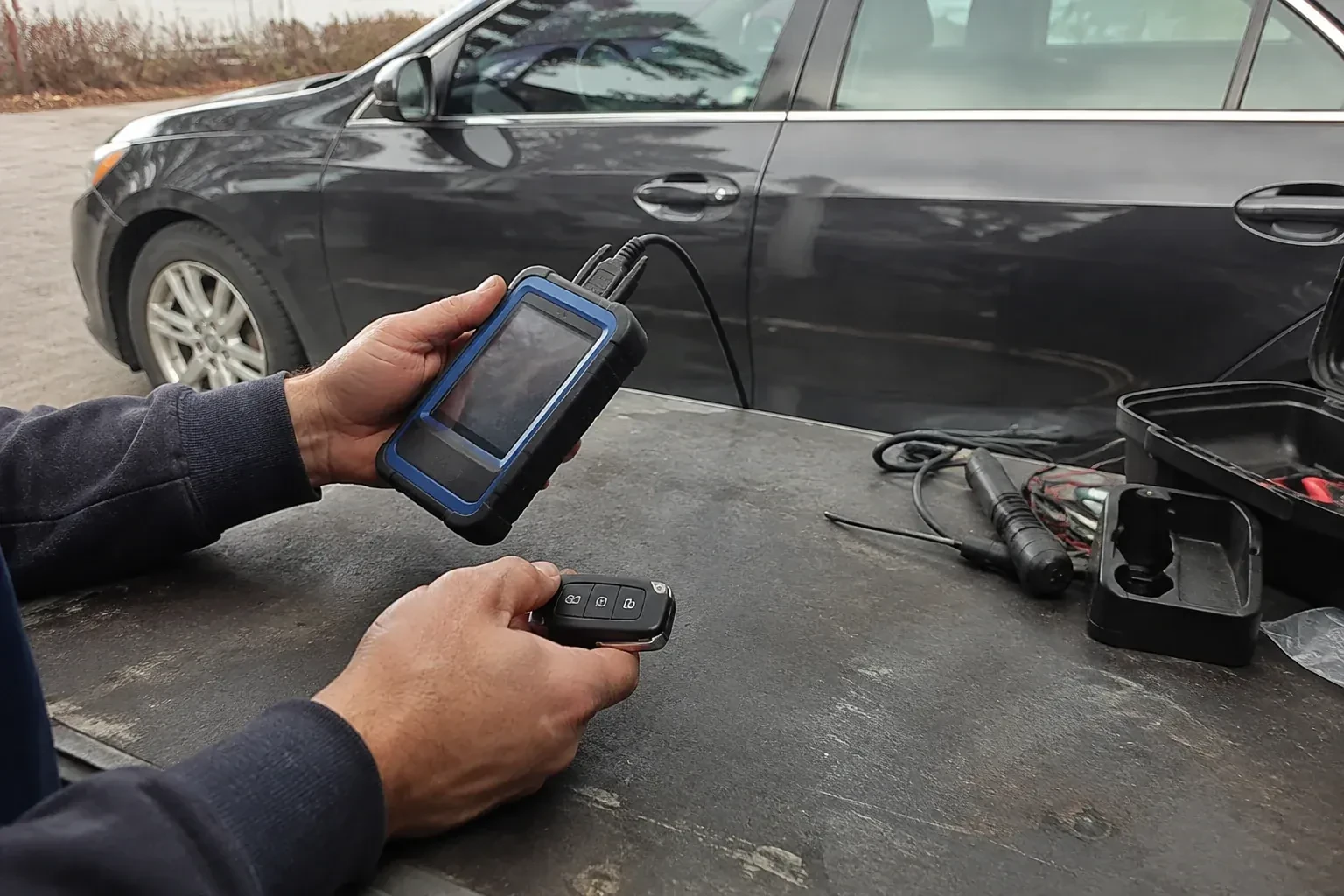
A modern car key is often two systems living in one housing: the transponder, a chip with no battery of its own that only the immobilizer needs to see, and the fob, a battery-powered remote that handles locking, unlocking and alarm functions from a distance. Programming a transponder key addresses the first system, letting the engine start, while pairing the fob addresses the second, restoring the buttons. A key can pass one test and fail the other, so both get checked before the visit is finished.
How the visit goesEvery key that ever opened the car is gone at once, one taken with a stolen bag, the spare misplaced months ago and never replaced. There is no working key left anywhere in the house, the garage, or a coat pocket, and the car sits exactly where it was parked.
Transponder Key Programming
How the visit goes
What the finished set should look like
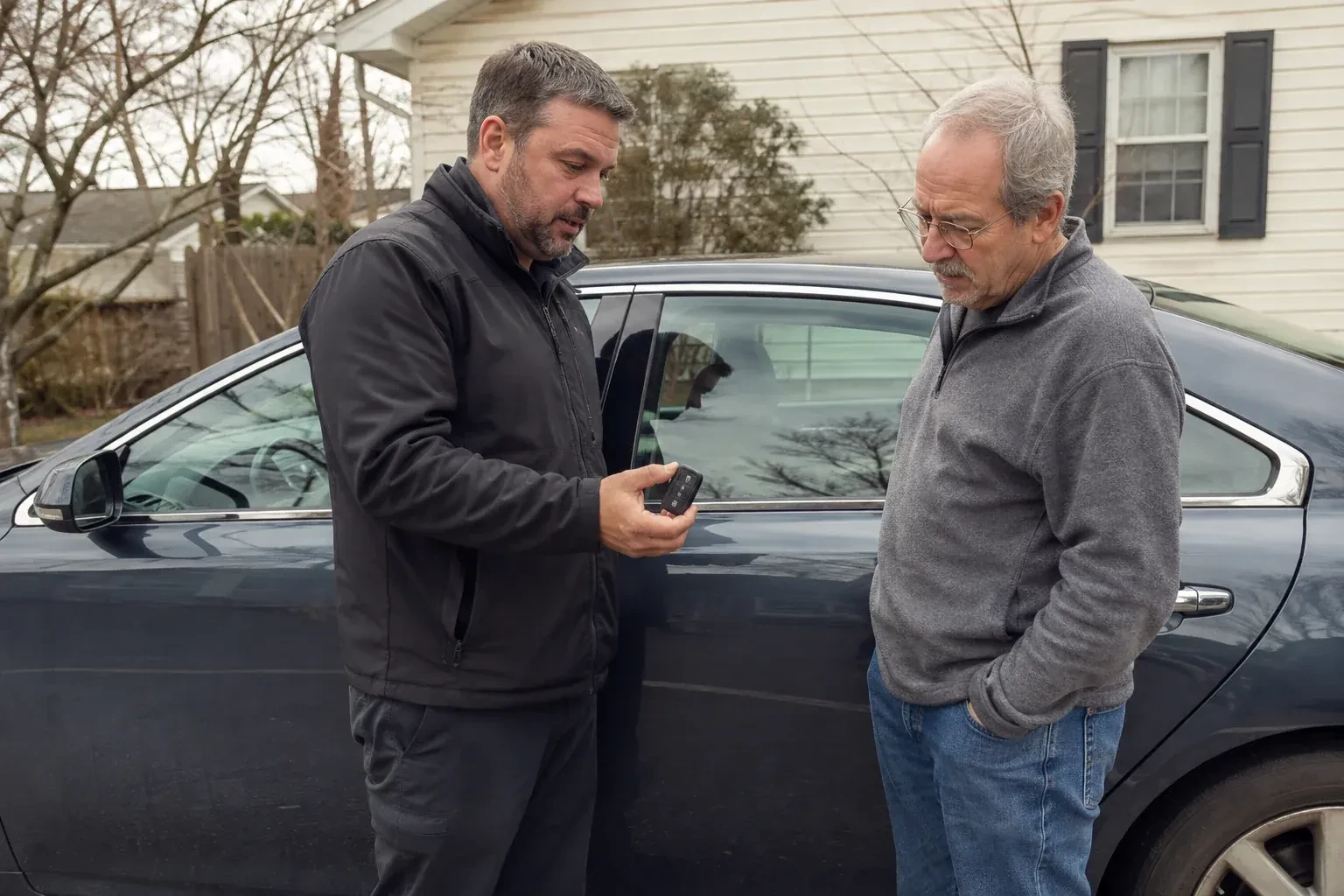
Not every visit ends the same way. Someone who lost their only key wants a working replacement and nothing more. A family adding a driver wants an extra key without disturbing the ones already in daily use. Someone who has never had a spare wants one made and proven before it is ever needed. Asking how many keys should work afterward, and for whom, shapes the whole visit before a single tool comes out, and it is answered in plain terms rather than assumed.
Adding one key without disturbing the others
Bringing another driver onto the same vehicle means adding one identity to the key list while every key that already works keeps working exactly as before. The locksmith confirms the existing keys' status before touching anything, adds the new entry, and then tests every key in the household's hands, not only the newest one. This order matters because a mistake that silently disabled an existing key would be far more disruptive than any delay in getting the new one finished.
Ready for the next cold snap
A fob that survived one winter will not necessarily survive the next one on the same battery, since cold weather is genuinely harder on a battery that was already getting weak. Testing it before the temperature drops, rather than after it has already failed on a frozen morning, catches a fading battery while replacing it is still a small errand rather than an unplanned one. The metal blade inside a proximity fob does not mind the cold at all, which is exactly why it is worth knowing where it is.
Transponder Key Programming
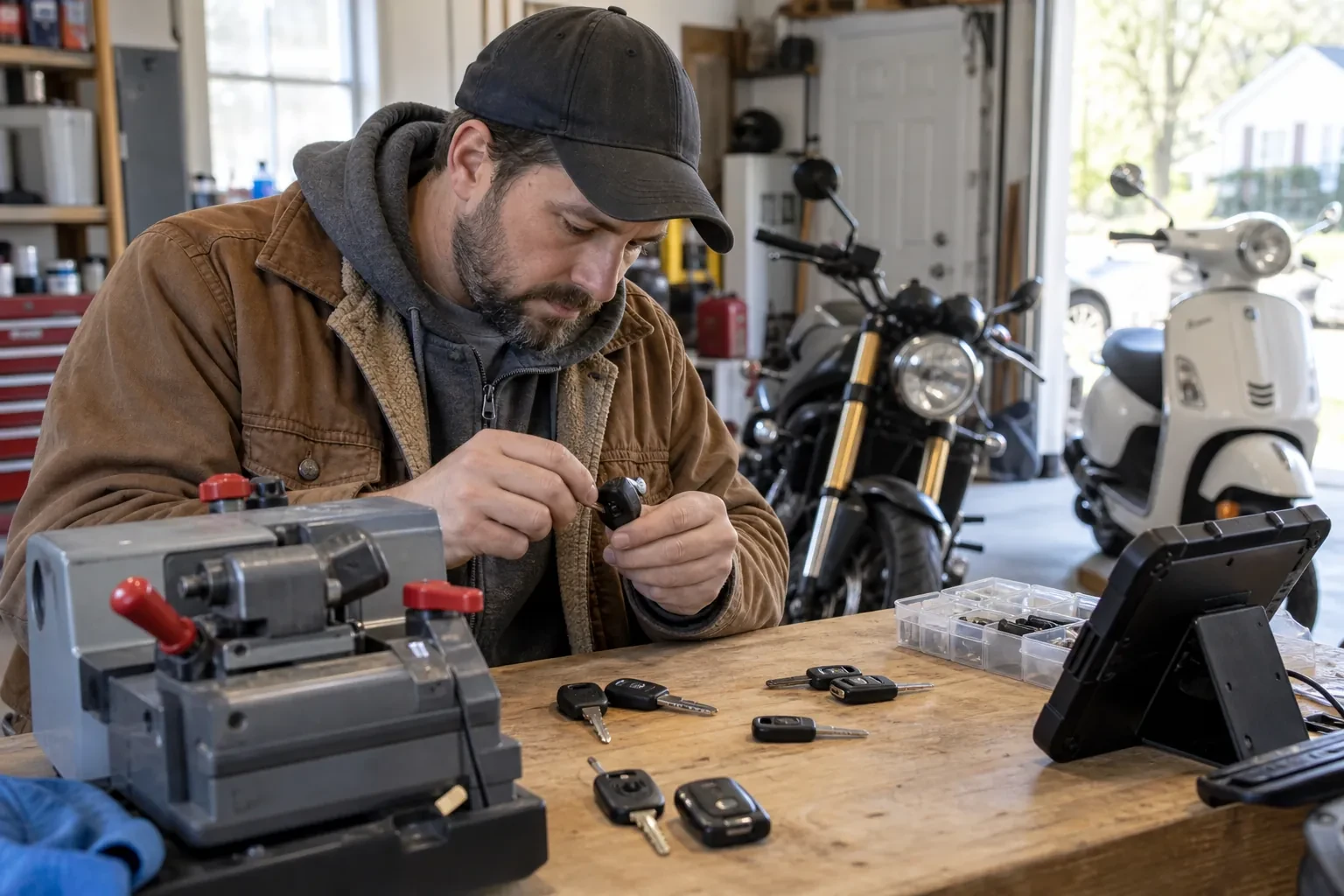
In the van
VIN reference tool
Replacement remote-head fob
OBD-II key programmer
Bench programming adapter
Chipped key blank
Transponder Key Programming
What affects the quote
Aftermarket alarms or remote starters already installed
A vehicle with an aftermarket alarm or remote starter wired into its ignition circuits may need extra time to confirm how that system interacts with the factory immobilizer before a new key is programmed.
Cutting method: by code or by duplication
Cutting from a manufacturer code tends to be more direct than duplicating from a worn or damaged working key, where extra care is needed to read the original cuts accurately before a blank is shaped to match.
Trim or dash removal some models need for access
A small number of vehicles place the antenna ring or module somewhere that needs a panel or trim piece moved for a clear connection, which adds a step beyond the programming itself on those specific models.
What to have ready
- Is the key a basic blade, a remote-head, or push-button proximity?
- Do you have the vehicle permit or registration on hand?
- Where is the vehicle parked right now?
Transponder Key Programming: questions
QuestionsWhat's the difference between a transponder key and a key fob?
The transponder is the passive chip that talks to the immobilizer and lets the engine start; it needs no battery of its own. The fob is the separate, battery-powered piece that handles remote locking, unlocking and alarm functions. Many modern keys combine both in one housing, but they answer two different systems, which is why a fob with a dead battery can still start the car with its mechanical blade.
How many keys can one vehicle hold in its memory?
It varies by make and model; some systems hold only a handful of identities, while others allow considerably more. Many vehicles let one working key on hand authorize adding another, though some ask for two working keys and others use a different programming route entirely, which is why all-keys-lost situations are handled differently from adding a spare or a second driver's key.
Can a copy cut at a hardware counter ever start my car?
A general-purpose key-cutting kiosk can shape a blade that turns the door lock, and a few kiosks can also copy certain transponder chip types. Most cannot handle what a modern immobilizer needs, though, so the usual result is a key that opens the car and even turns the ignition while the engine just cranks without starting. Even where a kiosk manages the chip, a separately programmed key can still turn out to be needed.
Related services
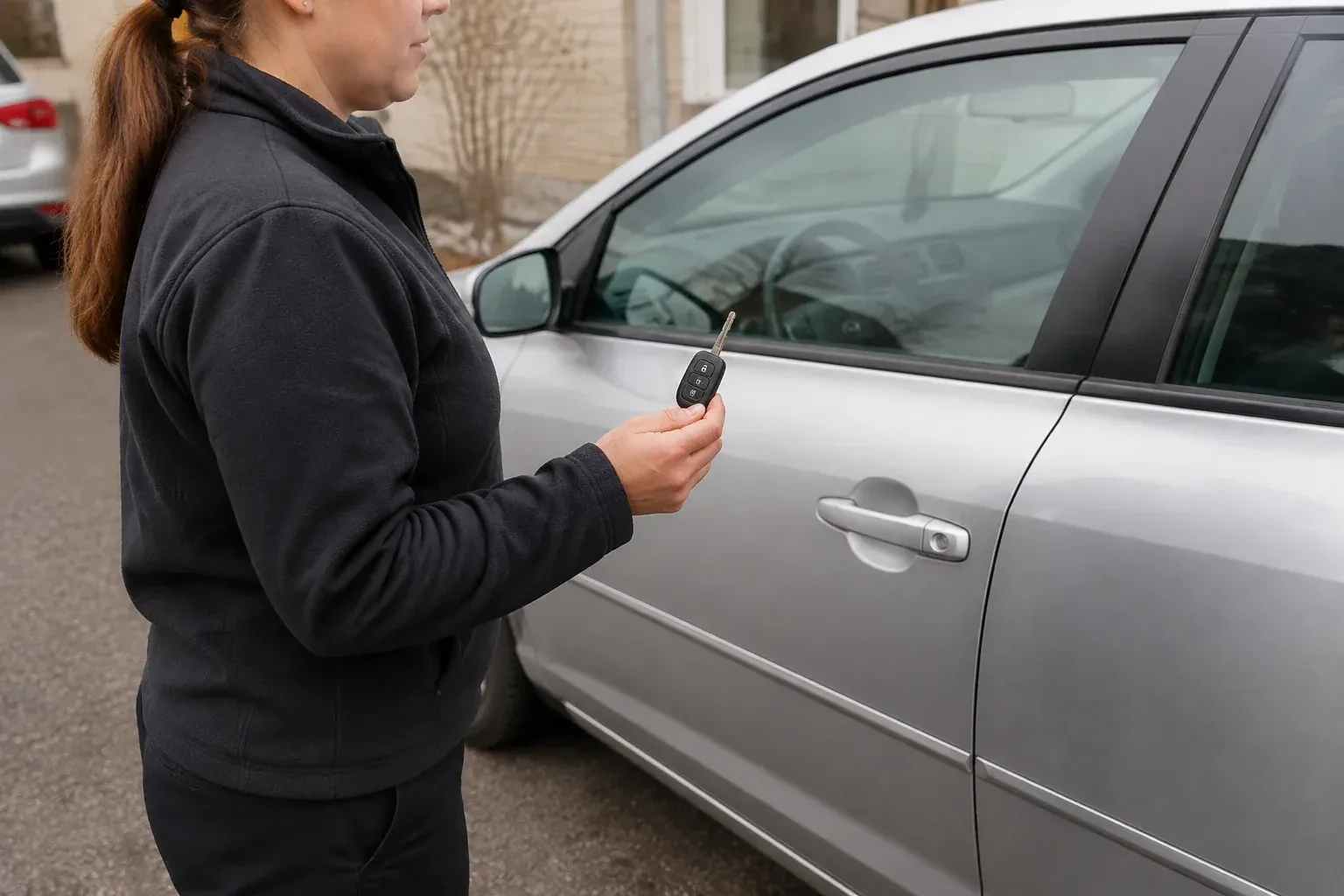
- Car Key ReplacementThe engine cranks, catches for a second and dies, and a small key-shaped light keeps blinking on the dash.
- Spare Car Key DuplicationA lockout last month ended with a locksmith opening the door and going home, and the same single key has been carried ever since with nothing behind it.
- Key Fob ProgrammingA new driver has joined the household, and the one existing fob is the only key anyone has ever had cut for this vehicle.