Cedar Dale Locksmith Pros · Oshawa
High Security Locks: inside the visit
Locksmith · Oshawa, Ontario
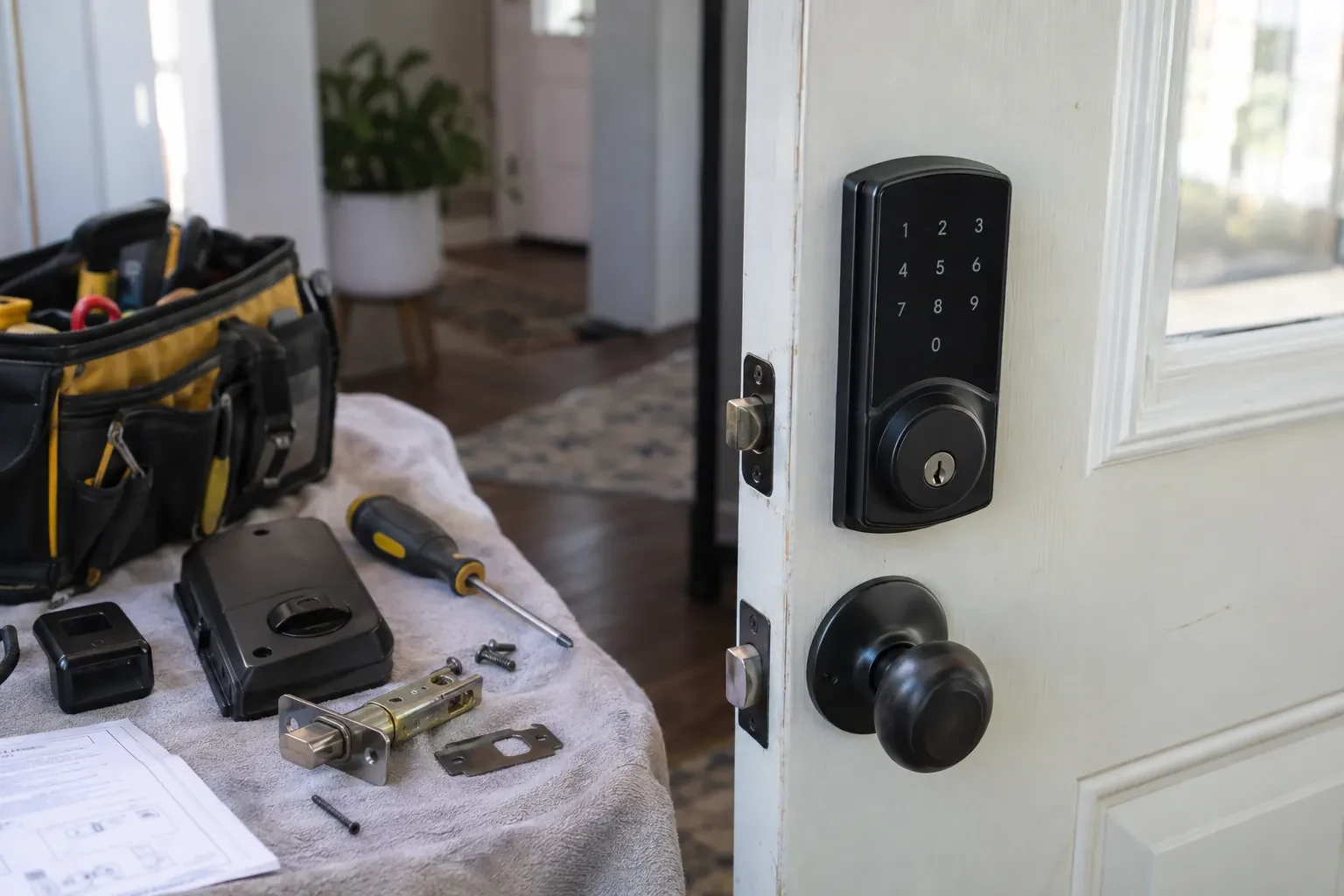
A high security cylinder is rated by independent laboratory testing that times how long it holds out against picking, impressioning, drilling, prying and wrenching. The lock body and deadbolt carry a separate hardware grade for strength, cycle life and finish. A locksmith reads those ratings for you and matches them to your door, because a rating on the box means nothing if the door frame is thin or the bolt barely enters the jamb. The visit usually ends with a heavier deadbolt, a reinforced strike fastened into the framing and a cylinder whose keys cannot be copied at a kiosk.
Matching the rating to the risk
Ratings are only useful if someone explains them. A residential deadbolt carries a hardware grade for security, durability and finish based on hammer blows, pulling force and cycle testing. A high-security cylinder carries a separate laboratory listing based on how many minutes it resists picking, drilling and forcing. The locksmith explains what each figure means in practice for your door and points out the rule that matters most: the whole assembly takes the grade of its weakest part. That conversation ends with a recommendation you understand rather than a part number you have to trust.
Reinforcing the strike and frame
The strike is where a forced door actually fails, so it gets serious attention. The stamped plate comes off and the pocket is deepened to accept a box strike or a long reinforced strike, fastened with three-inch screws that pass through the jamb into the wall framing. Stripped or split wood is filled and doweled first so the screws have something to hold. Where the frame is thin, a wrap-around reinforcer around the door edge and a full-length jamb plate are options. The result is a bolt that ties the door into the house rather than into a strip of trim.
Watching the patent calendar
Patented keyways protect you for as long as the patent lasts. When it expires, blanks may be sold openly and the copy-control layer weakens, though the mechanical resistance of the cylinder stays. The locksmith notes the patent term of your system at handover so the date is not a surprise. Many years before it arrives, the same hardware can usually be moved to a newer patented keyway by changing cylinders and keys while the lock bodies stay. Treat it like a roof: nothing needs doing for a long while, but the date is written down.