Lockouts · Lakeview Park
Lost Keys — Same-Visit Rekey in Lakeview Park
Your purse was taken from the back of a chair at a restaurant.
In plain words
A missing key is also the moment a household can stop carrying four. Because a rekey sets a fresh combination in every cylinder anyway, the locksmith can set the same combination in all of them, provided they share a keyway family, so the front door, back door, garage entry and side gate open with one key. Where a cylinder belongs to a different family, it can be swapped for one that matches during the same visit. The result is a single key on each ring, fewer copies to keep track of, and the certainty that the lost one operates none of them.
How the visit goesYou let a part-time employee go on Friday. The shop key is on a ring in their apartment, or their car, or a friend's kitchen, and on Monday morning the register and the stock room open with it.
Lost Keys — Same-Visit Rekey
How the visit goes
How many keys, and who gets them
Before pins are touched, the number of keys is agreed, because that number is the whole point of key control. The locksmith asks who in the household or business needs one: each adult, a teenager, a caregiver, the neighbour who feeds the cat, the landlord, the cleaner. Each name gets a key and the total is written down. Anyone who had a copy of the old key but is not on the new list is, from that moment, simply someone without a key. Knowing the count on day one is what makes it possible, years later, to say with confidence exactly how many keys to this property exist.
Resetting a homeowner-rekeyable cylinder without its key
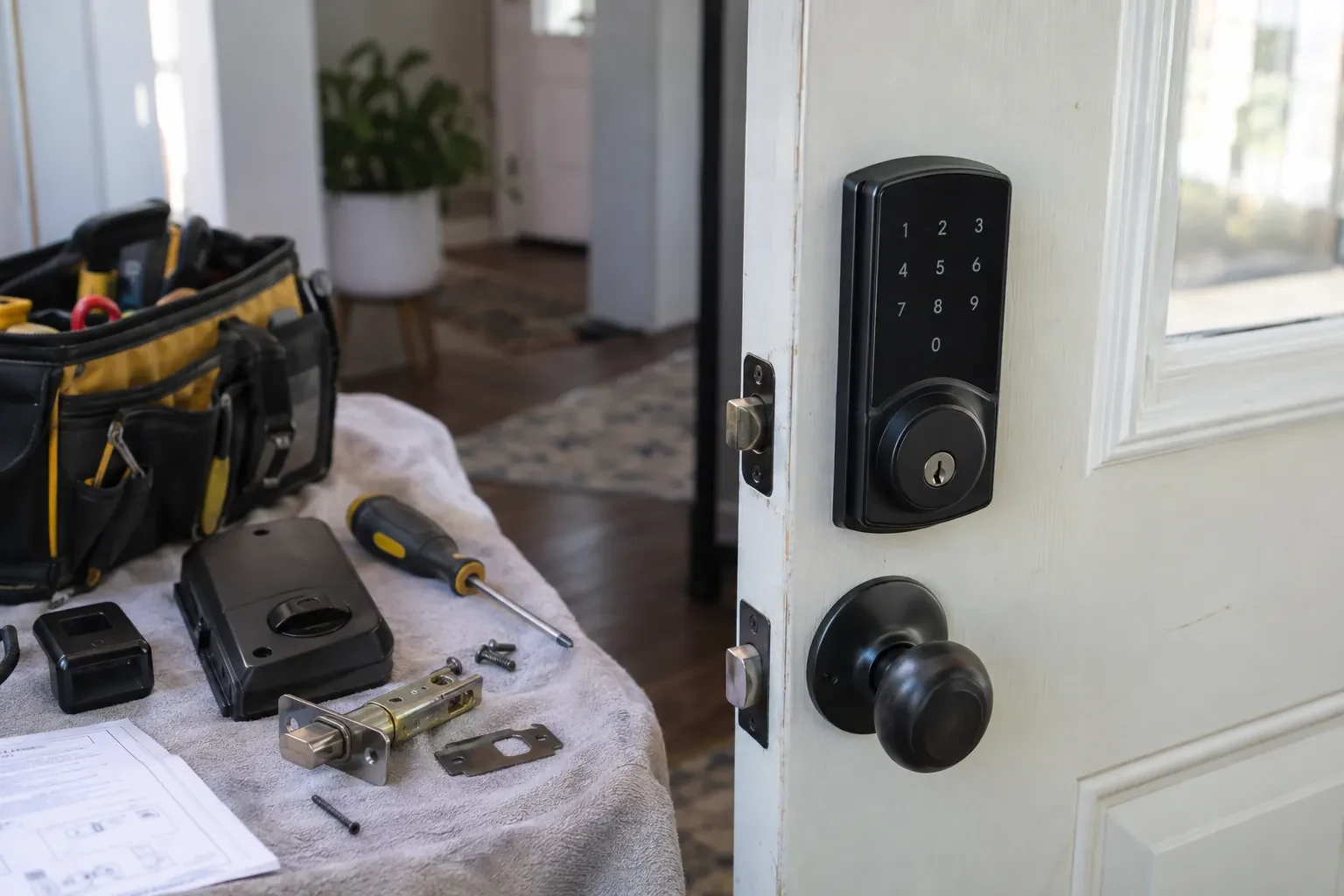
Some newer residential locks carry a small slot beside the keyway that lets a homeowner change the key with a learn tool, but only while a working key is in hand. When that key is the one that was lost, the locksmith uses the manufacturer's reset tool instead: the cylinder is pulled from the lock, seated in the reset fixture, and its internal sidebar and wafers are returned to a blank state. A new key of the right blank is then inserted, the learn tool sets the cylinder to it, and the lock goes back on the door taking the new key and rejecting the old one.
Spares that live outside the house
A rekey is the natural moment to decide where the spare goes, because the one under the planter is the reason many of these calls happen. A key with a trusted neighbour or nearby relative is the simplest answer. A small combination lockbox fixed in a discreet spot, with the code shared only with the people on your list, is a step up and can be fitted before the locksmith leaves. For families with a keypad lock, a personal code for each member does the same job without a key at all. Whichever you pick, the spare is now a planned thing with a known home rather than a habit.
Lost Keys — Same-Visit Rekey
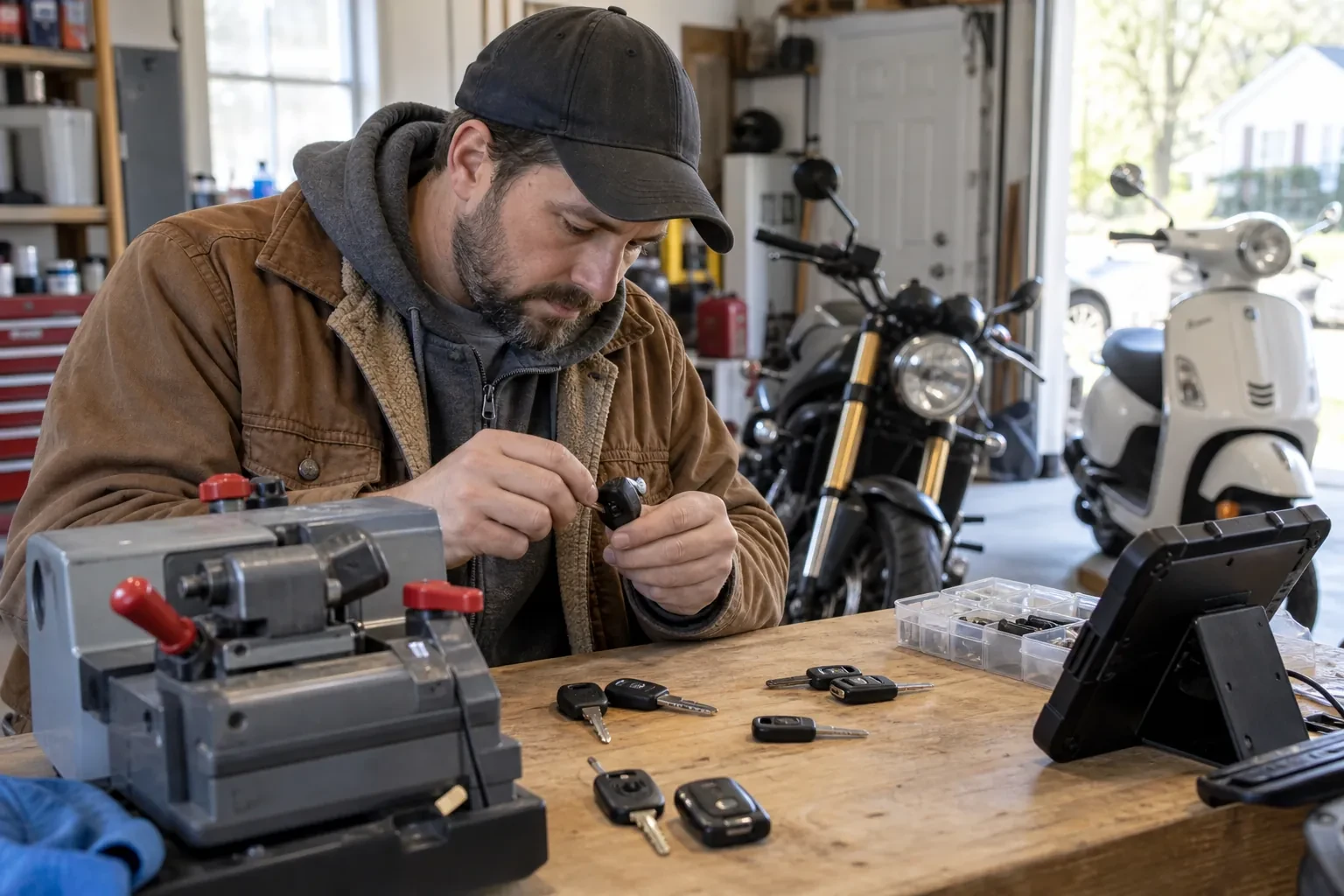
In the van
Cylinder retaining-clip and cap tools
Key blanks in common keyways
Pin tweezers and shims
Code key machine
Dry graphite or PTFE lubricant
Lost Keys — Same-Visit Rekey
What affects the quote
Restricted or high-security keyways
Patented and high-security cylinders carry more parts, need dedicated pin kits and issue keys through authorised channels. Rekeying them takes longer and the blanks cost more than common residential ones.
Homeowner-rekeyable cylinders without a working key
Resetting a homeowner-rekeyable cylinder when its key is gone uses that system's own reset fixture, where the installed lock supports one, and a few extra minutes per cylinder, which shows as a small line on the quote.
Travel to the property
Every call-out includes the drive. A house across town and a rural property at the end of a concession road involve different time on the road, and the quote reflects the trip.
What to have ready
- Do you currently have a way inside, or are you locked out as well?
- Is any lock a keypad, smart lock or homeowner-rekeyable type?
- Do you know roughly how many copies of the old key exist?
Lost Keys — Same-Visit Rekey: questions
QuestionsHow long does a whole-house rekey take?
Plan on an hour or two for a typical house with three or four cylinders, including the walk-through, identification, pinning, cutting and testing. Each additional cylinder adds a little, as does swapping a cylinder to bring a mismatched door onto the same key, resetting a homeowner-rekeyable lock or clearing a garage opener. The locksmith gives a realistic window on the phone once the list of doors is known.
A garage door remote was on the ring. What happens with that?
The opener on the garage ceiling holds a memory of every remote paired to it, and it can be erased in one step so the lost remote is forgotten. The remotes still in the household are paired again afterwards, and a keypad on the outside of the garage gets a new code if you have one. The locksmith can do this during the visit, and it takes only a few minutes at the opener.
Can I just have another key cut instead?
You can, and it solves being without a key. It leaves the lost one working, though, which is the half of the problem that keeps people awake. Rekeying takes about as much effort as a trip to a hardware store counter and ends with a new key in your hand and the old one retired. If the key was mislaid somewhere it will never be found and named nothing, a plain copy is a fair choice.